Follow Us on Google
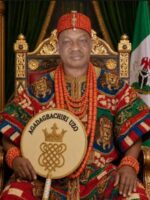
Eze Otisi.N.Ikoro, Agadaghachiri Uzo, Eze Ndigbo Ifako-Ijaiye, Lagos
We, the Igbo, have always been a people on the move. From Arochukwu to Abriba, from Onitsha to Nnewi, Aba, and now from every village in the Southeast to every corner of Lagos, Abuja, Kano, and beyond We are traders, builders, doctors, engineers, and artisans. We carry our chi with us. But the question we must ask ourselves today is this: In our rush to survive and succeed in contemporary Nigeria, what part of our soul are we leaving behind?
I am not here to romanticize the past. Our fathers and mothers were not perfect. But there were things they understood that we were in danger of forgetting.
They understood Igwebuike, the power of the community. In our villages, a man’s problem was never his alone. When the yam barn collapsed, the village rose to rebuild it. When a child was orphaned, the umunna took responsibility. Today, in Lagos, we live in high fences and locked gates. We do not know our neighbours. We have become rich in money and poor in brotherhood.
They understood Nduko, respect for elders, and the dignity of human beings. Not because elders are always right, but because a society that does not honour its roots will soon have no branches. Today, I see young Igbo men and women who can not greet an elder properly. I see children who call their parents by first names because they have picked up habits from television and social media. This is not civilization. This is a loss.
They understood the sacredness of Omenala. Our new yam festival, our marriage rites, our title taking ceremonies, these are not just events. They are the core of our identity. They teach patience, they teach sacrifice, they teach that life is bigger than one person’s ambition. When an Igbo man takes a title, he is not just buying a red cap. He is making a covenant with his ancestors and his community. But today, I see title taking reduced to a transaction. I see Igbankwu marriage ceremonies performed in hotel ballrooms in Lagos with no elders present, no kolanut broken, no wine carrying done with the seriousness it deserves. We are performing the motions, but we have lost the meaning.
And then there is Aku Ruo Ulo, the belief that whatever wealth you gather outside, you must bring something home. Our fathers built houses in their villages even when they lived in the city. They sent their children home during long vacations so they would know the smell of the red earth, the sound of the night cricket, the names of their great grandfathers. Today, I meet Igbo children in Lagos who have never crossed the Niger Bridge. They think their hometown is a place their parents argue about during Christmas. This is how people disappear, not in one generation, but slowly, like smoke.
Let me speak plainly. The Igbo has contributed more to the unity of this country than our history books often acknowledge. We built the markets of Kano, the industries of Lagos, the commerce of Port Harcourt. We did not ask for special treatment. We asked for fairness. We asked to be allowed to work, to trade, to build, and to live in peace.
But contemporary Nigeria has tested us. The Civil War took our fathers. The economic policies of the 1980s broke our businesses. Today, the insecurity in the Southeast has made our homeland a place of fear for many. So we ran. We ran to Lagos. We ran to Abuja. We ran anywhere the guns were not.
And in running, we have built something remarkable. Go to Alaba International Market. Go to Trade Fair Complex. Go to the workshops of Nnewi spare parts dealers in Lagos. The Igbo have built empires with their bare hands. But we have also built a problem.
Now, I must turn to something that pains me deeply. I must speak about us, the traditional rulers in the diaspora.
I am a traditional ruler myself. I hold the title of Eze Udo Ndigbo in Ifako Ijaiye. I say this with humility, not pride. The institution of the Eze in diaspora was created out of necessity. When thousands of our people left the Southeast and settled in Lagos and other parts of Nigeria, they needed leadership. They needed someone to settle disputes, to speak for them, to preserve their culture in a foreign land. The Eze was meant to be a father, a mediator, a protector.
But I must be honest with you, my people. Something has gone wrong.
I have seen it with my own eyes. I have heard the stories in whispered tones in my palace and sometimes in loud, angry voices. There are traditional rulers among us, not all, but enough to stain the cloth, who have turned the sacred stool into a business venture.
They exploit our people.
Disputes arise in the community, over land, over business, over family matters. The people come to the Eze for justice. But justice has a price. The one who can settle the Eze better wins the case. Our traditional courts, which were once the pride of Igbo civilization, have become marketplaces where the highest bidder takes the verdict.
This is not the Igbo way.
Other News
In our true tradition, an Eze is a servant. He eats last. He carries the burdens of the people on his head. He does not enrich himself at their expense. The Igbo saying is clear: Eze bu nke mba, o bughi nke onye. The king belongs to the community, not to himself.
When did we forget this?
So where do we go from here?
First, we must reclaim our values, not as museum pieces, but as living principles. Teach your children Igbo. Not just the language, but the proverbs, the stories, the ethics. Let them know that Aku ruo ulo is not just about building a mansion in the village. It is about bringing honour home.
We must rebuild our communities in the diaspora with transparency and accountability. The Eze institution must be reformed. There must be clear standards. There must be accountability to the people, not just to the person wearing the crown. If an Eze is exploiting his people, the community must have the courage to say so. Tradition is not a shield for corruption.
We must engage with contemporary Nigeria as Igbo who know our worth. We are not beggars in this country. We are builders. We must demand fairness in federal appointments, in infrastructure, in security. But we must also build alliances across ethnic lines. The Yoruba man in Lagos is not our enemy. The Hausa man in Kano is not our enemy. Our enemy is injustice, and our enemy is the decay of our own moral fabric.
Finally, we must go home. Not just for Christmas. Not just for funerals. Go home when the sun is shining. Invest in your village. Support your local schools. Let your children know the land that produced them. A tree that forgets its roots will fall in the first storm.
Let me speak directly to my brothers who hold stools in Lagos, in Abuja, in Kano, in every corner of this country where our people have settled.
We are being watched. History will not forgive us if we betray the trust placed in us. The red cap is not a license to steal. The horsetail whisk is not a tool for beating the poor. We are custodians, not conquerors.
If you can not serve your people with honesty, step aside. Let another take the stool. The Igbo has survived wars, famine, and exile. We will survive your greed, too. But you will not survive the judgment of history.
And to the politicians who think they can buy our people through us, hear this: the Igbo are not for sale. Not their votes, not their dignity, and not their future.
I am advanced in age now. I am currently away for health care reasons, and being away from home gives you a strange kind of clarity. You see things from a distance that you miss when you are in the middle of them. From here, I look back at Nigeria, and I see us rising, and I see us falling. But I still believe in the Igbo spirit.
Our culture is not a burden. It is a compass. Our values are not chains. They are wings. And our community is not a business to be managed for profit. It is a family to be nurtured with love.
Let us be Igbo again. Not just in name, but in deed. Let us show contemporary Nigeria that we are a people who build, who endure, who forgive, but who never forget who we are.
Eze bu nke mba.
The king belongs to the people.
And the people must never belong to the king.
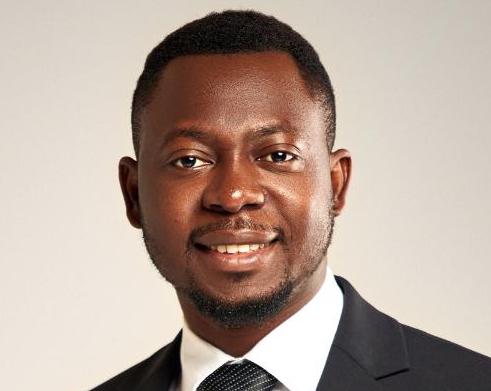
Eze Otisi N. Ikoro Agadagbachiri, Uzo Ndigbo Lagos State, is the Eze Udo Ndigbo, Ifako Ijaiye LGA Lagos State.