Follow Us on Google

• We’re working to professionalise medical aesthetics industry in Nigeria
By Christy Anyanwu
Bimbola Ige, CEO of Celeb Laser and Aesthetics Clinic, shares her journey into the world of medical aesthetics, from her background in radiography to building a successful clinic with multiple departments, including laser hair removal, Glutathione injections, and cosmetic dentistry.
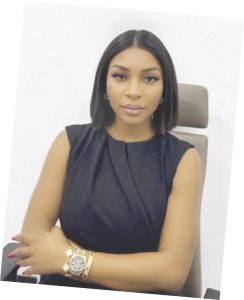
In this interview with Sunday Sun, she discusses her passion for education, her experience working with pharmaceutical companies, her mission to professionalise the aesthetics industry in Nigeria, and also she unveiled her latest laser machines.
Tell us more about the nature of your business
We have five different departments – the dental department which has cosmetics dentistry like laser teeth whitening. We also do skin polishing. The second department is our Glutathione department, where we do intravenous injections for Glutathione, vitamin C, B12, Gingkon, Vitamin Ds etc.
The other department is the laser department which we just opened now. The most popular procedure there is the laser hair removal. We also have the therapeutic department.
How long have you been in this business?
I started in 2011. I started in London. And then I moved the business to Nigeria in 2017. I have a medical background in radiography. I became very obsessed with lasers and laser hair removal because I myself had issues with ingrown hair and razor bumps from when I was a teenager. So that’s how I actually got in that aspect of medicine, of aesthetic medicine, because there was nobody to help me out there.
What’s your best selling procedure?
For now, our best selling procedure is laser hair removal. That’s our number one for now.
It changes sometimes. Like last year, it was laser teeth whitening. And then maybe two months ago, it was glutathione injection.
Glutathione injection helps your skin. It helps to brighten up your skin and helps the texture get better because it’s full of Glutathione. So glutathione has the most vitamins in the world. It’s kind of comparing it to moringa. It has 10 times more vitamin C than oranges.
I will explain it to you properly how it helps to brighten up your skin. The Caucasian people, our Oyinbo people, they used to use glutathione back in the day to help to refresh their bodies. They used to use it on people that had like cancers and stuff like that as well to give them like vitamins.
Then they realised that, wow, this thing is making us whiter. That’s the side effect of it. Because a lot of things have side effects.
But they didn’t like it because white people don’t want to get lighter. They want to get darker. That’s why they’re always under the sun in sunny countries.
But when Africans heard about that, they said, this side effect (whitening) is what we want. That’s how glutathione entered our markets.
That’s how it got even more popular than the people that brought it in, the white people. And that’s why it sells fast. It sells. it’s one of the best sellers.
So when I came in 2017, I’m sure our clinic was like, top three in the market then, because people did not know much about the aesthetics industry. It was still new.
Now, we have about 1,000 people doing it. So that’s different. So the market is extremely saturated, and there’s a lot of problems with the industry, with the old issue of regulations and stuffs like that, or people are not well qualified, have not done their training.
We’re trying to help with that, but it’s a lot of work.
I’m the president of Medical Aesthetics Association. It’s a lot of work to regulate the industry.
As president of the Medical Aesthetics Association, what are you doing to ensure professionalism in the industry?
Now, we have collaborated with the Ministry of Health. So they go to check everybody’s clinic, like every three to six months, to make sure that everything is clean and tidy, to make sure that they have the nurses and doctors on ground. You know, they have to have like qualified nurses. They check their licences, you know. So we’ve collaborated with LASUTH and Lagos State Medical School as well, to train people that we catch are not doing things the right way. So we send them back to school to go and do a course.
But obviously, you know, this is Nigeria. There will still be people like, obviously not doing the right thing. How do we see the people in Port-Harcourt? How do we see the people in Akwa Ibom? It’s hard to reach everywhere. It’s really, really difficult, to be honest with you. The Ministry of Health in other states are not extremely helpful. But the ones in Lagos, they’re very good. They go everywhere.
How did you really start?
I’m obsessed with education. In fact, I have about 75 certifications. Yes, including degrees. I was always studying because they made it easy abroad for us, to be honest with you. Sometimes we don’t even have to pay for education.
They will just bring it up and just say, okay, you can get this done for free. You can get this type of education for free. It might not be a degree or diploma.
It might just be certification. So I always went for every single certification that was going on. So when I finished from uni, I did radiography for my first degree. For my second degree, I did business management. So after that, I went in to work for Glaxo & SmithKlein
I went to Greenwich University. So when I left there, it was a struggle, because it’s always a struggle to get jobs everywhere, not just Nigeria.
But it wasn’t too bad for me because I’ve been working since I was 13 years old. They give you opportunities to work. You have to have experience. You must work. So that helped me a bit.
But I was still having odd jobs. I was working in McDonald’s a particular time. I met somebody that introduced me to someone in KPMG. And KPMG was like the biggest consultation financial group in London at the time. They were able to hook me up with GSK. And GSK is the biggest pharmaceutical company in Europe at the time. This was 2016.
So I was involved in one of their biggest projects. They employed me out of 125 people. That was when we merged GSK with the largest pharmaceutical industry in America. That’s Novartis.
I was the project manager in charge of that project at the time. I was able to navigate into a lot more and experience more on the medical field through that.
Because prior to that, the jobs I had were odd jobs that didn’t have anything to do with my qualifications.
So from there, I now learned laser teeth whitening. And I went from that to having about 45 different procedures. I was just going from one to the other.
After one year of doing laser teeth whitening, I saw that there’s a market in Nigeria. At the time, nobody was really doing laser removal.
I had a lot of issues growing up as a teenager. I picked a shaving stick one day and decided to shave all of my face, all to my feet.
I don’t know why I did it, but something made me do that, I think. And I started getting bumps everywhere. It was depressing. Every doctor I went to see said there’s nothing you can do about it. There was no solution at all. Because the lasers that were available back then, as of 2015, 2016, they were lasers for white people. If you put it on a black person’s skin, their skin would burn. It would be like they were in the fire.
So once the laser for black people came out, that time it took me like six months to pay for that machine. That first machine was like 35, 000 pounds. But I kept saving up and saving up and saving up to buy it and waiting to make the money back. It was a lot of back and forth because it was a risk as well. Because we were not sure whether this was going to work out or not.
Do these procedures have medical side effects and implications?
Yes, it comes with complications if it is not handled properly. The first thing we learn in medical aesthetics is contraindication. It’s very important. I mentioned earlier that if you do laser you are not allowed to use laser machines if you are pregnant. If you have epilepsy you can’t. It does have after effect just like botox and filler as well if it’s not done correctly.
How do you relax if you are not thinking about your business?
This year, God called me. I got to know Christ this year. I never went to church and now I have gone deep into the scriptures and I’m very close to God. Now, I see. I literally see. I had a calling the way Joseph in the bible had a calling, you see the way Moses had a calling. That’s the way.
If you saw me last year and you asked me my religion, I would just tell you that I believe in God. For me to be the one moving around with Bibles will make you know I have been through something crazy in my life. God is real, Jesus is real. It’s good to read the bible. And Jesus is coming soon.
Lesson you have learnt about life?
A lot. There are too many lessons. There’s a lot to life. Spirituality is number one. Ninety-nine per cent of our lives is spirituality. Only one per cent is physicality. So you don’t need to be worried about what is happening here. People that worry about the physical, once you attack the spiritual and take everything to God, you don’t have to do anything, everything will come to you. That’s the biggest secret to life. Everything is spiritual because there’s nothing that happens in the physical when it has not happened in the spiritual. We have so many demonic energy now; you can notice that people’s behaviour are different now. People have started behaving crazily. You can see that the people you helped are turning against you now. There’s a reason for it. God is coming very soon.