Follow Us on Google
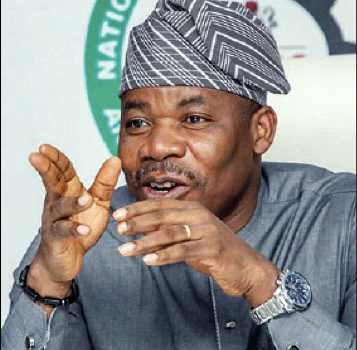
By Moses Akaigwe
The Director General of the National Automotive Design and Development Council (NADDC), Otunba Oluwemimo Joseph Osanipin, has called for the development of a robust domestic used-vehicle market that will reduce Nigeria’s continued dependence on imported used vehicles, popularly known as “tokunbo”.
Osanipin said Nigeria’s used-vehicle market should be built around vehicles originally purchased and used within the country, rather than relying almost exclusively on automobiles discarded or sold off by users in other countries.
The NADDC boss spoke when the Managing Director of The Sun Publishing Company Limited, Mr. Onuoha Ukeh, paid a courtesy visit to the Council’s headquarters in Abuja recently, accompanied by the Editor of the Daily Sun, Mr. Iheanacho Nwosu.
According to him, used vehicles are not inherently bad, stressing that the real challenge is Nigeria’s dependence on used vehicles imported from other countries, instead of developing an internal market in which vehicles circulate from one owner to another.
He, however, decried a situation where huge foreign exchange goes to the importation of hundreds of thousands of used vehicles – a good number of which are in terrible condition – are imported into the country.
Osanipin also described as a deterrent the prevailing situation where the high volume of ‘tokunbo’ vehicles outweigh the low number of products from the auto plants in Nigeria.
He painted a picture of what he met on ground upon assumption of duties as the NADDC Director General in October, 2023, saying, “When we came in, we knew that we were facing a lot of challenges in the automobile industry. And we knew that we could not surmount the challenges in the next three, four, five years, or even 10 years.
“But we knew we had to start from somewhere and start laying the foundation towards tackling the challenges. And that was why we first identified the challenges after consultations with industry experts and all the stakeholders.
“We identified the majority of the problems and summarised them into three.”
He identified legislation, lack of consumer credit and the issue of used vehicles as the three major challenges confronting Nigeria’s automotive industry.
On legislation, Osanipin explained that the automotive sector requires huge investments and long-term planning, making policy stability critical to the survival and growth of businesses in the industry.
“The automotive sector requires a lot of funding. It is very competitive. So, it is not something that you can say you want to just leisurely try; if it works out, fine, and if it does not work out, fine.
“The way the automotive industry is, you have to get it right from the beginning, because for you to have a very good assembly plant, it takes several billions of naira.
“If you want to know whether what I am saying is the truth or not, go and check the second factory Innoson (Vehicle Manufacturing Company Ltd) is building in Nnewi. Apart from the cost of the land, they must have spent billions in erecting the structures there. Then, when you add land and equipment, you would now understand how difficult it is to invest that kind of huge amount.
He noted that it takes a lot of courage to invest in the automotive industry, because a policy shift, which the Council is trying to obviate through the Nigerian Automotive Industry Development Plan (NAIDP), could result in a huge investment “going down the drain..”
Auto policy
Osanipin explained that the NAIDP, a document developed by stakeholders in 2023 to drive the automotive sector, was conceived to provide a more predictable policy environment.
He explained why efforts are being made to ensure it is not vulnerable to unnecessary changes, saying, ““One way it will not be easily changed is if it is the product of legislation. Somebody can argue that China’s auto industry does not have this kind of legislation. But the reality is that in China, it is the same government that has been there for so long that is still there today. So, there is continuity.
“They are not going to wake up one morning and change their policy the way we do our own.”
Osanipin, however, disclosed that the Council was already working on a new draft of the NAIDP, which would be subject to further consultations with stakeholders before being forwarded to the Ministry of Justice.
“Where we are now on our NAIDP is that we already have a draft. In the next few weeks, the stakeholders will be meeting to critique it and then make inputs before we move forward and send it to the Ministry of Justice.
“We had earlier sent it to the Justice Ministry. They made a lot of comments and said we should correct one or two things, especially where there were overlapping roles between the existing laws and the new tax law.
“So, because of that, they returned it and asked us to wait until the tax law was out. When the tax law was out, then we had one or two other areas to fine-tune, especially pioneer status.
“But in the process, we noticed that a lot of things have changed since we put it together, so we are now doing another review. We have discussed it with the National Assembly. We have also discussed it with the Presidency and the Chief of Staff, and they are eagerly waiting to see what we have done.”
Consumer credit: The missing link
The second major challenge, according to Osanipin, is consumer credit, which he described as critical to the development of a vibrant automotive market.
He noted that vehicle purchases in advanced automotive markets are largely financed through specialised automotive finance companies, unlike Nigeria where consumers make outright payment for vehicles and sometimes almost entirely in cash.
“Nowhere in the world, apart from maybe Nigeria and a few other African countries, do we see people buying vehicles with 100 per cent full payment or in cash. It is not done.
“And if you want to borrow money to buy a vehicle in Nigeria, commercial banks will not do that. But if you go to Japan, the biggest financier of automobile purchases is a company known as Toyota Financial Services.
“If you go to South Korea, the biggest one is known as Hyundai Financial Services. If you go to China, the biggest one is owned by GAC.
“In fact, each of these finance companies is bigger than banks in Nigeria. They basically finance automobiles, most likely their brands. And it makes it easier for them to finance vehicles and give credit.
“Unfortunately, here, our banks want to give credit at 30 to 35 per cent interest rate, even to do genuine business, let alone finance your comfort.
“So, it will be very, very difficult not to talk of buying vehicles that are going to depreciate. You cannot be paying interest at 30 to 35 per cent. It will not make any sense.”
He said the Council subsequently approached the Presidency after consultations with experts and stakeholders, leading to efforts to address the challenge through the Nigerian Consumer Credit Corporation (CreditCorp).
“Luckily, CreditCorp came to be, and we are working with them gradually to make sure that the greater percentage of the funds available to CreditCorp is devoted to automobiles.
“Even recently, we were sitting together, putting finishing touches to the expected fund, because we can see more funds coming in to support, apart from the initial N20 billion, which we are devoting to automobiles.”
Tokunbo challenge/ Building Nigeria’s own used-vehicle market
But perhaps the most significant challenge identified by the NADDC boss is the structure of Nigeria’s used-vehicle market.
Osanipin argued that Nigeria should stop looking at used vehicles as a commodity that must continuously be imported from other countries and instead create a system in which vehicles bought new in Nigeria can subsequently become part of a thriving domestic used-vehicle market.
“And the third one is the issue of used vehicles, or tokunbo. A used vehicle by itself is not bad. But it is bad if it is coming from another country to your own country.
“Used vehicles flourish in South Africa, but all the used vehicles in South Africa are generated internally. In most of the other countries too, their used vehicles are generated internally.
“In Nigeria, the difference is that ours come from outside, and that is where the problem lies.”
He explained that a properly developed domestic used-vehicle market would allow vehicles to circulate within Nigeria for many years, creating value for successive owners while reducing the need for continuous importation.
“If we buy a new vehicle, use it for two or three years, and you think a new version is out, you sell it. By the time other people do the same, an internal used-vehicle market is created.
“Some people may have the funding to buy the third generation. When I say third generation, I mean the first person uses the vehicle as new and sells it after three years. Another person that can buy a three-year-old vehicle buys it, uses it for two years — that is a total of five years — and then sells it to a third user.
“So, this way, new vehicles circulate within the same system as used vehicles.”
According to him, such a system would not only deepen the domestic automotive market, but also make vehicle ownership more accessible to Nigerians who may not be able to afford new vehicles.
Other News
However, he noted that for this model to work effectively, Nigeria must develop a reliable vehicle-history and information system.
“And for that to happen, and for the used market to grow, you need information on the history of each vehicle, because if you want to buy, you want to know the date it was bought.
“You want to know the kind of maintenance done on it. You will like to know whether it has been involved in an accident before.
“Unfortunately, we do not have such data bank. So, what do we do? We have to develop something on our own.”
To this end, the NADDC recently launched in Lagos the much applauded National Automotive Repository Platform (NARP) which will be integrated into the National Vehicle Registry (VREG) of the Federal Ministry of Finance and Nigeria Customs Service’s platform.
“What this means is that as vehicles are coming in, we monitor those vehicles. Also, as they register those vehicles, we have to feed their details into the system.
“So, part of what we are working on later on is to ensure that everything that happens to vehicles is captured so that we can have the history of the vehicles.”
Components: The engine room of automotive industrialisation
Beyond the three major challenges, Osanipin said the NADDC was also focusing on local component manufacturing, which he described as the “engine room” and a major driver of the automotive industry in any country.
“The major one is component parts development. The components are the engine room, the major driver of the automotive industry in any country, and we are very conscious of that at the NADDC.”
He cited his experience during a visit to South Africa, where he saw the extent to which component manufacturing had been integrated into the automotive production ecosystem..
According to him, automotive component manufacturing is clearly more employment-intensive than vehicle assembly, with the potential to generate up to 10 times more jobs across the value chain. Similarly, it was observed that auto component manufacturing consumes significantly more energy than auto assembly.
It was in recognition of this importance that the NADDC started identifying components that could be manufactured locally and at competitive costs.
“By the time you now realise that we use almost 2,000 to 3,000 parts in a vehicle, you will understand how complex it is. You can now do the multiplying and do the mathematics.
“When we came in, we started identifying what components that can be produced in Nigeria”
According to Osanipin, this is why the NADDC has visited several states, particularly Lagos and Anambra, to identify clusters and businesses with the capacity to manufacture automotive components.
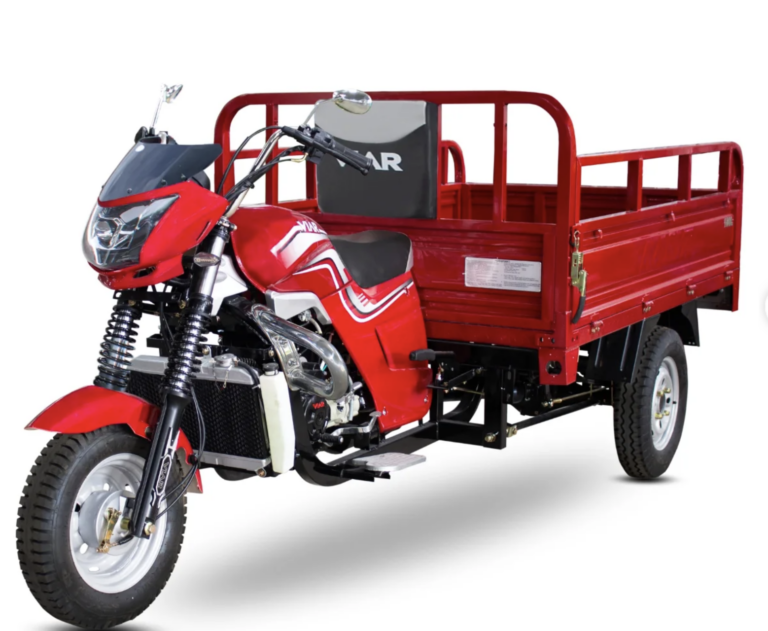
And one of the outcomes is, “We noticed a company that can do motorcycle and tricycle tyres,” while another massive plastics manufacturing plant in Emene, Enugu State, has the capacity to produce different types of (plastic) products for automobiles, homes and other applications.
“We have only two of those plants in the whole of Africa. I am not the one that said it. It was a team from the African Association of Automotive Manufacturers (AAAM) during their visit to some auto companies in Nigeria (including the one in Enugu.”
Osanipin said the high quality of locally manufactured components also needed greater public awareness.
“A lot of Nigerians will look at the bumper from that company in Enugu and say, ‘It is a Nigerian-made bumper.’ But this is the same bumper that we import from South Africa and from different parts of the world.
“Meanwhile, the one from Nigeria is better and far more solid. So, that is part of the areas where we need more sensitisation.”
Motorcycle parts, batteries and local-content
He said the Council recently identifued components that could be produced locally at a comparative cost advantage, leading to the launch of its motorcycle parts deletion programme.
“We started with a motorcycle parts deletion programme. A lot of the things on motorcycles can be produced locally.
“The tyre can be produced locally. Almost every other part, apart from the engine, can be produced locally. So, we have launched a deletion programme.
“What we need to focus.on now is how to make each part adaptable to the product or brand we have here in Nigeria, which we are working on. So, with that, we just want to take it step by step.”
The NADDC boss said the Council had also conducted sensitisation programmes and workshops on tyres and batteries, which revealed significant gaps between local production capacity and domestic demand.
“We have done sensitisation and workshops on tyres as well as on batteries. And those were eye-opening.
“Because after we did the battery programme, we saw a lot of people that came up. And then we saw a lot of batteries that can be manufactured in Nigeria. They told us their capacity.
“What we heard is that Nigeria is using about 120,000 batteries every month. But what we can produce in Nigeria as of today is less than 20,000.
“So, what that means is that we need to build that capacity up a bit before we can come up with any serious policy that will limit that importation; otherwise, there is going to be a gap.”
AfCFTA and rule of origin
He stressed that Nigeria could not afford to slow down its local-content drive, particularly with the African Continental Free Trade Area (AfCFTA) creating opportunities for Nigerian-made automotive products to access other African markets.
“We cannot afford to slow down now, especially with AfCFTA, the African Continental Free Trade Area, coming up, bearing in mind that that is what the 40 per cent rule of origin is all about.
“The 40 per cent rule of origin emphasises that you have to have 40 per cent local content before they can allow you to move an item to another country without a trade barrier.
“So, these are the things we have all identified, and we are encouraging them to improve.
“One of them has promised to improve its capacity to 35,000 every month.”
Skills certification: Rewarding Nigerian automotive talent
Osanipin also underscored the importance of skills development and certification as part of the Council’s strategy to build a sustainable automotive industry.
He said Nigeria has a large pool of people with automotive skills, but many of them lack formal certification, making it difficult for them to receive the level of recognition and remuneration their expertise deserves.
“We have people that have different skills in automobiles, but they are not certified. And because of that, their skills are not well rewarded.”
For the NADDC, he said, developing the automotive industry therefore goes beyond assembling vehicles.
It requires a stable legislative framework, accessible consumer credit, a strong domestic used-vehicle market, reliable vehicle-history data, local component manufacturing, increased local content, skills certification and the capacity to compete within the emerging African automotive market.
Osanipin acknowledged that these challenges could not be solved overnight, but insisted that the foundation must be laid now if Nigeria is to move from being predominantly a consumer and importer of vehicles and components to becoming a genuine automotive manufacturing and production hub.
The emerging strategy, therefore, is not simply about producing more vehicles locally. It is about creating an entire automotive ecosystem in which new vehicles are assembled or manufactured in Nigeria, components are increasingly sourced locally, financing makes vehicle ownership more accessible, skills are certified and rewarded, and vehicles remain within the domestic economy long enough to create a vibrant used-vehicle market.
In that ecosystem, the Nigerian motorist would no longer have to depend overwhelmingly on a steady stream of used vehicles arriving from overseas.
Instead, a vehicle bought new in Nigeria could pass through several Nigerian owners over its useful life, generating value, supporting businesses and creating jobs at every stage of its journey.
That, ultimately, could turn Nigeria’s huge appetite for used vehicles from an importation challenge into an opportunity for domestic automotive growth.