Follow Us on Google
By Oluseye Ojo
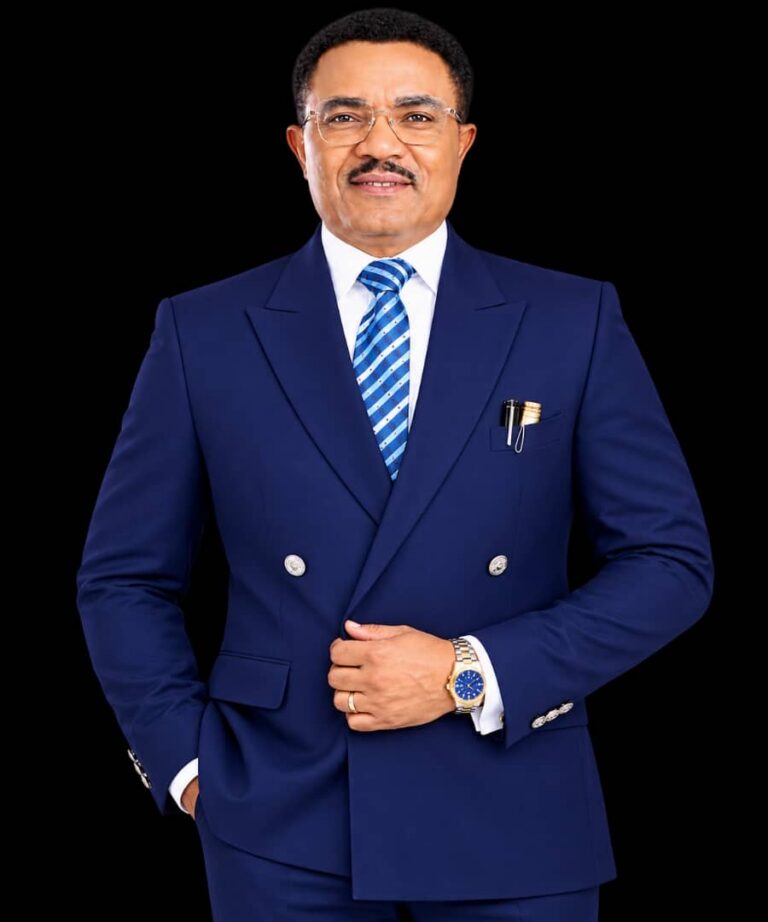
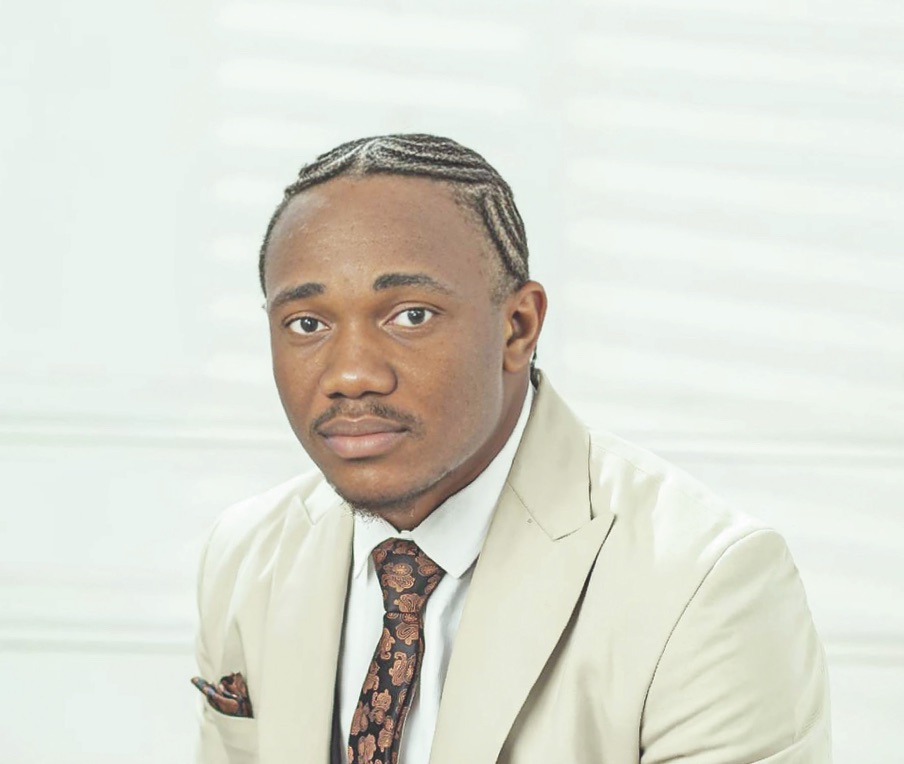
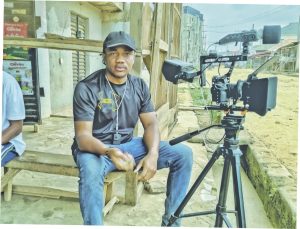
Aderemi Davies, also known as AyaworanHO3D, is a talented Nigerian creative documentary photographer, filmmaker, visual content developer, and Principal Partner at HO3D Nigeria.
He’s a two-time Best Documentary nominee at the Africa Magic Viewers Choice Awards (AMVCA) in 2018 and 2020 with his documentaries ‘OMIDAN’ and ‘Against All Odds’ respectively.
In this interview, Aderemi Davies shares his passion for storytelling, his journey as a creative, and his vision for Nigeria’s cultural heritage.
He believes that Africa’s simplicity and naturalistic approach to life is not a sign of inferiority, but rather a reflection of its unique understanding of the universe and forging a harmonious relationship with nature.
He also speaks on the power of collaboration to guard against mediocrity in respect of products from the creative industry.
As a renowned documentary photographer and filmmaker, can you tell us what sparked your interest in capturing the stories of Africa and its people?
Firstly, I must say having the opportunity of being raised in a family like mine really gave me a strong foundation as a media professional.
My parents are veteran broadcasters, who did a lot in the media and broadcasting space and this gave me and two elder brothers a lot of exposure into the field while growing up. However, for me personally as a creative person, I strongly believe that story telling through the media is a powerful tool in shaping our societies and our future.
So, much can be told about our societies, cultures, people and events that will help shape global narratives and the future of our society. Hence my drive is to use my photography and filmmaking to change the widespread negative narrative about my country Nigeria and Africa as a whole by showing the world that there’s more to us beyond the circulated stereotypes, through powerful and compelling stories of good people doing great and laudable things.
Africa is also a very beautiful place with great cultures and tradition that the world needs to see and we cannot exhaust these.
Your work often celebrates African indigenous values, cultures, people, places, arts, and identity. What message do you hope your audience takes away from your documentaries and photographs?
Cultural identity. We live in a global village right now where cultures and ideologies are constantly interacting. You can see and learn about any nation and culture from the comfort of your living room and you can also be greatly influenced by this information so easily.
Every nation is selling their culture, religion and practices to the world and it is beautiful and inevitable. Africa, in the course of history, has always been on the receiving end, a dumping ground for different cultures and we just accept everything and forget our own.
It is therefore very integral for us as African creatives and storytellers to aggressively push our stories, narratives, cultures and systems to the global space to show the world what we have and to also instil a strong sense of cultural identity in our people so that we don’t forget who we are in the midst of the massive cross-cultural interactions going on globally.
You’ve had a successful career, with two nominations for Best Documentary at the Africa Magic Viewer’s Choice Awards (AMVCA). What drives your passion for storytelling, and how do you stay inspired?
For me, my biggest dream as a storyteller is to see Nigeria become truly great again and respected in the global community. It is so difficult to be a Nigerian right now in the world. We have lost dignity as a people and our passport – a major element of our identity, now commands little or no respect.
Being a global citizen with Nigerian descent is tough and highly disadvantageous. This didn’t happen overnight. It is as a result of many years of negative narratives spread widely by international media.
While I would not deny the fact that we have our shortcomings as a nation, which is in no small measure, we must however understand that there is more to us than these terrible things we are constantly labelled with.
There is more to us than cybercrime, corruption and bad leadership. We have great people doing amazing things in different fields. We have beautiful cultures and ethos. We have beautiful landscapes and rich nature. We should also be celebrated for these.
Hence, I believe that perhaps if we start pushing those positive sides to us globally, maybe someday soon or in years to come, Nigerians will no longer be looked down on as criminals or corrupt people; we will no longer be asked to file on a separate line at airports for special searching; we will no longer be banned from certain platforms; our youths will no longer be profiled as fraudsters and we can have access to compete for opportunities fairly in the global scene without being misjudged. It starts with one story at a time.
How do you balance the creative and technical aspects of your work as a documentary photographer and filmmaker?
I believe creativity and technicality go hand in hand. Most times you require a great deal of technicality to communicate your creativity. This has never been an issue for me. Creativity is superficial, non-tangible. However, with the right technical know-how, you can bring your creativity alive for people to see.
For instance, your creativity may spark the desire to convey some certain emotions in a particular scene in film to give some depth, you however need technical understanding of how to combine cinematography, lighting, and directing to skills to convey that emotion for your audience to understand.
Also, there is the dimension of understanding the limits of your technical abilities to be able to deliver the scope of your creativity. For instance, you are conceiving a sci-fi film when you don’t have the technical capacities or resources to deliver the required visual effects, you will run into problems.
Your documentaries have been screened at various film festivals and TV channels, both locally and internationally. What’s been the most memorable experience you’ve had with one of your projects?
Watching my documentary OMIDAN; Styles Defunct announced as one of the Best Documentary Nominations in 2018 for my first AMVCA nomination is one memory that I would never forget. I screamed when I saw it during the announcement programme.
Of course, I was the one who submitted my film during the open call but I had some challenges submitting the main file and eventually had to submit an abridged version of the documentary, which was just five minutes, so I didn’t even think it would go far.
Also, the beautiful thing about the AMVCA nomination is you don’t get any notification ahead, everyone sees their result during the special announcement show on TV. That’s where you get to know if you were selected.
So, seeing my name that day, I was shocked and full of excitement. I screamed so loud that my brother had to rush in to find out what had happened. When he saw it himself, he joined me in the celebration immediately. It’s one experience I can never forget easily.
As a Nigerian, how do you think the country’s rich cultural heritage can be better preserved and promoted through arts and media?
A wise man who happens to be my mentor, Prince Tunde Odunlade, a great artist, once told me that culture and arts are the only finished products we export from Nigeria to the world. According to him, every other resource exported from Nigeria still has to be processed when they get out there, but when we export our culture and arts, they leave as finished products ready to be consumed.
This means that when our films, music, arts, clothes and so on, are taken out of the country they go as finished work, ready to be consumed. This shows the power of art and media if channelled and promoted rightly.
We are currently experiencing a wave of well-produced epic movies in Nollywood, which are enjoying wide acceptance globally and lots of accolades. This shows us how much the people are ready for these stories internationally. A lot can still be done through government involvement and some private-public partnership.
Also, media practitioners and creatives generally need to understand that we need to own this space more than ever. Stories of our cultural heritage need to be shared with the world to show who we are and our deep cultural identity. No one will do this for us; it’s our duty to not only showcase our cultures but preserve it for generations to come.
Our culture is what the world wants to see from us; that’s our uniqueness that they want to connect with.
A white man doesn’t need you to be him, neither can you be more Indian than an Indian himself. What they want to see in us and be marvelled by is our originality, our culture and traditions. This is what we need to project to stay relevant in the global scene.
Other News
You’ve worked with various clients, from private establishments to government parastatals, NGOs, corporate organisations, and growing brands. What’s been the most challenging project you’ve worked on, and how did you overcome any obstacles?
Photographing the Oyo State First lady, Mrs Tamunomini Makinde for straight 72 hours to execute 50 looks shoot for her 50th birthday a few years ago. I collaborated with my friend and protégé, Ogunyemi Debo, who was then the official photographer to Governor Seyi Makinde, and another amazing photographer friend of ours, Adetoyese.
We shot for three days at the state house along with three of our interns and it was quite a lot. The experience really drilled us. It was equally a fun experience as we had an amazing time working with the First Lady and her aides and we were hosted well at the state house for the three days.
The major challenge was being able to sustain the creativity to shoot 50 different looks without each shot looking the same and we were able to pull this off because we collaborated. Everyone on the team brought in their ‘A Game’ and we had a lot of ideas to work with. That’s the power of collaborating. No one knows it all.
Yes, all three of us were masters of the craft and we had some talented interns as well, but coming together and putting ideas together made it easier to pull of such voluminous shoot. It was also easy to deal with the stress as a team.
Another experience was when I had to lead a 12-man photography team to document the dedication ceremony of the 30,000-seater auditorium and complex of the Deeper Life Church in Gbagada, Lagos. It was such a hectic one and an eye opener for myself and my brother, Adefemi Davies, who is my partner at HO3D Studios.
We run the outfit together as principal partners and he happens to be my personal coach, who I learn a lot from. It was our first time documenting an event with such a crowd and such calibre of invited dignitaries.
The then Vice President, Prof Yemi Osinbajo, was there along with several fathers of faith, business moguls and government office holders. There was also a huge media presence, though we were the official photography company hired by the agency in charge of the event – Prima Garnet.
Personally, it was my first time shooting on such a stage and setting but I had to brace up. Of course, we’ve shot different events with high profile personalities and clients before but this was on another level. It’s one experience I would never forget.
Your photos have been exhibited at the United Nations Headquarters and other places. What was that experience like, and how did it impact your career?
It is the dream of every creator and artist to have their work go to places even they haven’t reached and this only comes by the Grace of God. Yes, we put in the work but Grace amplifies your efforts and takes it global.
This is my opinion as a Christian creative. It’s been a great privilege over the years to enjoy the opportunity of my works leaving the shores of this country and making impact even in places I have not reached.
Having my work exhibited during the Fifth International Day of Women and Girls in Science Assembly at the United Nations Headquarters in February 2020, was a testament that yes, I know what I am doing and God is taking me even to heights I can’t think of yet.
After the event, one of the attendees who was an Indian lady based in the United States, reached out to me via email and shared the testimony of how my photograph that was exhibited had impacted her and was the highlight of her attendance at the conference.
This was such a humbling experience for me and a huge motivation. She later did a feature for me on her blog and held a virtual interview on her channel. The video is still on YouTube and the feature is still on her blog.
As someone who’s passionate about celebrating African identity, what do you think are some common misconceptions about Africa and its people that you’d like to challenge through your work?
One thing I have been privileged to understand about Africa over my years of researching the black race and culture, both as an artist and a scholar of African Traditional Religion (I have an MA in African Traditional Religion from the Department of Religious Studies, University of Ibadan) is that our simplicity and more naturalistic approach to life, in terms of our technology and exploration of the universe is not as a result of us being lesser or mediocre, it is guided by our understanding of the universe and our religious systems.
I will elaborate. Now, we all believe that the Western world is more advanced than us and that we were crude and not technologically advanced till the white men came. But I have come to learn that it is not exactly as we see it. We aren’t exactly inferior in technological advancement. We only had a different understanding of our place in the universe and how man is meant to interact with nature.
For the white men, the interaction of man with the universe is that of ‘dominance, humankind is king, the most superior being, and we have dominion over all things in the universe.
This is why you see the way western technology interacts with nature is exploitative. Everything is believed to be at the service of man and we can take, exploit, manipulate as we like. But for the African, the worldview is different. Man is not superior or better, we are all existing realities serving different purposes and playing our different roles in the sustenance of nature and the universe.
Therefore, man has no right to destroy nature because he wants to invent something to solve his problem. If he has a need, for instance, he needs herbs for healing, the medicine man can’t just go into the bush to destroy a plant to make his medicine, he has to negotiate with the plant for permission to take the herb to do his business.
Another example, when we build small mud huts to live, we do so because we respect that mother earth, ‘Ile’, is an existing reality like us and should not be burdened by too heavy structures all because we want to live on her. So, we build small huts with the same material as earth itself. Skyscrapers are good but what happens to the earth. Who carries them?
This is a very broad concept that I cannot exhaust in the scope of this interview, and oh yes, I know many people will disagree and come for me.
How do you think Nigerian artists and creatives can better collaborate and support one another in promoting the country’s cultural heritage?
Collaboration is the new oil. As they say; when you go alone you go fast, but when you move together, you go far. The need for collaboration cannot be overemphasised, the major reason being that, Nigerian art and media space has really advanced and also our reach now is global.
The eyes of the world are on us and what we turn out and the market is always available. The time of turning out simple and mediocre products is gone because we now serve an international audience. So, now we need to pull resources together to be able to deliver international standard products, that’s the only way we can meet up with expectations.
See the film and music space for instance, Nollywood has gone beyond just servicing Nigerians, it’s now a global market and the expectations are high. So, filmmakers, production houses, distributors, marketers, content creators, everybody has to come together to create international standard films that can compete on any stage. Even the local audience are now so exposed and won’t take mediocrity anymore.
So, filmmakers have to collaborate to create a kind of quality that will make people go to the cinemas to watch.
In the music space as well, we see artists taking Afrobeat to the ends of the world, projecting our sound, culture and image. This can’t be possible without collaborations. Artists must work with each other to pull the audience; even across industries, we see great collaborations happening. We see creatives in music, film, fashion and performing arts coming together to create powerful projects that will take the image of the nation to global heights. This is how we can keep breaking barriers and moving mountains.
The government also has to be involved in these collaborations, private multinationals and establishments are also not left out. Creatives need funding and sponsors to bring their visions alive.
What advice would you give to young and aspiring documentary photographers and filmmakers in Nigeria, who are looking to make a name for themselves in the industry?
Passion is the number one thing. If you are not passionate about it don’t even start. Yes, the fame, recognition and rewards will come over time, but the primary thing that keeps you going before you start reaping benefits is passion and genuine desire to make impact.
I also want to advise creatives to understand the power they carry. We are not just doing this for ourselves, but everything we turn out shapes the future and affects the image of our nation, either positively or negatively. Nigeria has suffered so much negative representation and that is really affecting us all now. So, as a creative and storyteller, understand that you are an image maker as well and what you do in its little way contributes to what becomes of us all in the future.
What’s next for you? Are there any upcoming projects or initiatives that you’re working on that you can share with our readers?
Yes, I have a new documentary, which I recently premiered and it’s one dear to my heart. The title is BAMBOLA.
It is a documentary film that addresses the issue of plastic waste and environmental pollution from a unique perspective.
By giving a voice to the underrepresented community of informal plastic waste pickers in South West Nigeria, a group of young individuals widely mistrusted and harassed as criminals, the documentary highlights from a balanced perspective the vital role they play in saving the planet by feeding our growing recycling industry and proposing solutions towards a safer integration of their hustle into our communities.
The documentary examines the tensions between the benefits of recycling culture and community fears that these scavengers may use their activities as a cover to trespass and steal. Through balanced storytelling, the documentary presents both sides of this important societal debate—one that affects urban communities across the country.
It’s currently going to festivals and private screening but will soon be publicly released on my YouTube channel, @ho3dstudios. I am also currently working on a short film which will be out soon.