Follow Us on Google
By Ngozi Nwoke
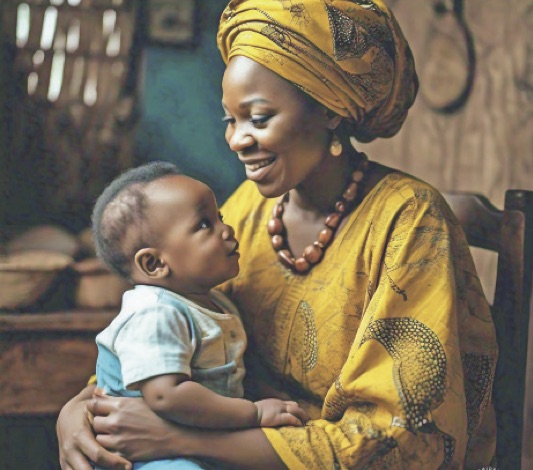
Miriam Ojukwu, a single mother of one child is in her early 30s. Focusing on her child’s well-being, personal growth, acquiring more skills, developing a business, and support from family have helped her as a single parent to persevere. As a single mother, she has faced countless challenges that would test even the strongest of wills, which embodies resilience and determination. But despite the obstacles, she has risen above them all.

Ojukwu’s journey began with the daunting task of raising her son alone, a responsibility she had shouldered with courage and devotion. Financial struggles and societal stigma have been some of the challenges she has to live with but she has refused to let them define her. Instead, she’s channeled her energy into creating a better life for herself and her son.
As she navigates the complexities of single parenthood, she has discovered a strength within herself that’s remarkable. She’s learned to prioritise her son’s well-being while also nurturing her own personal growth.

“As a single parent, I have faced numerous challenges, including financial struggles, societal stigma, and the demanding task of raising my awesome son alone. It has been a challenging yet transformative journey. I have learned to navigate societal expectations while focusing on my son’s well-being and my personal growth.
“Financial independence is crucial, yet opportunities for women, especially single mothers, are limited. Society tends to judge single mothers harshly, with cultural expectations placing undue pressure on women to conform to traditional family structures. Being a single parent has brought me immense rewards. Watching my beautiful son grow and thrive is a source of unparalleled joy and pride. This journey has shaped me into a more compassionate, resilient, and resourceful individual.”
Despite the many challenges she had faced, the ordeal of the resilient mother is one of hope and triumph.
“For single parents in Nigeria to thrive, certain support systems and resources are vital. Affordable childcare, access to quality education for children, and job opportunities tailored to women’s needs are essential. We need community-based initiatives that provide mentorship, creating spaces for networking, counselling, and skills acquisition programmes can make a significant difference. Religious and cultural leaders could also play a role by addressing societal stereotypes and encouraging acceptance.
“A cultural shift of supporting single mothers is also necessary. Society must recognise the strength and value of single mothers, moving away from judgment and focusing on inclusivity and empowerment. Although there is still much to be done to support single mothers, the experience has taught me resilience and strength. With the right support systems, policy changes, and societal acceptance, single mothers can thrive and continue to contribute positively to their communities.”
For 35-year-old Edna Odigwe, a single mother of one, the most significant challenge of being a single mother is the societal shame and prejudice.
She explained that “having the right mindset that you need to let go of what has happened, putting the past behind you to be able to build yourself, educationally or career-wise to train your child or children in the best environment is a major issue for a single mother.
“If I would count the disadvantages of being a single mother, it may hip up so much that it runs over the benefits. The challenges stretch your strength so thin so much that if you are not careful, you are back to square one. Everyone suddenly forgets you are beautiful, young, ache for care and affection like everyone else, can still make several mistakes even while dealing with life as a single mom, because you are still human and not perfect, and in some cases might still be naive depending on the age you had your child.
“Single parents cannot cope without a support system either from family, society, or government. These three levels play a major role in the development of a child. My immediate family is a huge support system. My parents and siblings made sure I finished my university education and even furthered my education so as to be able to support my child. I am a UK Master’s degree holder and an NHS worker because they still saw me as that bright girl.
“Despite my circumstances, they did not give up on me. But the society and government in Nigeria failed me in the sense that Nigeria pets men in their iniquities, and the power play of men in Nigeria does not favour women at all.
“There is indeed a welfare system set up for men to take up the financial responsibility for their children, but it is not effective because the judiciary has no strength to enforce that law. Men have walked away free after many women have become exhausted from dragging these cases for years with no positive results.
“In the Nigerian society, some cultural backgrounds shun men for such acts, but in some other cultures, it is a norm. Nigeria is made up of multi cultural facets, which makes it difficult to depend on society to create a positive change. The government has to enforce the need for co-parental support for a child’s well-being, especially from a father.”
For Francis Ola, a single father in his 40s, being a single parent is a lot of hard work. According to him, one of the most important aspects many single fathers contend with is the issue of making time for children who require attention during the day. Children are dependent on nature, and any lapse in their supervision can affect their development.
Ola explained that emotional exhaustion is a common issue among single parents and often leads to chronic stress. Another major challenge, he observed, is financial instability as raising children on a single income can be overwhelming.
“Stigmatisation is a significant issue for single parents in many cultures. Single parents are often viewed as part of an ‘incomplete’ family or unfairly blamed for their circumstances. Single fathers may face scepticism regarding their care-giving abilities, while single mothers often encounter unrealistic expectations.”
On the flip side, Ola believes that despite these challenges, single parenting has its rewards. He said: “Many single parents develop deep connections with their children due to their undivided attention and shared experiences. The journey fosters personal growth and resilience, as single parents learn to overcome obstacles, build discipline, and adapt to new challenges.”
“Creating a supportive society for single parents requires a multifaceted approach. Policies that support workplace flexibility, such as remote work options, flexible hours, and childcare benefits, are essential. Financial assistance programmes and subsidies for single parents can alleviate economic pressures.”
Addressing the effects of single parenting on the child/children’s development and societal implications, child therapist and psychologists have stressed that single parenting requires a comprehensive approach, which includes an increased access to resources, social support systems, and community engagement.
They are of the opinion that promoting greater understanding, acceptance, and support will help create a more inclusive and supportive environment for single parents and their children in Nigeria.
Clinical Psychologist, at the Crusade for Greater Nigeria and Rehabilitation Ltd, Kugbo, Abuja, Mr. Nuhu David, said that children from single parents are poised to face varying psychological issues as a result of the nature and family structure they come from. He warned that when there is a gap in parenting, the child suffers increased frustration, anger and lack of social connection, which could destabilise their mental well-being and emotional state.
He noted: “Life generally is a balancing act, but when challenges occur and the demands are not looked into, it can have a devastating effect on the child. The needs of these kids are not met as a result of dysfunctional family or perhaps a single parent predicament where a parent lacks ways of balancing between seeking flexible working arrangements, achieving care – work harmony or develop adequate social life experiences.
“Support is critical when it has to do with single parenting towards a child, depending on who is missing in the equation. Healthy support networks must be built around such children, such as friends, teachers, and caregivers, so as to help eliminate or minimize the impact of sudden emotional or psychological blows. These effects have proven to have an after-effect later in the life of a child.
“It is also quite essential for single parents to look after themselves by balancing their immediate needs alongside the needs of their kids. Remember, when the parents are both there, the job is always lighter, but when it happens, the other way around the challenges is more.
“As such, in order, to enhance resilience and better coping techniques, a parent must appreciate and embrace his or her current status first. Furthermore, it is important to engage in broader support network such as sport lessons, parties, relaxation techniques and community function that could engage both the child and parent, thereby creating a balance.”
Christabel Arinze, a child therapist at Infantry Care Psychology Clinic in Enugu, also shared her opinion on the effects of single parenting.
“As a child therapist, I always point out that single parenting can have various effects on children, including emotional, psychological, and social impacts. Children may experience increased anxiety, emotional instability, and low self-esteem. They may also struggle with social relationships, academic performance, and trust issues. However, I must emphasise that many children from single-parent households thrive and develop into well-adjusted individuals.
Factors that can mitigate the negative effects of single parenting include supportive family and friends, positive role models, open communication, and stable routines. My approach is to work collaboratively with the child, the single parent, and other support systems to develop strategies that promote emotional resilience, social competence, and academic success for the child.”
From the experiences shared, single parenting in Nigeria presents numerous challenges such as financial struggles; managing household expenses, education, and healthcare costs on a single income, down to emotional burdens; balancing work, parenting, and personal life.
Experts believe that single parenting often leads to stress, anxiety, and burnout, plus facing social stigma; judgment, gossip, and ostracism due to cultural and traditional norms.