Follow Us on Google
By Adebowale Johnson
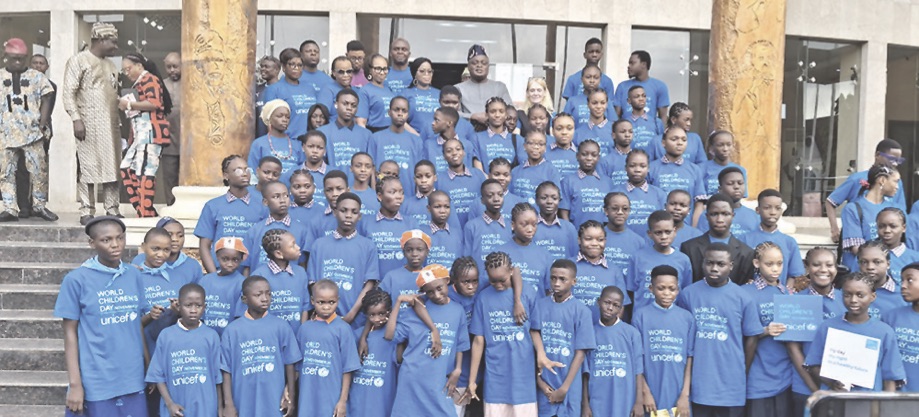
In commemoration of World Children’s Day 2025, the Lagos State House of Assembly opened its chambers to an unusual set of voices: schoolchildren who came not just to observe governance, but to shape it.
The event, a landmark Children’s Policy Dialogue convened by UNICEF in collaboration with the Lagos State Ministry of Youth and Social Development, carried a theme that captured the spirit of the day: “My Day, My Rights.” More than a slogan, it became a rallying cry for young people demanding a say in decisions affecting their everyday lives.
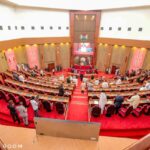
The Assembly complex buzzed with excitement as students from across Lagos State filed into the hallowed chambers where motions are debated and laws are crafted. For many, it was a first-ever encounter with democratic procedure, a front-row seat to live lawmaking, complete with debates, motions, and deliberations among elected officials.
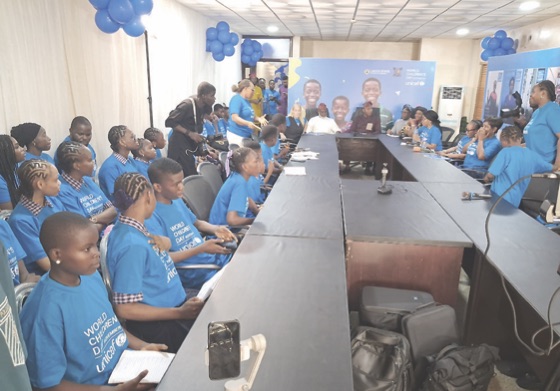
This rare exposure was not mere observation, as the students conducted a mock parliamentary session, led by the elected children’s Speaker, 16-year-old Abdulsalm Anjolaoluwa of Oriwu Senior Model College, Ikorodu. There, the voices of children rang with clarity and urgency.
One after another, the young parliamentarians articulated issues that shape their lives realities, the quality of education, digital classrooms, mental health pressures, clean water and environment, unsafe digital spaces, child protection gaps, and the urgent need for safe recreational facilities.
Their tone was earnest, their demands specific, and their message unified: children want to be seen, heard, and protected.
The legislators, visibly impressed, engaged robustly with the children’s concerns.
Chairman of the House Committee on Youth and Social Development, Hon. Abiodun Orekoya, praised the students’ eloquence and urged them to avoid drug abuse and negative peer influences.
Other News
For Hon. Foluke Osafile of Amuwo Odofin Constituency I, the children’s demands were not requests but fundamental human rights. She pledged that their needs, especially around education, protection, and welfare, would receive attention during the upcoming budget deliberations.
In her keynote address, Celine Lafoucriere, Chief of UNICEF Lagos Field Office, brought a sobering global perspective. Across the world, she noted, child-related funding is shrinking at an alarming rate: 4.5 million more children could die by 2030, six million more may be out of school by 2026 and over 200 million children urgently need assistance, yet resources continue to dwindle
“But this does not have to be Lagos’ story,” she declared, commending the state for its top national ranking in birth registration.
“When you decide that children matter, you prove it.You sit in the House where laws are made and budgets approved. You have the power to change their lives today. Do not listen politely and move on, what these children describe is not acceptable.”
Lafoucriere emphasized that prioritising children is not an act of charity but of foresight.
“Every child you invest in becomes a healthier, smarter adult. Every child you protect is one less person trapped in poverty or crime. Every child you empower becomes a leader who builds a better Lagos,” she said.
Representing the Speaker, Hon. Mudashiru Obasa, the Majority Leader, Hon. Moheed Adam, reaffirmed the legislature’s support and expressed appreciation for UNICEF’s partnership. He assured the young participants that their recommendations would be reviewed with seriousness and integrated into governance decisions.
As the programme ended, one thing became clear: this was not just a symbolic event. It was a rare moment in which children stepped into the heart of political power, and saw adults not only listening, but responding.
For the young delegates, it was a day of learning and empowerment. For the lawmakers, a reminder of their responsibility. And for Lagos, a glimpse of what governance looks like when young voices are truly heard.