Follow Us on Google
From Noah Ebije, Kaduna
In a state long shaped by its diversity and, at times, tested by it, Kaduna is steadily telling a new story. At the centre of this evolving narrative is Governor Uba Sani, whose deliberate, people-focused leadership style is quietly strengthening the bonds between Christians and Muslims communities across the state.
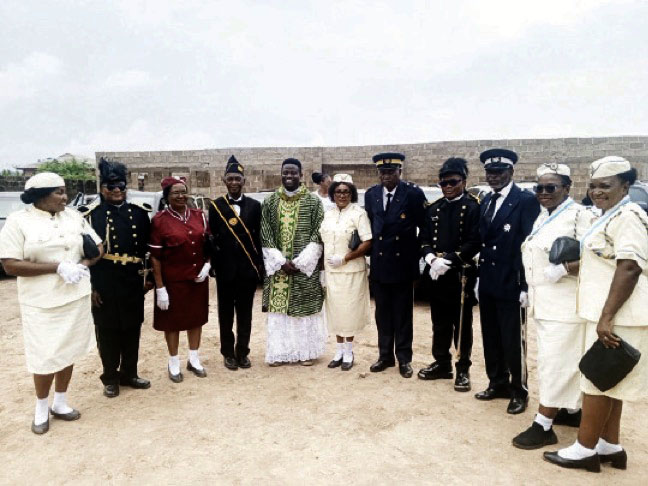
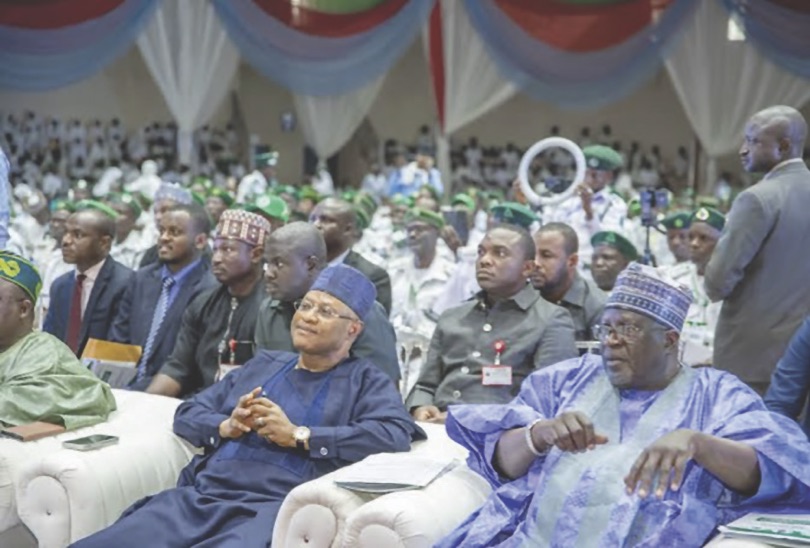
That commitment was once again on display at the 2025 Christmas Carol organised by the Christian Association of Nigeria (CAN), in collaboration with the Kaduna State Government. Held on December 21 at the Umaru Musa Yar’Adua indoor sports hall, the event brought together Christian denominations from across the state for prayers, hymns and reflection on the deeper meaning of Christmas.
For Uba Sani, the occasion was more than ceremonial. It was the fulfilment of a promise he made a year earlier when he attended the Kaduna Unity Christmas Carol at ECWA Goodnews Church, Narayi High Cost, Kaduna, where he pledged to participate in subsequent editions throughout his tenure.
The governor disclosed that the gathering was the third time he was sharing in what he called a “sacred moment with the Christian family in our dear state.”
Each time, he said, reinforced his belief that faith remains one of the strongest bridges to unity, healing and collective progress.
“Christmas is not just a celebration of the birth of Jesus Christ,” Sani noted. “It is a season that speaks gently yet powerfully, of love, sacrifice, humility, compassion, and selfless service. These virtues transcend religious boundaries and speak directly to our shared humanity.”
He explained that his presence at the carol was driven by choice, conviction, and commitment, stressing that such moments renew hope and reconnect society to values that bind people together beyond faith or ethnicity.
The governor made it clear that he was there not only as the chief executive of Kaduna State, but as a fellow citizen seeking inspiration during a season of deep spiritual significance for Christians worldwide.
He commended religious leaders and worshippers across the State for their role in sustaining peace, especially during moments of tension. According to him, their consistent choice of dialogue over division and unity over suspicion has helped shape a more hopeful present and a more harmonious future for Kaduna.
Hosting the Christmas Carol, he said, symbolises openness, inclusion, and progress and values he believes should continue to define Kaduna as a place where faith builds bridges and diversity fuels development.
Sani recalled that from his first day in office on May 29, 2023, he took a solemn vow to govern Kaduna for all its people, regardless of faith, ethnicity, or political affiliation.
Nearly three years on, he insisted that vow remains unbroken, reflected in policies anchored on fairness, justice, equity, and inclusive governance.
That same message of unity echoed days earlier at the 50th anniversary celebration of the Nigeria Aid Group of Islam, Jama’atu Nasril Islam (JNI), where Sani served as chief host.
There, he reaffirmed his belief that Kaduna’s diversity is its greatest strength and that faith must always translate into service to humanity.
He praised the founding fathers of the Aid Group for their foresight and lauded the organisation’s decades-long contributions to education, healthcare, social welfare, disaster response, and interfaith dialogue.
The governor also highlighted youth empowerment efforts, including three vocational training institutes that equip about 32,000 young people annually with practical skills.
Receiving an Award of Excellence and his appointment as Patron of the Aid Group, Governor Sani described the honour not as personal recognition, but as affirmation of a shared commitment to compassion, inclusion, and development.
From Christmas carols to Islamic humanitarian gatherings, Governor Uba Sani’s consistent presence sends a clear message: leadership in Kaduna is not about symbolic gestures alone, but about showing up, building trust, and governing with empathy.
In a state once known more for its divisions than its harmony, Kaduna is gradually becoming a model of peaceful coexistence, guided by a leadership style that treats faith not as a fault line, but as a bridge.
Beyond words, the Governor outlined tangible achievements across key sectors. In road infrastructure alone, his administration has completed or advanced work on 85 roads covering 785 kilometres in the first phase, and launched over 50 additional roads and bridges spanning more than 550 kilometres in the second phase.
Communities long cut off from markets and healthcare now enjoy improved connectivity.
He noted that before he assumed office, 12 local government areas had not seen a single kilometre of motorable road in over a decade. “Today, at least 18 local governments are linked by modern road networks, with work ongoing to reach all 23”.
In healthcare, the administration has upgraded 255 Primary Health Care Centres to Level Two status, the highest number achieved by any state in Nigeria, bringing quality medical services closer to the people. A major milestone in the sector is the commissioning of a 300-bed Specialist Hospital named after President Bola Ahmed Tinubu.
Agriculture, which contributes over 42 percent of Kaduna’s GDP, has also received renewed focus. Budgetary allocation to the sector rose from less than one percent in 2023 to over ten percent in the last two years, with projections of about twelve percent in the 2026 budget, exceeding the Malabo Declaration benchmark.
The selection of Kaduna as the pilot state for the Nigeria–China Poultry Project, the governor said, reflects growing confidence in the state’s stability and leadership.