Follow Us on Google
By Ngozi Nwoke
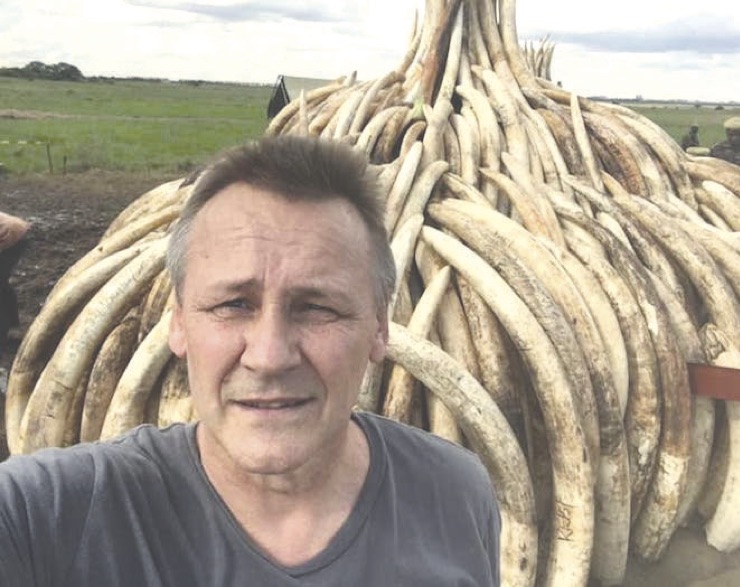
The founder of Wild Africa Fund, Peter Knights, has said that there are huge conservation challenges Nigeria is currently facing because the country’s wildlife is very, very endangered. According to him, there are less than 50 lions left and less than 500 elephants in Nigeria.
He said: “So, the big challenge is, can we move that back up again, to sustainable populations? And I think, for me, the dream is for Nigeria to have national parks where you can go and see a lion, you can go and see an elephant. That can be a tourism industry.

“And that has been doing a lot of work in Rwanda. They have rebuilt their national park. They have put back rhinos in the zoo, they have put back giraffes in the zoo, they put back other animals and now they have a good tourism industry. So that will take time and it takes money and resources.
“But at the end of it, it can create a lot of jobs through tourism. And that’s hotel jobs. That’s taxi drivers job. That’s restaurant jobs. And I think that would be a huge boom for tourism here in Nigeria, because there’s amazing music in Nigeria. There’s amazing art. There’s amazing dance, but right now there’s no wildlife element. And for many tourists coming to Africa, they like to see a wildlife element. So if Nigeria can rebuild that piece, I think it can really help the tourism industry take off.”
On how he thinks Nigeria can address these challenges, he said a new legislation will of tremendous assistance. Knights said: “The new law will help do that. We have seen them start working with NASA, which is the agency in charge, they have done few to no prosecutions in the past. But with this new law, we believe they will be able to do prosecutions, and this will help reduce the illegal bushmeat trade.

“It will help stop Nigeria being the center for smuggling and we hope actually Nigeria will be the regional leader on this. There’s definitely the capacity there within those agencies, but they need the right laws.
“I think we talked earlier about trying to do a programme to get sniffer dogs for customers. The sniffer dogs have been very effective. They can detect ivory and pangolin scales even inside containers without opening the container and this will make it a lot more risky to send things through Nigeria, and we think that will have a big impact. So there’s a lot going on with those agencies in terms of training, in terms of better laws, in terms of equipment like sniffer dogs, that is going to make them, hopefully, the best in the region on these issues.
“I know more challenges, particularly prosecuting erring people is a challenge considering that the law is weak. This is where the new law comes into action. So, for example, it has the possibility of extradition, and other things like that.
“So, this law is particularly designed to be able to attack this and also treat it as organized crime. In organized crime prosecutions, you can do things like you can seize people’s assets. If they use their car, you can take away their car as part of the penalty. It makes it much more stronger and this has been used around the world to combat drug trafficking, Mafia and things like that.
“So, this law will enable customs to go after that to contact the venue for authorities to say we need help and all that. It’ll make a real difference because wildlife crime is never usually all in one country; it’s international. So this is very necessary.
“It’s also necessary for Nigeria to be able to fulfill its commitments under societies, the United Nations Convention. Currently, the legislation is not strong enough to fulfill the commitments so it’s kind of as chairman Johnson Wilma said, who are you? One of the sponsors of this bill potentially, is, you know, we need to do this just to fulfill what we already agreed to. This is catching up. We were already signed on. We just haven’t done the paperwork to finish off. So yes, it’ll make a big difference in that for sure.”
Why is Nigeria the transit hub for the illegal trafficking of pangolin scales?He said: “Specifically here in Nigeria, we are very interested because it has become, as you know, I think the epicenter of illegal wildlife trafficking in Africa really with the ivory and pangolins and the seizures that Customs have made have been some of the biggest seizures ever. And Nigeria has kind of emerged as the center for illegal wildlife trafficking.
“At the same time, we see that there is a lot of concern in the government and people of Nigeria, there isn’t a role that they want to take. And we think it’s going to be possible to turn things around here. So that in two or three years, Nigeria is at the cutting edge of fighting this problem as opposed to being the bad guys of the moment.
“We’ve started last year, with wild day we started the biggest awareness programme ever on the African continent about wildlife trafficking and many of your publications have been part of this. There’s been television obviously, we’ve managed to get supportive people.
“We’ve had religious leaders support, we’ve had the minister as an ambassador, and so really trying to bring people together to solve this problem. And the news coming up probably next week, and we’ll let you know as soon as this happens, but in all likelihood, there is going to be new legislation introduced to parliament to combat wildlife trafficking, and to address this issue of Nigeria being the hub for illegal activity.
“Possibly, as soon as this week, a piece of legislation will be introduced, and we’ll let you know about this and give you a briefing on that. This would really take Nigeria from my description, using my English football terms, from the relegation zone into playing for Europe. So, it could be a huge, huge change. And that law will help the government prosecute international criminals because a lot of the stuff going on here is not Nigerians. It’s actually people from other countries using Nigeria as a hot morning.”
On how the illegal wildlife trade affects Nigeria’s wildlife and biodiversity, Knights said just as it’s historic to eat bush meat here, wild meat has been popular in China and most of it has been wiped out.
According to him, they do have farming now to try and supply the wild meat because there is a tradition in Asia. He said the matter could be partly addressed through education and awareness.
He explained: “We’ve done a lot of work in the past, one day with Jackie Chan, Yao Ming and people like that, making people more aware and post COVID. The Chinese government banned wild meat consumption and they actually closed down all the breeding places. So, there is a lot going on in China at this end. Here, I think it needs to be through the embassy. And it needs to be educated through the Chinese embassy that they need to tell people you’re coming to Nigeria, do not go and buy these products because it’s illegal and you will be prosecuted.
“And Chinese Customs has done a lot of work now on illegal ivory for example. And they actually sent a delegation over to Nigeria to work here as well. So, collaborating with enforcement agencies, education through the embassies, and then education back in China, which was still going on with WildAid on these different things.
“We’re going to do a survey later this year to see how many people have seen the campaign and how they’ve reacted to it. The other thing we can do is we’re monitoring the markets to see how the prices and availability of the animals are.
“So, you can see how the price for example, in China, we saw the price of ivory go down by like two thirds. So, by definition, the quantity is going down and the demand is going down. It’s a combination of market surveys, and then also public opinion surveys. And then sometimes you actually get the population information from the animals. For example, in South Africa, we know how many rhinos are poached every year. And it went down, particularly during COVID-19.
“My wife and myself decided, we love Africa. We love coming to Africa. We love working here. We want to focus exclusively on Africa going forward for the rest of our careers. And so why are they just doing everything around the world? It’s doing tiny little things. So we decided to set up the Wild Africa Fund to focus on Africa to do the communications work we’ve been doing already, but also to raise money to support local initiatives.
“Some of the people we’re featuring are unsung heroes, we want to give them some financial support as well to help them in their endeavours. That’s really the transition. We’re going to continue working with WildAid co-branding with it and doing stuff, but it’s because we want to focus here, and Nigeria is one of our hubs in Africa. We’re working out of Lagos, Cape Town, South Africa, Kigali and Rwanda and Harare in Zimbabwe, and those are our main focus countries.
“But from that we hope to sort of spread out in the region, but Nigeria will be like our hub. We will co-brand and it will be a continuation of the existing work, where the added element is where we are going to be providing some financial support to local organizations that need some help.”
Regarding the enforcement agencies like Customs and NESREA, Knights said the extant laws have been somewhat problematic. According to him, it’s quite hard to prosecute because they’re not the law that has some issues with it.
Disclosing that that’s why this new law is needed, he said: “I think Customs have done an amazing job with their seizures. You’ve seen all those seizures. This is really bad, but it means Customs is doing their job. So all credit to Customs for doing that. They haven’t been able to prosecute in many cases.
“And that’s why the new law is needed. So I think with the new law, they can do even better, but they haven’t done a good job on prosecutions, hardly any prosecutions historically in Nigeria on wildlife crime.”
He added Nigeria is by far the largest economy in the region and a lot of the trade comes through Lagos, be it food or whatever it comes through Lagos. “Lagos is like a transportation hub. But historically, there haven’t been hardly any prosecutions. So people have done it and Customs have made seizures, which is all credit to them, but people haven’t been prosecuted. People haven’t gone to jail. They’ve just had this stuff taken away. “Hopefully, there’s new legislation which should be introduced soon, we’ll combat that where people are actually being prosecuted, and what we’ve seen in other parts of the world and once people are actually going to jail and there’s a real risk of doing this crime, it goes down dramatically, and also once the public is more aware. “So, people are on the lookout and people are reporting wildlife crime. I think it’s because of the size of the economy, but also because it has been historically weak on the laws that can all change very quickly,” he explained.
He explained what Wild Africa Fund is and its missions in Nigeria and Africa. He said: “Our mission is public service work, outreach and education through media materials. We’re about to launch a park concert series, which is a concert with music from all over Africa, featuring top musicians with wildlife education mixed in it. So it’s a concert but they’re also people talking about the animals and what’s happening and things like that, through all the television channels that we’re working with. We’re just about to do a kids TV show about wildlife.”
He explained that his group is ” doing work supporting this legislation as it’s going through and when it comes through, we’ll do education outreach around that we’re doing the work with Customs with the dogs and things like that.
“Around the markets, we see pangolin scales and Dr. Mark has been talking to all the sellers to educate him about what’s going on. And then we have helped with providing chickens for some of the sellers and hunters. So it’s a combination of law enforcement, education and awareness, and then providing alternatives.
“You put those three things together and we think that’s the way you solve this problem. So you’re helping the people but you’re educating people and at the same time there is the law enforcement, they have to know it’s against the law. Once you put those two things together, we think that can make a huge impact and also education there too. Because, you know, genuinely, we have a story from Cameroon where there’s a lady who people used to collect the pangolins from her cocoa plantation. And she said, oh, that’s fine, you know, and then she learned, so I didn’t realize they only have one baby every 18 months. That means it can’t be sustainable.
“She was shocked by that and then she understood the pangolins eat up to 40,000 ants the ants are eating my cocoa.”
Knights further said that later this year, they will be doing a survey. “If you remember, we did a survey on bushmeat trade to begin with. We are going to do a follow up survey to see how it’s going.
But all I can say is that the response from the media and the ambassadors has been incredible. “You know, we have so many different TV channels, newspapers, and print that’s gone out there. The campaign has been everywhere. And we’ve got a fantastic range of ambassadors we just mentioned. So, we’ve been delighted and impressed by the takeoff and the enthusiasm.
“At the same time, we have had a very positive reaction from the government agencies. Customs were engaged in a sniffer dog programme. Obviously, Customs have been very active in making seizures. And we have seen new legislation pending from the ministry of environment.
“I think it’s been a really positive response. And we’re hoping that within the next 18 months or so, this is gonna be a massive transformation, not just in what happens here in Nigeria, but also the international perception of Nigeria. Seeing that the country is taking all these steps to combat this problem is tremendously good for the reputation of Nigeria internationally.
“We are working with NTA to get it into local languages. So we are providing materials and they can do the translation into 20 languages. We’re quite a small organization, but we can catalyze this and then work with partners. And that’s what we’ve done here.
“All the environmentalists have a little Whatsapp group, for example. And I think we are all on the same page. We all come together with it. What I hope we’re doing is through promotion, we’re dealing with a whole issue. It’s not about us promoting our organization. It’s about promoting the issues. And the Unsung Heroes series is all about profiling. It’s like five minute mini-documentaries all about the people you’re talking about showing their projects and their programme. They have never been on national television before. And now they’re getting out on all these different TV notes to show people. So the whole idea for us is that, you know, we’re just here to be kind of the messenger, the people doing it here on the ground. We want them to be promoted. We’d love you guys to do profile pieces and we can help in that. So that their profile is raised that conservation just becomes way more mainstream in Nigeria. Because what we’ve generally found was very funny when I first got here.
“Everybody said to me, oh, nobody cares. In Nigeria, Nobody cares. Everybody I met said how can we help? And I said at the end of conversation, you just contradicted yourself because you said no one cares. You care because you want to help. If you want to help, many other people want to help and sure enough, we’ve had great pickup and great enthusiasm.”
Knights said it’s a win-win situation and everyone should participate in caring and protecting wildlife.