Follow Us on Google

By Henry Uche
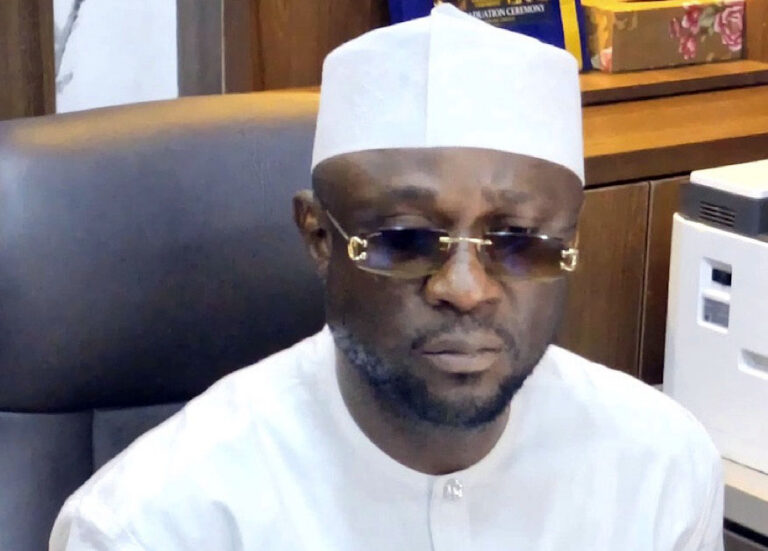
Professor Chibuzo Amaefula is an authority in Statistics and Econometrics. He is the current Head of Department (HOD), Maths and Statistics, Federal University, Otueke, Bayelsa State. In this interview with Daily Sun, he weighed in on Nigeria’s social, political and economic environment as they impact on the country and Nigerians. Professor Amaefula is of the view that Nigeria’s core challenge is not lack of ideas, data or intelligence but the failure to convert evidence to credible, sustained action. Econometrics, he affirmed, can illuminate the path, but institutions must choose to walk it.
Nigeria’s economy is often described as ‘data-rich but insight-poor.’ Do you agree with this tag, and why?
Yes, largely. Nigeria produces large volumes of data (GDP, CPI, labour force surveys, administrative records), but suffers from weak inferential use of that data. From an econometric perspective, the problem is not scarcity of observations but: Measurement error especially in informal sector output, employment, and income. Low-frequency aggregation that hides structural breaks. Poor integration of datasets across agencies. Policy decisions driven by headline statistics rather than causal inference. In short, Nigeria often describes the economy statistically but rarely diagnoses it econometrically.
From an econometric standpoint, what are the most misunderstood indicators of Nigeria’s economic health?
From an econometric standpoint: GDP Growth – Often interpreted as welfare improvement, ignores distribution, informality, and population growth. Per capita GDP and median income often tell a very different story. Unemployment Rate fails in economies dominated by informal and underemployed labour. Changes in definition have weakened intertemporal comparability.
How reliable are official economic statistics in shaping public policy, and where do you see the biggest gaps?
Official statistics are methodologically sound on paper, but econometrically fragile in practice due to weak sampling frames, delayed rebasing, political pressure on timing and framing, inadequate micro-level panel data. The biggest gaps are in household income and consumption tracking.
What early warning signs should policymakers be watching now that the public may be overlooking?
Key econometric red flags include: Persistent negative real wage growth, rising variance of food prices, not just average inflation, declining Total Factor Productivity (TFP), Structural break between GDP growth and poverty reduction, and weak pass-through from monetary tightening to inflation expectations. All these suggest macroeconomic stress beneath stable aggregates.
Inflation figures are frequently released, yet citizens are poorer. How do we reconcile the numbers with lived reality?
This divergence arises because Consumer Price Index (CPI) weights do not reflect poor households’ consumption baskets. Food inflation disproportionately affects welfare. Also, inflation averages hide volatility, which households experience as uncertainty. Nominal income growth lags price growth, while econometrically, perceived inflation ≈ inflation volatility + food inflation, not headline CPI.
What does econometric evidence suggest about the true drivers of inflation in Nigeria today?
Evidence points to structural and cost-push inflation, not excess demand: Exchange rate pass-through strong and asymmetric. Energy and transport costs, food supply constraints like security, logistics, climate shocks, weak domestic production capacity, monetary tightening alone has limited impact when inflation is non-monetary in origin.
Can economic growth occur without improving living standards, and is that what we are witnessing?
Yes, and yes. Nigeria exhibits jobless and welfare-neutral growth, where output grows, productivity stagnates as poverty and inequality rise. This is consistent with growth driven by capital-intensive or extractive sectors, not broad-based productivity gains. Policies are often ex post justified with data, rather than ex ante designed using evidence. Common issues include: Weak counterfactual analysis, no pilot evaluations, limited use of impact evaluation or structural modelling, and short political cycles overriding long-run efficiency.
What are common mistakes made by the government in interpreting models?
First, treating forecasts as certainties ignoring model assumptions, using correlation as causation, applying models calibrated for advanced economies, and failing to update parameters after structural breaks. Nigeria needs a unified national microdata system linking: Tax records, social registers, firm data and household surveys. This would transform fiscal targeting, poverty reduction, and policy evaluation.
Other News
Tell us how mathematics has changed economic forecasting
Compared to a decade ago: Non-linear models outperform linear regressions. Bayesian methods handle uncertainty better. High-dimensional optimisation is now feasible. Structural breaks are explicitly modelled, economics is now computational, stochastic, and algorithmic, not just analytical.
In this era of AI, would you say the technology has impacted data generation and application in Nigeria?
Yes, especially in inflation nowcasting, tax compliance, early recession detection and agricultural yield forecasting. But success depends on data governance, not algorithms.
Would you say that socio- economic and political formulators are keeping pace with modern tools?
Not fully. There is a growing capacity gap between what academic econometrics can do and what policy institutions actually use. Tools exist, but institutional incentives are lagging.
How should Nigerians interpret projections amid global uncertainty?
They should be done as probabilistic scenarios, not promises. Point forecasts are less informative than confidence intervals, downside risk assessments and stress-test outcomes.
In your view, is Nigeria better positioned economical than it was a decade ago?
Institutionally, slightly and structurally, not significantly. Resilience remains weak due to dependence on imports, oil, and fragile public finances.
Most times, postulations of economists and strong academic research rarely translate into government policy. Why is it so?
This is because research incentives reward publication and not implementation. Secondly, policymakers lack technical absorptive capacity. Also, communication gaps between academia and government political economy constraints dominate optimal solutions.
Why do you think economists should be vocal on national issues, especially the economy?
Because silence enables poor policy. However, economists must acknowledge uncertainty, avoid partisanship and speak truth even when inconvenient.
What is your take on Gov. Hope Uzodinma’s administration and Imo politics?
From a neutral analytical lens, governance outcomes appear mixed, with infrastructure visibility but persistent trust deficits. The heavy role of courts in electoral legitimacy reflects institutional fragility. Voter disengagement signals declining faith in democratic transmission mechanisms. Whether Imo people re-engage electorally depends less on personalities and more on credibility of institutions, especially elections and justice.
Your final thought on Nigeria’s socio- political and economic atmosphere.
Nigeria’s core challenge is not lack of ideas, data, or intelligence —it is the failure to convert evidence into credible, sustained action. Econometrics can illuminate the path, but institutions must choose to walk it.