Follow Us on Google

By Steve Agbota
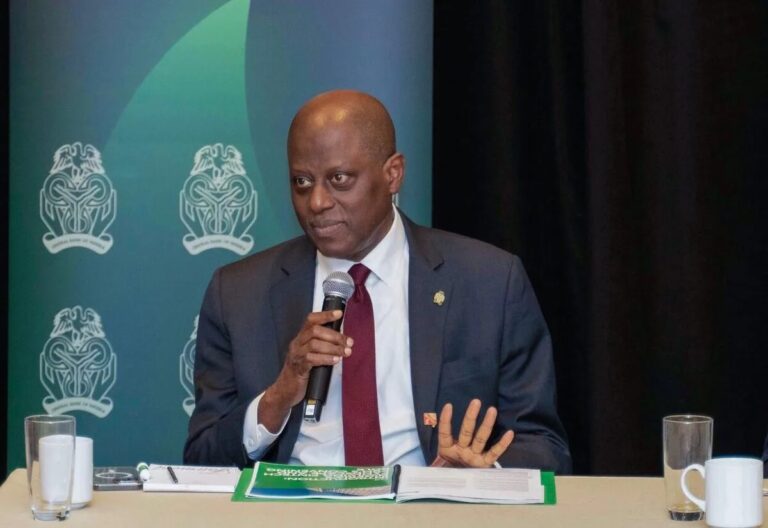
The Executive Secretary/Chief Executive Officer. Nigerian Shippers’ Council (NSC), Dr Pius Akutah, said that the Council has embarked on initiatives that will improve the nation’s maritime sector as the port economic regulator.
He said one of the initiatives is the implementation of the International Cargo Tracking Note (ICTN), which will improve cargo monitoring and transparency within the logistics chain.
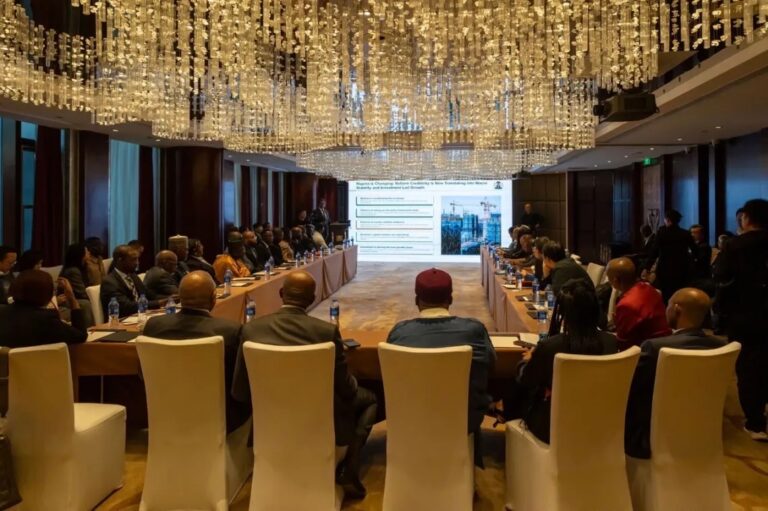
Akutah, who spoke in this interview on the sidelines of the recent management retreat, revealed the Council’s 2025–2029 strategic plans, progress on the Nigeria Port Economic Regulatory Agency Bill, and digital transformation initiatives.
“While strengthening our internal systems, we are also focused on broader sectoral initiatives that will improve Nigeria’s maritime and logistics environment. We are also supporting the development and operationalisation of critical inland transport infrastructure across the country, strengthening trade facilitation and logistics connectivity, and enhancing economic regulatory oversight within Nigerian ports,” he said.
According to him, the success of these initiatives depends heavily on strong collaboration among maritime agencies, logistics operators, and private sector stakeholders.
He also shed light on the recent controversy surrounding tariff increments by shipping companies, the role of the Council as port economic regulator, challenges facing the agency, and plans to strengthen its financial sustainability and other maritime-related issues.
What is the current status of the Nigeria Port Economic Regulatory Agency Bill?
The NPERA Bill represents one of the most significant institutional developments for the Council and the Nigerian maritime sector. As you may recall, the Bill had earlier been passed by the National Assembly and transmitted to the President for assent. However, during the review process, certain provisions were found to conflict with aspects of the Nigerian Tax Administration Act (NTAA) 2025. Based on observations communicated by the President, the Bill was returned to the National Assembly for corrections. I am pleased to inform you that the House of Representatives has addressed those areas of conflict and passed a revised version of the Bill in line with the President’s comments.
The amended Bill is now awaiting concurrence from the Senate. Once the process is completed and the Bill receives presidential assent, it will provide the statutory foundation for strengthening Nigeria’s port economic regulatory framework and reposition the Council for an expanded regulatory mandate.
What key initiatives is the Council pursuing to improve Nigeria’s maritime and logistics sector?
While strengthening our internal systems, we are also focused on broader sectoral initiatives that will improve Nigeria’s maritime and logistics environment. Among these initiatives is the implementation of the International Cargo Tracking Note (ICTN), which will improve cargo monitoring and transparency within the logistics chain. We are also supporting the development and operationalisation of critical inland transport infrastructure across the country, strengthening trade facilitation and logistics connectivity, and enhancing economic regulatory oversight within Nigerian ports. The success of these initiatives depends heavily on strong collaboration among maritime agencies, logistics operators, and private sector stakeholders.
It also requires the deployment of innovative regulatory and technological solutions to improve cargo visibility, efficiency, and transparency. Ultimately, these initiatives are designed to strengthen regulatory oversight, improve operational efficiency, and enhance Nigeria’s competitiveness in international trade.
Other News
The Council has also mentioned plans to implement the International Cargo Tracking Note. Could you shed more light on that initiative?
Yes, the implementation of the International Cargo Tracking Note (ICTN) is one of the initiatives we are currently discussing with stakeholders. As you may know, the initiative has a complicated history in Nigeria, with previous attempts at implementation not succeeding.
This time around, the Minister is determined to ensure that the system is implemented properly and in a manner that benefits the country. The ICTN will enhance cargo monitoring, improve transparency in trade transactions, and strengthen regulatory oversight. Furthermore, the Nigerian Shippers’ Council is a revenue-generating agency of the government. For us to effectively carry out our mandate, we must also develop sustainable internal revenue sources. Currently, much of our operational funding comes from allocations rather than revenue generated directly by the Council. Our enabling law already provides for a one per cent freight stabilisation fee as the Council’s primary funding line. The intention is to activate this provision so that the Council can generate its own revenue to support its regulatory functions.
Last year, we included this mechanism in the budget, but we were unable to establish the appropriate collection structure. We are now engaging stakeholders again with the aim of setting up that collection mechanism in 2026.
It is important to clarify that this is not a new charge being introduced into the system. Rather, it is a statutory provision that has existed in our law. We have also conducted a cost-benefit analysis, and our findings indicate that implementing this mechanism will provide significant long-term benefits for the maritime sector.
Even international assessments support this approach. For instance, an OECD panel report recognised the importance of the Nigerian Shippers’ Council in overseeing the post-concession regulatory framework of Nigerian ports. However, it also emphasised that the Council should be financially sustainable. This is precisely what we are trying to achieve—ensuring that the Council can fund its activities through legitimate revenue streams while continuing to regulate the port sector effectively for the benefit of the Nigerian economy.
Recently, there were upheavals in the maritime sector over an increase in charges by shipping companies despite your earlier directive that they should engage stakeholders. Where exactly do we stand on the issue of shipping companies’ charges?
When I assumed office as Executive Secretary in 2023, I made it very clear to shipping companies and terminal operators that tariff increments should not become a tool for profit maximisation or a means to arbitrarily increase their profit margins. For close to two years, the Council maintained a firm position on this matter. Every request for tariff increment that came to us during that period was declined.
This decision followed thorough consultations with shipping companies and terminal operators. Even though the economic indices that typically justify tariff adjustments had manifested over time, the Council was resolute in ensuring that the broader Nigerian economy stabilised before any discussion of an increment could be entertained.
However, earlier this year, we reached a point where we had to exercise our regulatory authority more decisively. We undertook a more scientific and analytical approach to the issue by examining the tariff requests alongside the operational realities of the operators.
For the first time in the history of the Council, we examined the financial records and investment profiles of shipping companies and terminal operators. We looked closely at the level of investments made in the sector over time and used those findings as part of the basis for assessing the tariff increment requests.
After that comprehensive assessment, we approved a very marginal increase in tariffs. This approval was formally communicated to the operators. One of the key conditions attached to that approval was that the companies must engage their stakeholders before implementing the increment. From our understanding, several of the companies have indeed engaged their stakeholders.
There may have been a particular instance where one shipping company experienced disagreements with stakeholders, but that is something they are working to resolve.
It is important to note that, as a regulator, we cannot permanently insist that tariffs must never be increased, especially when the economic indicators justify such adjustments. Our responsibility is to ensure that any increment is justified, moderate, and transparent. Other sectors of the economy also review their charges periodically, so the maritime sector cannot be entirely exempt.
What we are trying to achieve is balance. If operators are prevented from adjusting charges, even when their operational costs have significantly increased, it could hinder their ability to deliver services effectively. Ultimately, that could harm the maritime sector as a whole. Therefore, the approach must be one of moderation, understanding, and concessions from all sides, so that the industry can continue to function efficiently.