Follow Us on Google
By Adewale Sanyaolu
The ambitious African Atlantic Gas Pipeline project has received a major boost with the Heads of State and Government of the Economic Community of West African States (ECOWAS) unanimously signed the Inter-Governmental Agreement (IGA).
The move marks a significant step towards the implementation of one of Africa’s largest cross-border energy infrastructure projects.
Minister of State for Petroleum Resources (Gas), Mr Ekperikpe Ekpo, described the development as a watershed moment for regional energy cooperation.
He added that, the agreement would accelerate economic growth, strengthen energy security and unlock new investment opportunities across West Africa.
Speaking on the sidelines of the 69th Ordinary Session of the ECOWAS Authority of Heads of State and Government in LUngi, Sierra Leone, Ekpo said the signing of the agreement signals that the project, popularly known as the Nigeria-Morocco Gas Pipeline, has moved beyond the planning stage into implementation.
The minister was part of Nigeria’s delegation led by Vice President Kashim Shettima, who represented President Bola Tinubu at the summit.
According to Ekpo, the pipeline will enable Nigeria to maximise the economic value of its vast gas reserves while supplying cleaner energy to countries along the West African corridor.
He noted that Nigeria, with about 215.19 trillion cubic feet of proven natural gas reserves, the largest in Africa is strategically positioned to drive the project’s success and strengthen its role as a regional energy hub.
“This agreement gives further momentum to our ambition to move from being merely a gas-rich country to becoming a gas-powered economy and a dependable regional and global energy partner,” he said.
Ekpo added that the project would improve regional energy security, expand export opportunities for Nigerian gas and stimulate industrial development across participating countries.
He said the pipeline would also catalyse investments, create thousands of jobs and support key sectors of the economy, including electricity generation, fertiliser production, petrochemicals, manufacturing and other gas-based industries.
The minister reiterated the commitment of President Bola Tinubu’s administration to deepening gas development through increased production, expansion of critical infrastructure and greater domestic utilisation, while leveraging export opportunities to boost economic growth.
He also commended ECOWAS member states for their unanimous backing of the project, describing the decision as a strong demonstration of regional cooperation and a shared commitment to Africa’s energy transition and economic integration.
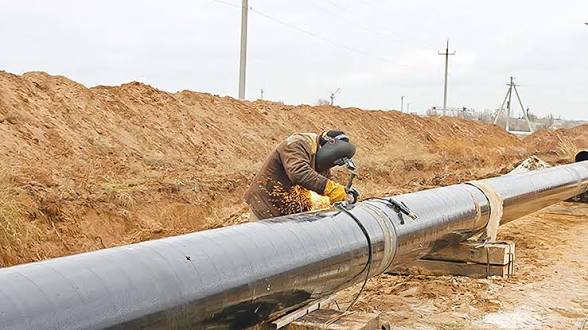
The African Atlantic Gas Pipeline is a proposed 6,900-kilometre offshore and onshore pipeline expected to transport up to 30 billion cubic metres of natural gas annually from Nigeria through 13 West African countries to Morocco, where it will connect to the European gas network.
When completed, the multi-billion-dollar project is expected to improve energy access for millions of people, deepen regional integration, drive industrialisation and position West Africa as a more significant player in the global natural gas market.
Yahoo Mail: Search, Organize, Conquer