Follow Us on Google
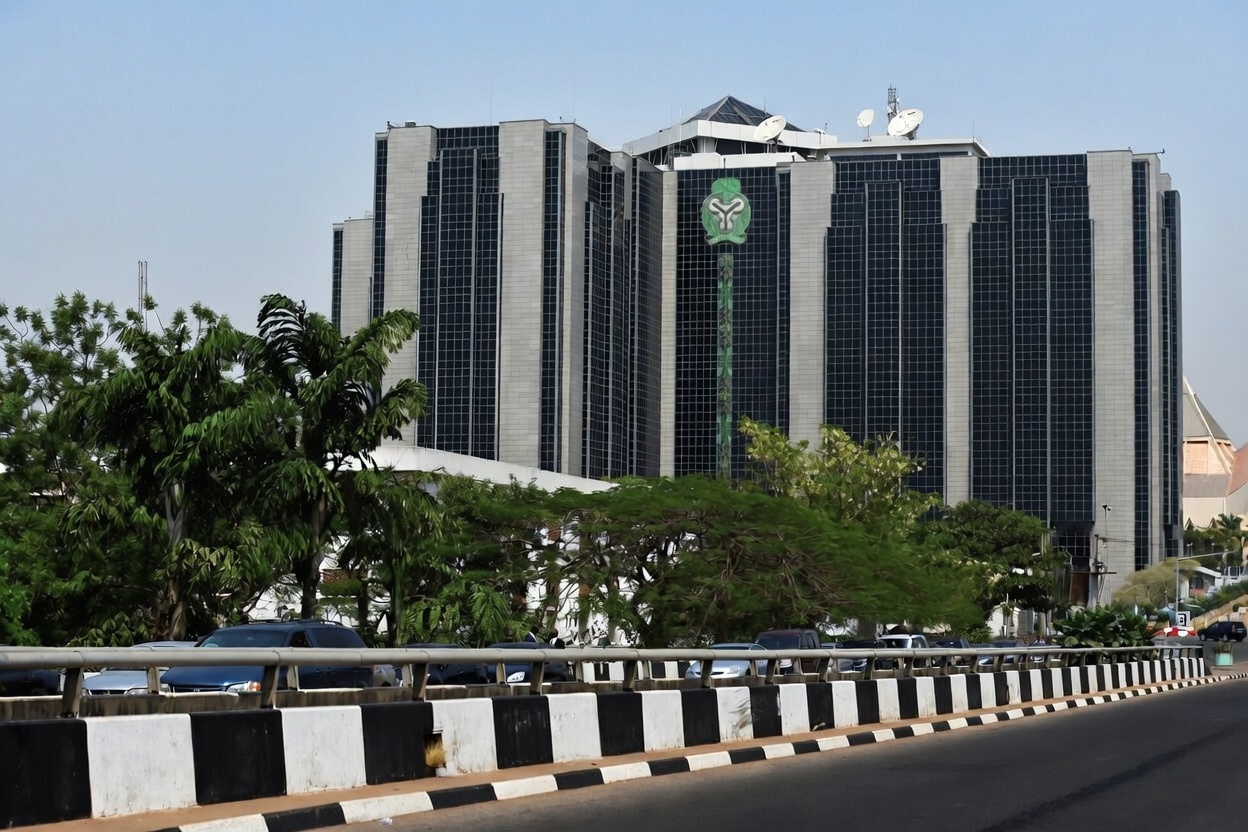
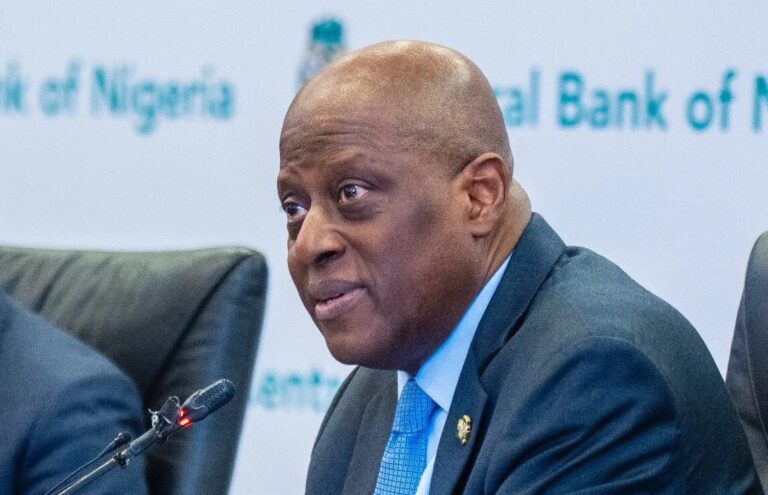
As the Monetary Policy Committee (MPC) of the Central Bank of Nigeria (CBN) convenes for its final decision today, financial markets, economists and investors appear united on one point and that is, interest rates are likely to remain unchanged.
With inflation still elevated, geopolitical tensions threatening fresh price shocks, and policymakers keen to protect recent gains in exchange rate stability, analysts believe the Committee will opt for caution by retaining the Monetary Policy Rate (MPR) at 26.50 per cent, while leaving other monetary policy parameters unchanged.
Such a decision would reinforce the CBN’s strategy of prioritising price stability over short-term growth concerns, even as economic activity continues to strengthen.
The anticipated hold would also extend a policy stance that has characterised the apex bank’s recent meetings, a data-driven approach that seeks to ensure inflation is firmly on a downward trajectory before any easing cycle begins.
Unlike previous MPC meetings where opinions were divided between another rate hike and a possible pause, expectations ahead of the July meeting have converged remarkably.
Banks, investment houses and research analysts largely agree that prevailing macroeconomic conditions do not justify either a tightening or easing of monetary policy.
Although headline inflation moderated marginally to 15.91 per cent year-on-year (y/y) in June from 15.93 per cent in May, analysts argue that the decline is too small to constitute convincing evidence that inflationary pressures have been defeated.
Instead, the latest figures suggest inflation remains stubbornly high, even if it now falls within the CBN’s preferred tolerance band of 14.5 per cent to 18.5 per cent.
The modest slowdown has largely reflected softer energy prices and relative exchange rate stability, but underlying risks remain significant.
Global crude oil prices have risen once again amid renewed conflict in the Middle East, while domestic food prices continue to face pressure from flooding across major agricultural regions. These developments could quickly reverse recent improvements in inflation if left unchecked.
Against this backdrop, economists believe the MPC has little incentive to begin lowering borrowing costs.
Inflation still dictating policy
Inflation remains the single most important consideration for the Committee.
Although the headline figure has stabilised, food inflation continues to accelerate, highlighting persistent structural pressures within the economy.
Higher transportation costs, climate-related disruptions to food production and renewed volatility in energy markets continue to threaten price stability.
Experts note that while inflation has moderated from earlier peaks, it remains considerably above levels consistent with sustainable economic expansion.
The recent rebound in international crude oil prices beyond $80 per barrel has further complicated the outlook.
Ordinarily, higher oil prices benefit Nigeria through stronger export earnings and improved fiscal revenues. However, they also raise domestic energy costs and transportation expenses, particularly following the removal of fuel subsidies.
The result is a complicated policy environment where higher oil prices simultaneously improve external balances while worsening inflation.
For policymakers focused primarily on price stability, the inflation risks currently outweigh any argument for easing monetary conditions.
Growth offers room for patience
One of the strongest arguments supporting a policy hold is Nigeria’s improving economic performance.
Real Gross Domestic Product expanded by 3.89 per cent y/y in the first quarter of 2026, up from 3.13 per cent recorded during the corresponding period of 2025.
Growth was driven largely by services, agriculture and improved oil production.
Analysts expect the second quarter to deliver even stronger performance. Forecasts place Q2 GDP growth at approximately 4.2 per cent, supported by the main harvest season, easing production costs and higher crude oil output.
Nigeria’s oil production increased from around 1.70 million barrels per day in May to approximately 1.74 million barrels per day in June, providing additional support for government revenues and foreign exchange earnings.
The resilience of economic growth reduces pressure on the CBN to stimulate the economy through lower interest rates.
Instead, the MPC can afford to prioritise inflation control without risking a significant slowdown in output.
Indeed, economic experts argue that maintaining macroeconomic stability today creates stronger foundations for sustainable growth tomorrow.
Naira stability changes the conversation
Perhaps the most significant improvement in Nigeria’s macroeconomic environment has been the relative stability of the naira.
After prolonged volatility that unsettled investors and businesses alike, the domestic currency has become considerably more stable in recent months.
Despite temporary fluctuations arising from seasonal foreign exchange demand, the naira has maintained a year-to-date appreciation of roughly 3.4 per cent, trading around N1,382 to the United States dollar.
This improvement has been underpinned by measured interventions by the CBN, improved investor confidence and stronger autonomous foreign exchange inflows.
Equally important has been the continued build-up in Nigeria’s external reserves.
Gross external reserves climbed to approximately US$51.89 billion as of mid-July, representing the highest level recorded in about 17 years and an increase of nearly 14 per cent since the beginning of the year. Currently, according to the CBN Governor, the reserves stand at $52 billion while net reserves stood at $40 billion, a remarkable recovery from the roughly $3 billion level that caused alarm in the market some years ago.
He pointed out that this improvement has been driven by a combination of FX market reforms, clearance of legacy obligations, stronger non‑oil inflows and renewed investor confidence.
The stronger reserve position provides the CBN with greater capacity to intervene when necessary while boosting confidence among foreign portfolio investors.
Hence, maintaining current interest rates helps preserve Nigeria’s attractive carry trade opportunities.
Higher domestic yields encourage foreign investment into local fixed-income securities, supporting reserve accumulation and strengthening the naira.
Lowering interest rates too early could weaken these inflows, reduce investor confidence and place renewed pressure on the exchange rate.
Global uncertainty reinforces caution
Developments outside Nigeria are also expected to influence the MPC’s deliberations.
Across advanced economies, central banks have increasingly adopted a cautious wait-and-see approach.
The United States Federal Reserve recently maintained interest rates, citing uncertainty surrounding inflation and economic growth.
Similarly, the Bank of England opted to leave rates unchanged despite persistent inflation concerns.
Other News
The European Central Bank remains something of an exception, raising rates modestly in response to energy-driven inflationary pressures.
However, Nigeria’s policy environment differs substantially from that of the euro area.
For the CBN, preserving exchange rate stability and containing imported inflation remain higher priorities than responding to external monetary tightening.
The uncertain global environment, marked by geopolitical conflicts, volatile commodity prices and shifting capital flows, provides additional justification for policy restraint.
Rather than making abrupt adjustments, central banks worldwide are increasingly waiting for clearer evidence before changing direction.
Experts’ views
Leading investment institutions share remarkably similar expectations.
Analysts at Coronation Merchant Bank expect the MPC to retain the MPR at 26.50 per cent while maintaining its tight monetary stance.
Their assessment reflects concerns that although headline inflation has moderated slightly, food inflation continues to rise, suggesting underlying price pressures remain entrenched.
The bank also identifies renewed geopolitical tensions, higher crude oil prices and flooding across agricultural communities as major upside risks to inflation.
Consequently, it believes the Committee will seek to anchor inflation expectations through continued monetary discipline. “Consequently, we expect the Committee to keep rates unchanged and preserve a tight monetary policy stance to further anchor inflation expectations”, the bank said.
Quest Merchant Bank reaches a similar conclusion.
Its analysts argue that despite the softer June inflation reading, the MPC is unlikely to relax their stance given the persistence of inflation risks.
The bank highlights developments in the global oil market and renewed instability in the Middle East as potential sources of additional inflationary pressure.
Quest also notes that Dangote Refinery’s decision to transition from naira-denominated crude purchases to dollar-denominated transactions could increase demand for foreign exchange, with possible implications for domestic prices and exchange rate stability.
Taken together, these factors reinforce the case for maintaining current policy settings until inflation risks subside more decisively.
Perhaps the clearest indication of the Committee’s likely direction has come from CBN Governor Olayemi Cardoso himself.
Speaking at the 14th BusinessDay CEO Forum in Lagos, Cardoso made it clear that the apex bank would not rush into cutting interest rates simply because inflation had begun to moderate.
He warned that premature easing could reverse recent gains in price stability and exchange rate management.
According to him, the MPC remains firmly data-driven and will maintain elevated borrowing costs for as long as inflation risks remain significant.
Cardoso recalled that Nigeria had experienced approximately eleven consecutive months of disinflation before fresh geopolitical developments disrupted the trend.
The Committee had initially anticipated that sustained moderation in inflation would eventually create room for gradual rate reductions.
However, renewed external shocks have forced policymakers to reassess that expectation.
The governor also emphasised the independence of MPC members, stressing that decisions are based on economic data rather than political or public pressure.
His comments strongly suggest that the MPC remains focused on securing lasting macroeconomic stability before contemplating any easing cycle.
Implications for businesses and investors
A decision to maintain rates would carry mixed implications for different segments of the economy.
For businesses, borrowing costs are likely to remain elevated, prolonging challenges for companies dependent on bank financing.
Manufacturers and small businesses may continue to struggle with expensive credit, potentially slowing investment and expansion plans.
However, maintaining monetary stability also offers important benefits.
Stable inflation and exchange rates improve business planning, reduce uncertainty and strengthen investor confidence.
For investors, the outlook remains relatively favourable.
Nigeria’s high interest rates continue to support attractive yields in government securities and fixed-income markets, reinforcing foreign portfolio inflows.
Combined with stronger external reserves and improved exchange rate stability, this could sustain positive investor sentiment in the near term.
Households, meanwhile, may experience slower relief from high borrowing costs, but continued monetary discipline increases the likelihood of more durable improvements in purchasing power over time.
Looking beyond July
While markets overwhelmingly expect another policy hold, attention is already turning towards the Committee’s subsequent meetings later in the year.
Should inflation resume a more convincing downward trajectory over the coming months, the MPC may begin considering a gradual easing cycle, potentially as early as the November 2026 meeting.
However, that possibility remains heavily dependent on incoming data.
Oil prices, food supply conditions, exchange rate developments and global financial market trends will all influence the Committee’s decisions in the months ahead.
For now, the balance of evidence points firmly towards continuity rather than change.
With inflation still elevated, economic growth proving resilient, foreign reserves at multi-year highs and the naira enjoying its most stable period in years, the MPC appears well positioned to maintain its cautious stance.
In doing so, the central bank would reinforce its message that restoring lasting macroeconomic stability remains the overriding priority. While businesses and borrowers may have to endure higher interest rates for longer, policymakers appear convinced that the long-term benefits of anchoring inflation expectations and preserving exchange rate stability outweigh the short-term costs.
Conclusion
For financial markets, today’s meeting is therefore shaping up not as a turning point, but as another chapter in Nigeria’s determined pursuit of macroeconomic stability.
The real question is no longer whether rates will be held this month, but how much further inflation must decline before the MPC finally feels confident enough to begin easing monetary policy.