Follow Us on Google
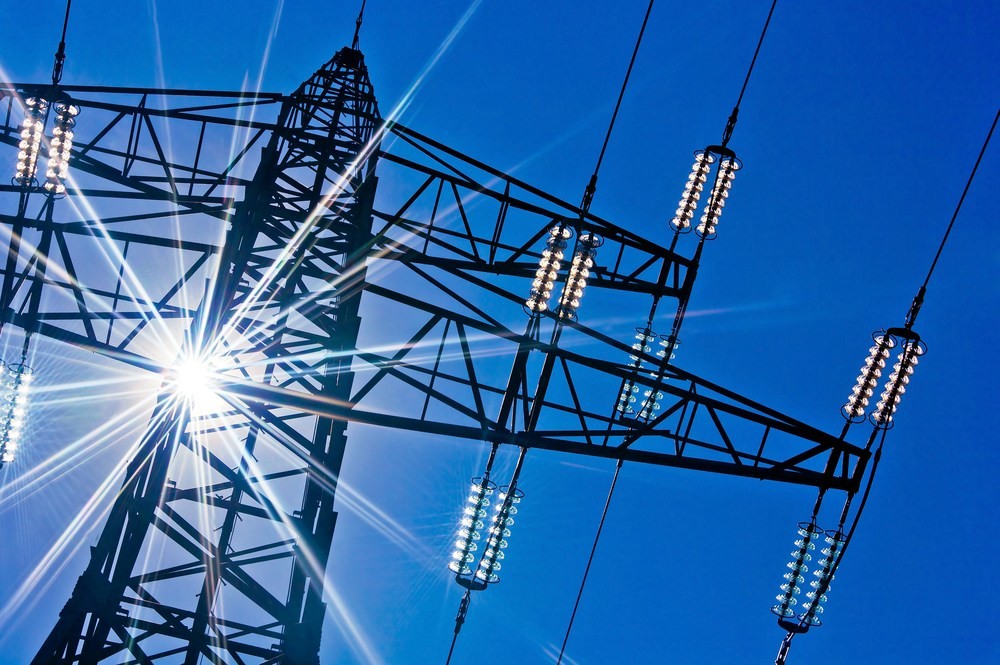
Following the mounting debt owed to electricity generation companies (GenCos), estimated at N4 trillion, the federal government on Tuesday issued an additional N729 billion bond.
Together with the N501 billion bond issued in January, the two instruments constitute the N1.23 trillion Series 1 and Series 2 components of the Capital Market Multi-Instrument Issuance Programme.
In July 2024, President Bola Ahmed Tinubu authorised a comprehensive review of the power sector’s liabilities, leading to the constitution of the Presidential Power Sector Debt Reduction Committee to establish the verified composition of sector liabilities, restore counterparty trust through co-ordinated settlement and design a sustainable, market-based resolution framework.
Following Federal Executive Council (FEC) approval in August 2024, Nigeria’s economy grew by 3.9 per cent in the first quarter of 2026 in naira terms. In 2025, it grew by 11.2 per cent in dollar terms and is on track to record another double-digit growth rate in dollar terms in 2026.
Speaking at the event, the Minister of Finance and Co-ordinating Minister of the Economy, Professor Taiwo Oyedele, said the foreign exchange market is functioning more effectively, fiscal revenues are strengthening and international credit-rating agencies are taking notice.
According to him, the next phase of economic reform is focused on investment, productivity and shared prosperity.
“We need to finance our growth differently because public resources alone will never be sufficient to meet the scale of infrastructure investment Nigeria requires. Private capital must play a larger role, and our responsibility as government is to create investable opportunities supported by sound policy, credible institutions, and appropriate risk allocation.
“The bond is exactly that model. The government provides the policy framework and the guarantee. The capital market mobilises long-term savings, institutional investors provide patient capital, and the power sector receives the liquidity it needs to grow. Everybody wins,” he said.
Oyedele observed that, for more than a decade, the Nigerian Electricity Supply Industry (NESI) has struggled with persistent tariff shortfalls, settlement gaps within the bulk electricity trading framework, accumulated debts to GenCos and their suppliers, and grid instability, all of which have constrained investment and weakened sector performance.
Other News
These problems, he said, could not be solved through budget allocations alone but required structural, market-based solutions.
“Electricity is the infrastructure of prosperity. No nation has achieved sustained industrialisation without reliable electricity. Factories cannot manufacture without power. Hospitals cannot function effectively. Schools cannot embrace digital learning technology. Companies cannot scale, and agriculture cannot maximise productivity.
“Reliable electricity is not merely another infrastructure asset; it is the infrastructure upon which every sector depends. If we decide to create jobs, which we do; expand manufacturing; and accelerate digital transformation, we must be deliberate about fixing the challenges of our power sector,” he emphasised.
Minister of Power, Joseph Tegbe, announced that the N501 billion bond issued in January was oversubscribed.
“Many of you in this room subscribed to the N501 billion Series 1 issuance. In fact, it was oversubscribed. The Federal Government has been unequivocal in its commitment to reposition the power sector as a commercially viable and investment-grade industry. Under the leadership of President Bola Ahmed Tinubu and through the implementation of the Electricity Act 2023, we are fundamentally reshaping the architecture of the power sector.
“We are fostering a more competitive electricity market and partnerships between national and state governments. We are expanding transmission infrastructure. We are accelerating renewable energy deployment. We are strengthening regulatory certainty and improving governance across the value chain. These reforms are already changing the investment narrative,” he stated.
The Managing Director/Chief Executive Officer of the Nigerian Bulk Electricity Trading Company (NBET), Johnson Akinnawo, noted that Series 2 of the bond, valued at approximately N729 billion, carries the same discipline, rigour and responsibility as Series 1.
“Stewarding it with integrity is the harder and ongoing work, and we do not take it lightly,” he said.