Follow Us on Google
By Olakunle Olafioye
Lagos continues to live up to its reputation as Nigeria’s commercial nerve centre. The state’s large population remains a driving force behind economic activities that thrive both day and night. During the day, major formal markets dominate commercial activities across the metropolis, while the streets remain largely orderly under the watchful eyes of the task force charged with enforcing the Lagos State Street Trading and Illegal Market Prohibition Law.
The state government prohibits street trading primarily to curb security threats, ease traffic congestion, protect public health, and advance Lagos’ aspiration of becoming a smart city. With task force operatives maintaining active surveillance during the day, many street traders, wary of being arrested and taken to the agency’s Oshodi office, avoid operating openly on the streets.
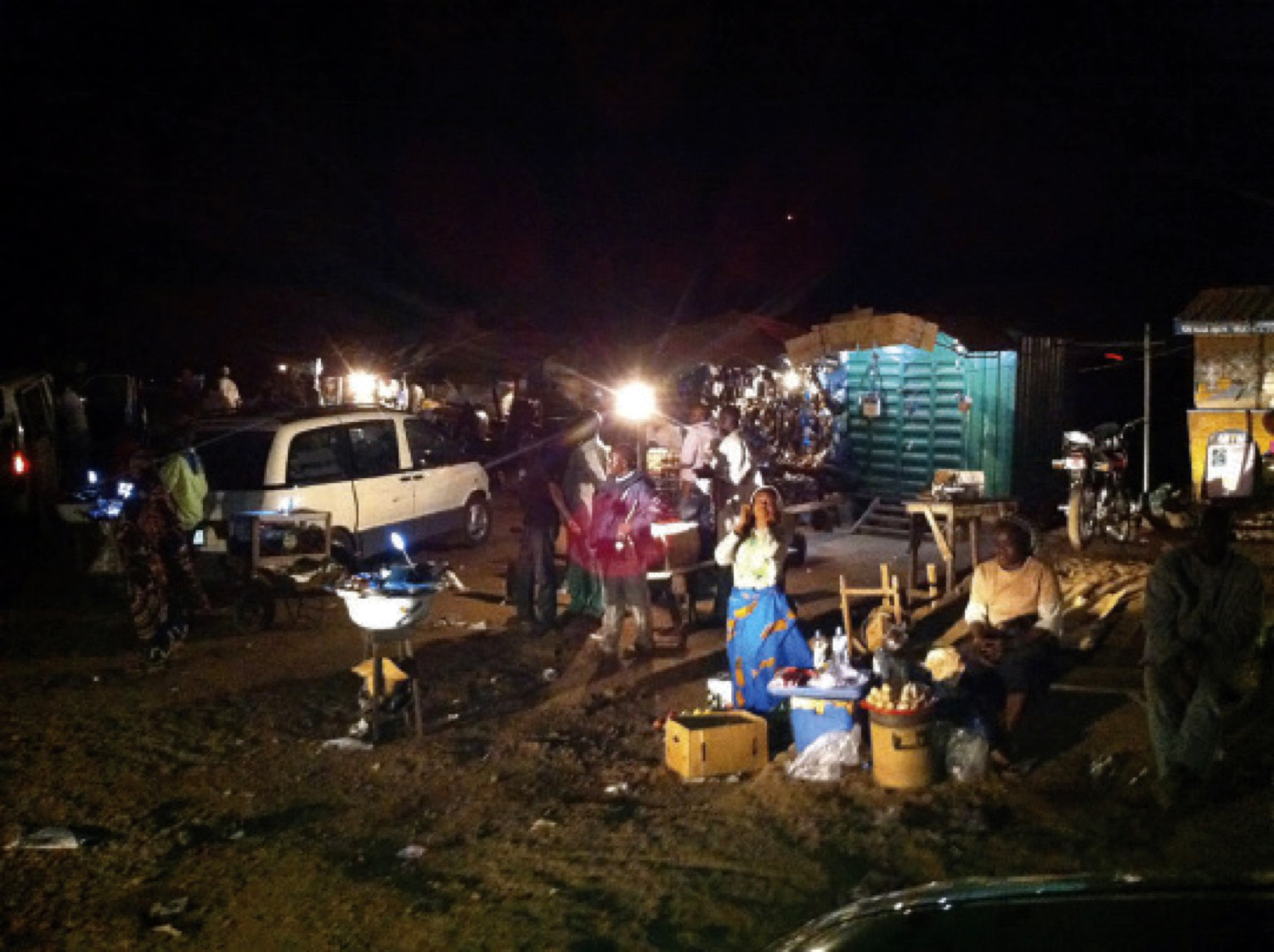
However, once the day’s enforcement activities end, a different reality emerges. As the task force operatives retire for the day, Lagos streets come alive with hawkers and street traders. The orderliness visible during daylight hours often disappears alongside the enforcement officials. From Mile 2 to Oshodi, Egbeda to Iyana-Ipaja, and Agege to Tollgate, traders occupy roadsides, bus terminals, and in some cases, critical traffic lanes.
The immediate consequence is increased traffic congestion. Motorists and commuters are forced to navigate through crowded roads at a snail’s pace, resulting in significantly longer travel times.
One location that vividly illustrates the contrast between day and night is the under-bridge area of the Agege railway track. During the day, the constant presence of officials from the Kick Against Indiscipline (KAI) Brigade creates an atmosphere of order as traders steer clear of the area.
A commercial bus driver, who identified himself simply as Lateef, described the disorderliness that takes over the area after the KAI officials leave, thus: “The traders are around even now; they are only waiting for the task force to leave. Once the KAI officials close for the day, the traders take over every available space, including the railway track. Whenever they hear the train’s horn, they quickly vacate the tracks, only to return immediately after the train passes,” he said.
Trading along railway tracks and on major roads carries enormous risks, yet many traders continue to operate there despite being fully aware of the dangers. Under the Lagos State Street Trading and Illegal Market Prohibition Law of 2003, both buyers and sellers conducting transactions in unauthorised locations are liable for prosecution. A first-time offender faces a fine of ₦90,000 or six months’ imprisonment. A second conviction attracts a ₦135,000 fine or nine months’ imprisonment, while a third offence carries a ₦180,000 fine or a one-year jail term.
But beyond the risk of fines and prosecution, accidents involving trains and pedestrians along railway tracks and major roads are not uncommon. Yet for many traders, economic survival outweighs safety concerns.
In October last year, a dispatch rider was killed in a collision with a moving train at the PWD Railway Level Crossing in Ikeja. According to the Lagos State Traffic Management Authority (LASTMA), the rider attempted to cross the railway line as an approaching train drew near. The accident occurred close to the route leading to Ikeja GRA and resulted in the rider’s immediate death. Eyewitnesses said the deceased had attempted to beat the oncoming train while trying to cross the tracks.
The reactions of street traders to approaching traffic often depend on the level of perceived danger. While the sight and sound of an approaching train trigger immediate panic and a rapid evacuation of railway tracks, roadside traders tend to behave differently. “An average roadside trader behaves like a king on the road,” a senior KAI official told Sunday Sun on condition of anonymity because he was not authorised to speak to the media. “He or she assumes that motorists are fully aware of their presence and will drive accordingly. They know the consequences of reckless driving and believe no sensible driver would take such risks. What they often fail to realise is that drivers can lose control unexpectedly, leading to devastating accidents. That is why the state government remains resolute to the campaign against street and roadside trading.”
Although the Lagos State Government has recorded notable success in keeping traders away from major roads during the daytime—thereby improving traffic flow—many residents returning home after work remain concerned about the resurgence of street trading at night and its impact on traffic.
Analysts argue that the dangers associated with street and roadside trading extend far beyond traffic obstruction and congestion. The practice also raises serious safety and security concerns for both traders and other road users.
In February, seven persons reportedly died in a fatal accident near the Ota Toll Gate along the Sango-Ota section of the Lagos-Abeokuta Expressway. The crash involved a tanker reportedly affected by brake failure and claimed the lives of several individuals, including roadside traders. Two other victims—a man and a woman—sustained critical injuries.
Barely two weeks later, another fatal accident reportedly claimed three lives at the same location where seven people had died just a fortnight earlier, further underscoring the dangers associated with commercial activities conducted along major highways.
There is yet another dimension to the menace of night trading on streets and major roads. Criminal elements often exploit the cover of such activities to perpetrate unlawful acts. In the past, several individuals who used traffic hawking as a disguise for armed robbery, pick-pocketing, and the transportation of illegal weapons have been apprehended. These incidents further reinforce the government’s position on the need to eliminate roadside and street trading across the state in the interest of public safety and security.
While the Lagos State Government’s sustained enforcement against street and roadside trading continues to record success during the daytime, an increasing number of residents are turning to night trading along major roads and streets as a means of livelihood. Many of the traders cite poverty, the demolition of markets where they previously operated, as well as the high cost of renting commercial spaces, as key major reasons for resorting to nighttime trading.
A real estate agent, Mr. Tolu Afuawape, said the average cost of renting a shop in a major Lagos market typically ranges between ₦500,000 and ₦15 million annually. He explained that factors such as location, customer traffic, and shop size significantly influence rental prices. In addition to prohibitive rent, some landlords often require tenants to pay a minimum of two years’ rent upfront, alongside agency fees, legal charges, and caution deposits.
A trader, Sylvanus Udoh at the Agege under-bridge, said he turned to street trading after the market where he previously conducted his business was demolished by the government several years ago. Since then, he noted, securing sufficient funds to rent another shop has proven extremely difficult.
Describing street trading as both stressful and challenging, Udoh said traders constantly face harassment from government enforcement officials. “The government task force is always after us. That is why most of us come out in the evening to do business,” he said.
Speaking on the development, a resident of Lagos, Mr Folusho Akanbi, attributed the rising number of street traders operating during both the day and night to increasing unemployment and widespread poverty in the country.
According to him, the creation of more employment opportunities and the provision of affordable commercial spaces for small business owners would significantly reduce the number of people engaged in street trading.
“If adequate employment opportunities are available, many people would no longer resort to trading on the streets. The level of poverty in Nigeria remains alarming, and the government must prioritise job creation. Gainfully employed individuals are less likely to engage in hawking, whether during the day or at night.
“In addition, when the government provides shops for traders, the rental costs should be affordable. Charging rents running into hundreds of thousands or even millions of naira places such facilities beyond the reach of ordinary citizens. This is one of the reasons many people are compelled to take up street trading,” Akanbi stated.