Follow Us on Google
By Simeon Mpamugoh
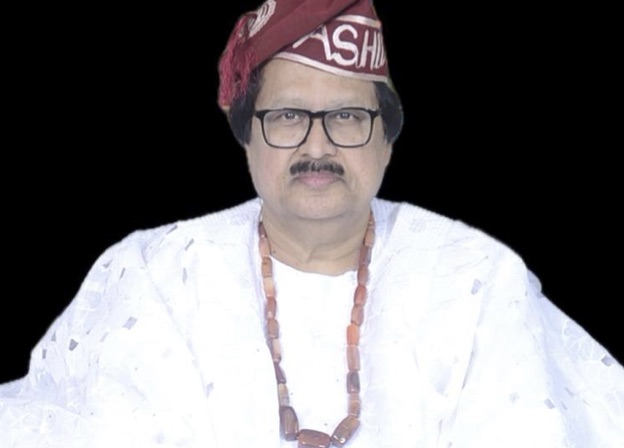
Chief Sanjay Jain is a popular figure in Lagos. He talks about a wide range of local and international topics, including mechanized farming. He hopes that Nigeria emulates a similar model India embraced to achieve food security for its huge population.
He explained how India – now the world’s most populous country- remained self-sufficient in food production while also serving as a major exporter of agricultural produce: “India’s food security model continued to attract global attention. The country statistically ranks as the most populous country in the world yet we are self-reliant in food security. Leaders from different parts of the world often wonder how we achieved the feat.”
Jain, who is the chairman of Jain International Trade Organization (JITO), noted that India was the second-largest producer of rice globally, the third-largest producer of export crops such as cotton, and the leading producer of sugar.
He added that India continued has to export food produce across the world: “India exports rice, sugar and beef to different parts of the world. Reports have shown that India is among the world’s largest exporters of beef. This clearly shows that the country is self-sufficient in food production,” he said.
On mechanization, seasons and farming innovations in the country, Jain explained that India’s agricultural success predates modern innovations such as soilless farming. He said: “Before soilless farming, there was vertical farming, which became successful in countries with traditionally normal agriculture land. It allows for multiplied yields and bountiful harvests when compared to soilless farming, which is usually done in pots or water-supported environments.”
He acknowledged that although soilless farming currently delivers lower yields in percentage terms, it is gaining momentum and may become more successful in the long run.
Jain stressed that India remains largely an agriculture dependent country, adding that government support—though once minimal—has significantly improved: “Today, the Indian government provides various forms of support to farmers and the agro-industry. As a result, we are not only self-sufficient but also exporters of several farm products to other parts of the world.”
Defining mechanized farming as the use of machines in land preparation and cultivation, Jain said modern technology has transformed farming efficiency.
Other News
“Machines help farmers achieve better yields and maximize land use. Every farmer now benefits from mechanization, which ensures bountiful harvests and improved returns on investment. Farmers are getting their highest yields through mechanized farming,” he said.
He also highlighted India’s seasonal farming structure: “In India, we have two major farming seasons. The first is Rabi, which runs from November to April, followed by Kharif, which runs from June to October. During the Kharif season, seeds are planted and later harvested for both domestic consumption and export. Some produce even has three cycles in a year, contributing significantly to food abundance.”
Jain disclosed that his organization is a global business and social networking platform: “JITO is an international trade organization with offices in over 70 locations, including several international chapters. It was initiated 18 years ago in India and has grown into a strong global network of business communities.”
He clarified that while corporate social responsibility (CSR) initiatives are typically the domain of multinational corporations, JITO focuses on trade facilitation and networking. “We provide platforms for people to interact, get guidance and connect with the right business partners,” he said.
Using Nigeria as an example, he said: “If a Nigeria wants to trade in cashew nuts and is looking for a buyer, JITO connects that person to the right business partner. This applies to all forms of agricultural and commercial produce. JITO is where buyers and sellers meet.”
He described the organization as inclusive and family-oriented, saying: “There is no discrimination. Whether you are Nigerian, Ugandan or Indian, we see ourselves as one family. That is the beauty of JITO.”
On non-violence and social values, he added that JITO also promotes physical wellness and ethical living, organizing activities such as Ahimsa Run— a run to highlight nonviolence – the basic principle Jain community members follow.
“We are a non-advocacy organization with zero tolerance for violence. Every year, we organize an interactive session and invite our Nigerian friends to participate. Last year, an international event was organized where Jains and others participated from over 100 countries and Prime Minister Modi was also in attendance. Modi is also a great propagator of non-violence as preached and followed by JITO and Jains.
According to Jain, JITO’s message emphasizes peaceful coexistence and non-violence. “Violence is not only physical, it can be shouting at someone or showing aggression towards someone. These are forms of violence that should be avoided. JITO preaches a non-violent approach to life and human interactions through the commodity market”, he added.