Follow Us on Google

Louis Ibah
The COVID-19 pandemic, no doubt, has ushered in a new epoch for mankind aptly captured by many as “the new normal.”
“This is a period societies, individuals, and organisations have to tweak and re-tweak its systems, policies, processes, ways of life, and even in its administrations to effectively confront the unexpected challenges thrown up by this uninvited enemy,” said Lagos-based anthropologist, Christopher Anza.
“The willingness to make this unprepared and inconviniencing adjustments is what will determine who survives or succeeds under the new normal, an aberration to the normal created by a virus whose cure is yet to be found,” he added.
In Nigeria’s aviation sector, it would appear that domestic airline operators have opted to respond to the new world order with a change in its leadership.
Under the aegis of the Airlines Operators of Nigeria (AON), the operators, particulary in the past seven years, have rallied support behind the Capt. Nogie Meggison-led leadership to confront some of its numerous challenges.
And to their credit, it is the feat of convincing President Muhammadu Buhari to see reasons to accede to the request of granting zero per cent payment on Customs Duty and Value Added Tax (VAT) payment on the importation of commercial airplanes and spare parts as a way of alleviating the cost burden as obtainable in other parts of the world and ensuring safe flight operations for citizens. And the Meggison administration also witnessed improved safety records and zero accident on commercial airlines with new entrants like Ibom Air, Azman, and Max Air.
However, the drop in passenger patronage on some routes in recent months, a direct impact of the COVID-19 pandemic, has resulted in sharp declines in revenue, thus compounding an already bad situation for the local airlines who returned to the sky after more than five months of forceful shutdown as precaution to stop the spread of the virus.
It was, therefore, no coincidence that some three weeks ago, AON members elected new executives to run its affairs under the “new normal.”
The election which took place in Lagos saw the emergence of Dr. Abdulmunaf Yunusa, founder of Azman Air as President, while Chairman/CEO of Air Peace Airline, Mr. Allen Onyema was elected Vice-President.
Other newly elected executive members at the Annual General Meeting of the association held at the Murtala Muhammed Airport terminal two (MMA2) conference hall were Shehu Wada who is of Max Air; Med-View Airline Managing Director/CEO, Alhaji Muneer Bankole and his counterpart at Overland Airways, Capt. Edward Boyo, as members of the Board of Trustees.
Flying in turbulent weather
There is no denying the fact that local airline industry has been operating like an aircraft on a flight path plagued by turbulence with neither passengers nor crew enjoying a moment of ease.
Poor capitalisation, inadequate aircraft fleet to compete with any of the world’s leading airlines, a shortfall in experienced captains-in-command to man today’s state-of-the-art aircraft, absence of modern maintenance hangers, high cost of aviation fuel and insurance, forex scarcity, multiple designation of routes to foreign airlines and other in-country fiscal and regulatory bottlenecks, have all combined to stifle the growth and prosperity of airlines in Nigeria.
The Yunusa and Allen Onyema-led executive, no doubt, have an herculean task at hand. Aviation is one sector loaded with prospects in Nigeria, but what are prospects if they are not unlocked for the socio-economic benefits of state and citizens.
In his acceptance speech, Yunusa acknowledged the myraid of issues that consistently plague the sector. Although, the last executive put in a strong fight to resolve these challenges, it appears that they didn’t achieve much as the bulk of the challenges remained unresolved.
“I am fully aware of all the pending matters and problems facing our association such as the issue of multiple taxation, VAT, and intervention to the airline operators, duty waiver and forex,” Yunusa said.
“I will like to assure you that I will continue from where the former chairman is today, taking the matter up with all the relevant authorities until we achieve our goals,” he added.
The success of the new exco would, therefore, depend on how much they clear these blocks of challenges.
In fact, the new administration has to act differently – select its battles in order of importance, galvanise support from all members, set timelines and work out solutions with courage and determination.
Aganda for new exco
Nigeria’s local airline industry has found its greatest threat in foreign airlines who are issued multiple entry and designation permits into Lagos, Abuja, Kano, Enugu and Port Harcourt international airports by the Federal Government without a deliberate window midwifed by government for an interlining deal between local and foreign airlines.
Ideally, what should be the case is a single entry permit, where an airline from Dubai or Paris is allowed to fly only into a single airport in Nigeria. If it has passengers from Kano, Abuja, or Enugu, it should instead interline with a Nigerian carrier to fly in such passengers to Lagos or Abuja for them, this way the local carrier also benefits from ticket sales on that route. This is the practice world over.
Abolition of multiple routes designation and skewed Bilateral Air Service Agreements (BASAs) that favour foreign airlines should occupy top priority of the new AON executive.
As analyst and member of Aviation Round Table (ART), Olu Ohunayo, told Daily Sun that the COVID-19 era and its associated challenges offer the best opportunity for the leadership of the local airlines and government to resolve all issues bordering on BASAs and multiple frequencies to foreign airlines.
Nigeria has an existing BASAs with over 88 countries and recently made new deals with India, U.S, Morocco, and Rwanda. These deals, no doubt, constitute great markets for Nigerian airlines to make money, and should be effectively reciprocated. Onyema knows full well the potential in these deals.
“The signing of Bilateral Air Services Agreements between Nigeria, the United States, India and Rwanda by President Mohammadu Buhari is yet another testimony of the commitment of this government to the growth of the domestic aviation industry. This couldn’t have happened at a better time than now that the domestic industry requires all the support to stay afloat, “ Onyema said in a commendation message to the President.
It, therefore, behoves on the new AON executive to insist that its members, like Air Peace, with a fleet capacity that includes three Boeing 777 for long haul flights, be allowed to reciprocate any BASA between Nigeria and foreign countries.
There is no gain in allowing foreign airlines enjoy a monopoly into the country, while local airlines are denied the privilege of savouring any benefit from these agreements.
Air Peace indeed put paid to the cheap blackmail of lack of managerial, technical and operational expertise of wholly owned Nigerian airlines successfully operating in the international market as it embarked on various emergency passenger evacuation and medical supplies flights to Europe, Asia, Middle East and America during the COVID-19 lockdown to the delight of Nigerians.
The airline has also freely deployed its Boeing 777 to airlift stranded and dehumanised Nigerians suffering xenophobic attacks in South Africa last year. One can only imagine what could have befallen these trapped Nigerians if there was no local airline with the capacity to undertake these long haul flights.
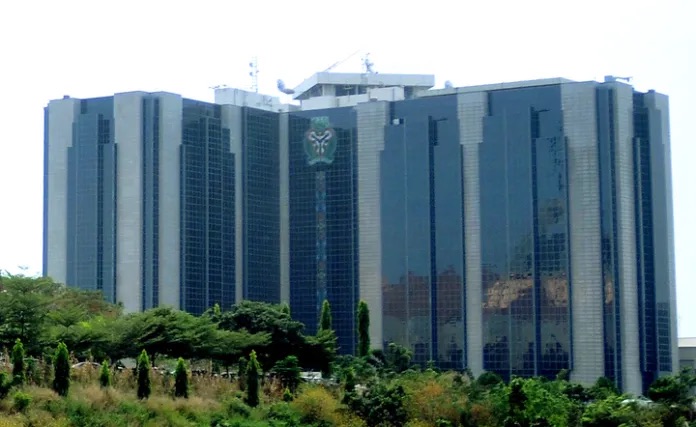
The new AON leadership, therefore, have the challange of partnering with the government, regulatory agencies, Central Bank of Nigeria, banks and creditor institutions to secure loans at single digit interest rates to boost fleet size capacity of members to compete effectively locally and in the global air space with other world renowned airlines. The feat of Air Peace in recent months has shown that only with the right aircraft fleet and size that the local industry can compete and offer quality services to passengers, create massive job opportunities for citizens and ancillary benefits to the Nigerian economy.
Multiple taxation
Taking up the mantle of leadership in a period all sectors, including aviation, appear heavily weighed down by COVID-19, means the new AON leadership shoild find a way to compel government to ease some of the tax burdens borne by airline owners.
The plan by government to provide about N5billion bailout for the industry would amount to a futile exercise under a clime where operators remain heavily taxed.
In fact, it is time the AON stood their ground for the harmonisation of charges by both NCAA , Federal Airports Authority of Nigeria ( FAAN) and the Nigerian Airspace Management Agency ( NAMA).
Jet A1 and local content law
Another challange before the new AON leadership is aligning with the government and the NNPC to bring down the cost of Aviation fuel, also known as JetA1. Fuel cost accounts for about 40 per cent of cost of operations for airlines, and is a lot cheaper in many other African countries and mostly
subsidized by the government for their airlines. On the contrary, airlines in Nigeria are made to pay exorbitant prices in excess of N250 per litre for the same product. Yet Nigeria is an oil producing country. A target should therefore be set by the new team to bring down cost of JetA1 for members.
As COVID-19 shrinks the industry , the more globally, Nigeria’s aviation sector would require a local content law akin to that operating in the oil and gas industry if it hopes to save existing workforce and create new jobs.
Foreign airlines are having a field day flying into Nigeria’s various airports unchallenged as Nigeria lacks a national carrier to reciprocate its over 88 Bilateral Air Service Agreements (BASA) signed with foreign airlines.
A local content law that makes it mandatory for all foreign airlines operating into Nigeria to have a Nigerian pilot and cabin crew on its staff would, therefore, go a long way in creating new jobs for Nigerian professionals and also cutting down some of the capital flight linked to the foreign carriers.
There should also be a law that abolishes the hiring of expatriates by private airline operators to positions that can be filled by Nigerians. These issues should form the core of the set targets that the new executives of the AON should face.