Follow Us on Google
•West, Central Africa most expensive in air travel –ASKY CEO
By Chinelo Obogo
All 12 member states of the Economic Community of West African States (ECOWAS) have commenced the process of complying with the bloc’s directive to abolish and reduce taxes, charges and fees on air transport in an effort to crash airfares.
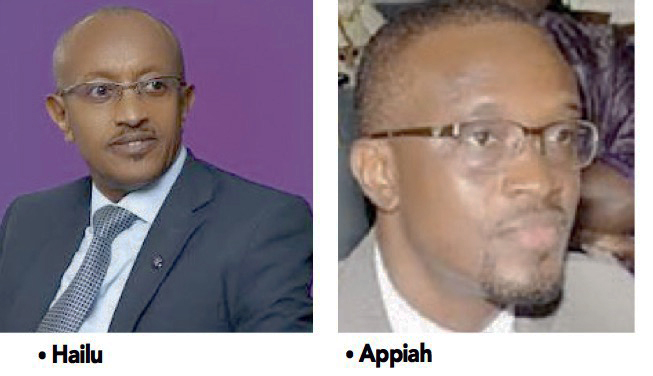
The Director of Transport for ECOWAS, Chris Appiah, made the disclosure when he spoke alongside the Chief Executive Officer of ASKY Airlines, Esayas Halilu at the July edition of the AFRAA SkyConnect Dialogue on Wednesday.
The update came from a discussion themed: “How ECOWAS Aviation Tax Abolition Can Transform Regional Connectivity and Spur Growth.”
The dialogue centred on ECOWAS’s abolition of taxes on air transport and its 25 percent reduction of charges and fees, and the implications for traffic growth, connectivity and regional integration. The discussion also touched on the notification and advocacy that preceded implementation of the ECOWAS decision, the challenges and mechanisms to monitor and ensure compliance, as well as the expected impact of implementation on connectivity, traffic, tourism and trade growth.
The genesis of the directive
Appiah started the conversation by saying that ECOWAS realised that the issue of taxes, charges, and fees was impacting air connectivity and airline success within the sub-region, and as a result, it took certain measures to ensure that air transport becomes affordable and competitive.
Explaining the reasoning behind the intervention, Appiah said: “We recognize that air transport like all other modes of transport is only a catalyst for the integration we want to achieve. So if we want to build on the strong integration and move to the next level, we must address the challenges facing that catalyst in order to accelerate the integration process. That was the first and highest-level reason for focusing on making air transport more affordable and accessible.
“Second, it is widely recognized and confirmed by assessment reports that the performance of the region’s air transport sector requires further work to make it more accessible and the preferred mode of travel and trade. We partnered with several organizations, including IATA, AFRAA, and AFCAC, to conduct performance assessments of our air transport market. Among the key cost drivers we identified, when we narrowed in on taxes, fees, and charges, we found that on an average ticket, taxes could account for close to 60–65% of the total cost. While we recognize that these taxes are typically intended to fund infrastructure and related facilities at airports, we found that the sector had become overtaxed and overburdened, and as a result, demand and traffic were significantly suppressed.”
Other News
He said the findings of those assessments pushed the matter to the highest political level in the region: “Compared to other regions, our airports and airlines were not competitive enough to feature among the top 10 in passenger traffic or carrying capacity. All of this led to a regional decision by the Heads of State themselves. To be clear, this wasn’t simply the Commission in Abuja deciding unilaterally to reduce costs, at the summit, the Heads of State themselves recognized that regional mobility was being hindered by the cost of travel, and they directed their Ministers of Transport, Foreign Affairs, and Finance to find a solution in collaboration with the Commission. That is where the work began. We then examined which taxes were contributing most to these costs, and that is why two specific taxes and four charges were targeted for either elimination or a 25% reduction.”
On the state of implementation across the region, Appiah confirmed that every ECOWAS member state has taken steps toward compliance since the directive took effect at the start of the year. He said: “As of January 1, 2026 member states were expected to begin implementation but to clarify, it was never going to be practical for all member states to fully eliminate their taxes and reduce charges on day one as removing taxes goes through a formal legal process. Last week, we met with all the countries in Lomé, and the Director-Generals of 17 civil aviation authorities were present. From the reports we received, I’m glad to say all 12 member states have begun the compliance process.
“I should also point out that one country, Côte d’Ivoire, has already fully eliminated its taxes in line with the decision. In addition, within the past three days, we received official communication from the Government of Sierra Leone confirming that they have removed the $50 airport security charge previously levied on all passengers arriving in and departing from Freetown. All other countries have also begun taking national-level action.”
Appiah explained that full compliance would take time because of the process involved, but stressed that the groundwork has been laid in every country: “Removing taxes requires revising national tax laws, and this takes time but we’ve confirmed that this process has begun in every country. Second, it requires multi-sectoral consultation across finance, transport, and economic affairs ministries, and nearly all countries have started these discussions. Third, some airports operate under existing concession contracts under which certain charges and taxes are levied on travellers to repay investment made in the airport. Renegotiating these existing contracts to find alternative funding solutions will take time. This work is ongoing,” he said.
High cost of flying in Africa
On how expensive travel is within Africa, Halilu said: “To be clear, Africa as a whole is more expensive than the rest of the planet when it comes to air travel, that’s the first point. Within that, East and Southern Africa are somewhat more competitive in terms of pricing, but West and Central Africa are very expensive, particularly West Africa. This is due to several factors. First, taxes, charges, and fees are very high. Second, aviation infrastructure costs, landing, parking, and other airport charges, as well as security fees are also very high. In addition, fuel is more expensive: Africa exports crude oil but imports refined jet fuel, so fuel costs more here than elsewhere on the planet.
“Within Africa, we transact in local currencies, the CFA franc, the naira, the cedi, the kwacha, the birr, and others but aviation costs are largely denominated in foreign currency. Buying or leasing an aircraft or engine, importing parts, paying for maintenance and training all of this requires foreign exchange. So access to hard currency adds significant cost, since we earn in soft currency but must spend in hard currency. All of this combined makes aviation very expensive across the continent, which is why ECOWAS intervened to reduce certain charges and fees.”
Asked whether the benefits of tax removal would be passed on to travellers and cause a reduction in the cost of air fares, Halilu said: “Taxes, charges, and fees are one factor driving up ticket prices, but there’s also another major factor to address, fuel, which is 30 to 40% more expensive in Africa than elsewhere. In addition, Africa largely operates older aircraft, somewhere between 700 and 800 of them with higher maintenance costs. As I mentioned, limited access to foreign exchange also raises costs, and the market itself is fragmented: only about 19% of intra-African routes are directly connected; the rest are not. So SAATM needs to be realized to build economies of scale and reduce unit costs. Fuel costs, along with the cost of infrastructure, navigation, landing, parking, ground handling, catering are all significantly higher here than in other regions, and all of this needs to be addressed.”
He called for closer cooperation across the industry, saying: “To implement SAATM sooner rather than later, airlines and countries across the ECOWAS region and Africa more broadly need to cooperate much more closely. There are 54 or 55 countries on the continent, depending on who you ask, and each wants its own national carrier. That isn’t practical; it only adds to market fragmentation. We need to move toward cooperation, alliances, and even mergers and joint ventures to make the sector more manageable. One country may have strong tourism potential; another may have a well-run, successful airline but limited tourism appeal. These two should combine forces, one brings tourists to the other, while the other grants the airline greater liberalized access under SAATM-type arrangements. Both benefit.
“It isn’t only through airline revenue that African countries can prosper, countries need to exchange strengths. One has tourism, another has natural resources, another has strong exports, another has passenger traffic, and another has a well-functioning airline. We need to team up, exchange, and combine our resources and capabilities to work together. It isn’t just about charges and taxes, fuel costs, other infrastructure charges, and traffic-rights restrictions all contribute to high unit costs and limit economies of scale. We need to address all of these factors.”