Follow Us on Google
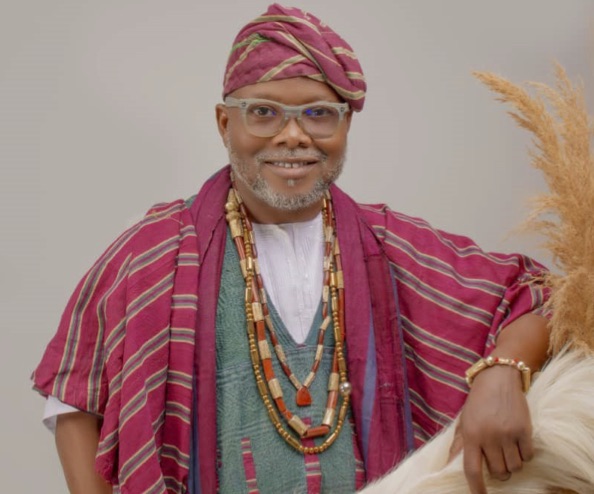
By Chukwuma Umeorah
“I’ve decided to devote my personal resources, connections, reach and pool of influence to transform the practice and support fellow media practitioners.”
At an age when many choose quiet reflection, Otunba Mike Ade Aladenika has chosen action. For him, turning 60 was never going to be just about cake, clinking of charged wine glasses, applause and tributes. The veteran journalist and former chairman of the Nigeria Union of Journalists (NUJ), Edo State Council, transformed what could have been a routine milestone ceremony into a statement of purpose for Nigeria’s media industry.
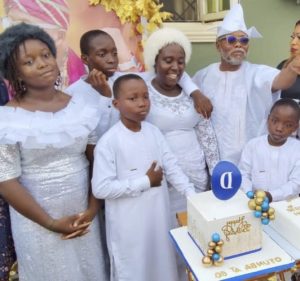
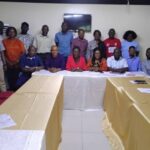
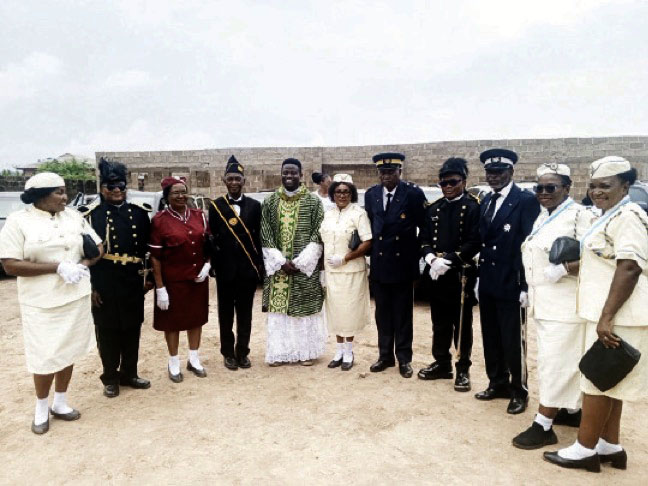
December 22, 2025, began with songs of praise and an atmosphere of thanksgiving at the Mountain of Fire and Miracles Ministry, Testimony Centre, Amagba, Benin, as Aladenika celebrated his 60th birthday. It was not the kind of gathering that announced excess or fanfare. Instead, it reflected gratitude, which gracefully defined the essence of the day. From the church service, the celebration moved to his residence where colleagues, friends and well-wishers were warmly received. Conversations flowed easily, laughter and banter were shared, and memories of long years in journalism resurfaced.
It remains a remarkable story of how Aladenika has etched his name in the annals of media excellence, rising from the ranks of a street reporter to becoming a respected corporate spokesman.
Born into the Leyo Royal Family of Ondo Kingdom, Ondo State, his journalistic journey began with the Nigerian Observer, Benin City, after completing his National Youth Service Corps in Kogi State as a features writer under Mr. Dele Enaifoghe. He later joined the Independent Television (ITV), Benin, owned by Sir Gabriel Osawaru Igbinedion, where he worked under the mentorship of the late Abbey Jarikre, then news manager.
“The trio-masters of the game – Lola Ebueku, Tony Abolo, and late Abbey Jarikre – managed the station, providing a training ground for me”, he recalls gleefully.
On the streets of Benin City, Aladenika honed his reporting skills, covering local news and events. His passion for “human angle stories” earned him recognition, making his sign-off: “Mike A-l-a-d-e-n-i-k-a, Independent Television News” a household name in Edo, Delta and Ondo states. At ITV Benin, Aladenika progressed to become Desk Editor, Foreign Desk Editor and reporter attached to the offices of then Edo State Governor, Chief Lucky Igbinedion, and the late Ondo State Governor Adebayo Adefarati. He worked with top policymakers, administrators, and politicians, becoming a sought-after journalist.
In 2003, Aladenika contested and won the Nigeria Union of Journalists (NUJ) Edo State chairmanship position, becoming the 13th chairman and the only non-indigenous chairman. He led the union prudently, thus leading his administration of the Union into financial autonomy, secured training for members, ensured their safety, and handled all litigation challenges.
After his tenure, he joined the Africa Independent Television (AIT), Benin Network Centre, as pioneer Head of Station, Raypower FM, and Head of News and Current Affairs. He occupied the positions for over 10 years until he stepped aside to join hands with other colleagues to establish the SPARKNEWSNAIJA, an online news platform where he was the principal editor.
His expertise and leadership abilities did not go unnoticed, as he was appointed Principal Assistant Registrar and Head of Information, Protocol and Public Relations at Ambrose Alli University (AAU), Ekpoma.
Relying on his experience, coupled with the vast support he has enjoyed from the management, staff and students of the school, he has proved to the world that the media makes things work better. He has helped to rebrand the institution in no small measure.
For Aladenika, the gift of life was not something he took for granted; he attributed the journey not to personal strength, but to divine grace.
At 60, I’m a product of unlimited grace. I often ask myself how I got here. It could have only been grace. It is not everybody that has my kind of grace. It is peculiar that for God’s love for me I wouldn’t have been 60. So, it has taken the grace of God for me to attain this level and I am so thankful to God. I’m so thankful for everybody that made one or two contributions towards my growth.”
The veteran journalist chose to redirect the spotlight from himself to Nigerian journalism, unveiling the Nigerian Media Support Initiative (NMSI), a non-governmental organisation designed to respond to the growing vulnerabilities of media practitioners across the country.
“To achieve this, I am floating an NGO that will take care of journalists. It will take care of journalists in their welfare, it will take care of journalists in their professional dealings, it will take care of journalists in litigation against them. It will take care of journalism in all ramifications because these are areas that I see that my colleagues are suffering and lacking. I intend to change that effect,” he said passionately.
He added: “I could have been one of them. Because of this experience, I have decided to devote my personal resources, connections, reach, and pool of influence to transform the practice and support fellow practitioners.”
In a country where journalism is increasingly shaped by economic pressure, shrinking newsroom budgets, legal intimidation and safety risks, Aladenika’s explains that having practised in the profession that has shaped his life for more than two decades, his initiative seeks to provide a structured response where individual resilience has long been the only defence.
“My journey has exposed me to the challenges faced by practitioners, limited access to modern tools, harassment, defamation suits, low remuneration, and insufficient legal protection undermine reporting quality and public trust. The NSMI will address these issues, empowering practitioners to deliver accurate, inclusive, and impactful journalism.
“These were not abstract problems, but daily realities for reporters and editors working across the country. In many newsrooms in Nigeria, journalists operate without job security, health insurance or legal backing, even as they are expected to report on corruption, insecurity, elections and governance failures. For freelancers and contract staff, the risks are even more pronounced, with little institutional protection when stories trigger backlash.”
Otunba Aladenika argued that these pressures have far-reaching consequences beyond the welfare of journalists themselves. “When practitioners are constantly worried about survival, safety or litigation, the quality of journalism inevitably suffers. These issues undermine the quality of reporting and public trust.” He stressed that a weakened media cannot effectively serve the public interest.
While unions and professional bodies play critical roles, Aladenika said there is a growing need for an independent platform focused on capacity building, welfare support and ethical reinforcement, particularly at a time when economic pressures are reshaping newsroom priorities.
He added that the event was not about looking back alone, but one shaped by responsibility, especially to colleagues who may not have enjoyed the same fortune or support. “You could have seen that I did not do an elaborate birthday. It is for a purpose. I’ve also observed that my colleagues and contemporaries a good number of them they don’t have the grace I had and how do I translate my grace into them how do I port into them.”
Aladenika ‘s over two decades in the profession is best described as a tale of a rookie reporter who has become a corporate spokesman.
Family members and friends also used the occasion to reflect on the celebrant’s character and journey. Their wishes were simple and heartfelt prayers for long life, wisdom and continued impact.
His wife, Pastor Judith Esosa Aladenika, who confirmed that Aladenika’s compassion for others extends beyond family made her wish for her husband. “I wish him well. I wish him 120 years in the name of Jesus. There’s nothing God cannot do. And I pray that God should grant him more wisdom, knowledge, and understanding.”
Others spoke of his humility, intellect and accessibility, qualities they believe have sustained his career and relationships over the decades. “Very intelligent guy, very delightable and easygoing. I wish him the very best. This is the beginning of many years to come.” As the day rounded off, it became clear that the celebration was less about age and more about direction for Aladenika who chose to turn gratitude into responsibility, and a birthday into a platform for reform.