Follow Us on Google

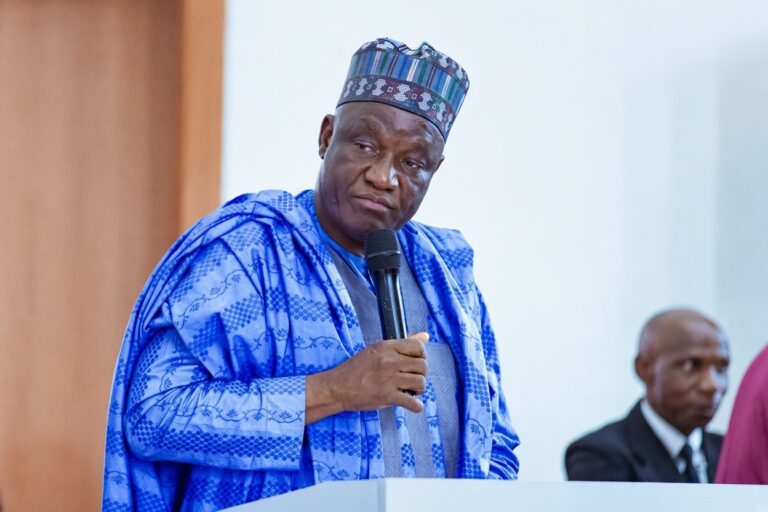
The Rt. Hon. Tukur Bodinga is the Speaker of the 10th Sokoto State House of Assembly and represents Bodinga North Constituency. In this interview, he speaks on how the Assembly has been able to pass 25 consequential bills, including the bill on mandatory and compulsory premarital medical screening, the bill to curb extravagances in marriage, and many others. He also describes the high turnover of House of Assembly members as a tragedy which he says must stop.
What is the working relationship between the House of Assembly and the executive?
The relationship is very cordial and it’s the same with the judiciary even though our interaction is limited. A lot of credit for the smooth working relationship goes to the Executive under the leadership of Dr. Aliyu Sokoto, who has continuously treated the House as partners in progress.
What feedback mechanism does the House have that helps it gauge the opinion of the people on its performance?
We have public hearings and town hall meetings. We also have a website where every member can be reached by his or her constituents. It’s a functional and interactive website, so members of our various constituencies interact with us in real time. We also maintain constituency offices with staff whose duties include bringing to our attention issues affecting our communities. The feedback mechanism is working well and we are very happy.
In the 10th House of Assembly, how many of your members returned from 2019?
More than 16 members came back from the 2019 set. It’s important to stress that some members, for personal reasons, decided not to seek re-election. Some members died, and of course some didn’t get their party ticket to contest in 2023. So the number of those who returned goes to show that we are truly in tune with our people. The casualty rate is not as bad as that of the National Assembly. However, Nigerians must understand that there are several other reasons why many members don’t go back. For instance, some constituencies practice zoning, where a member elected in 2023 won’t spend beyond one term. The high turnover of members is a tragedy because it affects the capacities of the legislature. We need to do something about this.
Can you in all honesty say that the Sokoto State House of Assembly has effectively represented the interests of all citizens of the state?
I can beat my chest that we have, and the evidence is in our work, which is obvious. I am happy that the governor and the people agree that we have always stood by them and solidly aligned ourselves with the interest of the state. Though for some Nigerians, a harmonious relationship means that the legislature has been compromised.
Are there laws that the executive wanted passed and the House refused? Also, in terms of debating the budget estimates, are there issues that you have included or removed and the executive accepted it in good faith?
It is important for Nigerians to understand that the annual budgets are estimates submitted by the executive arm which the House has a constitutional responsibility to legislate on before it can become a law. So when absolutely necessary, we have effected amendments to the budget estimates and other bills after public hearings. In Sokoto State, we work as a team. There are lots of constant consultations, and because we understand the governor’s position, we are able to work in harmony.
Did the House tinker with some laws and the budget to show that it is not a rubber stamp legislature?
Absolutely not. The Sokoto State House of Assembly has never subjected any bill to unnecessary amendments just to prove a point. I must also commend the executive for sending us well-researched and crafted bills. In fairness to the governor, he is always ready to listen to our opinion. For instance, during the debate on the 2025 budget, we discovered that some important areas were not included and we pointed this out, and the governor was very okay with our observations. I think it’s essentially a matter of approach, and this has reduced areas of friction. Thankfully, there hasn’t been any issue that we haven’t been able to amicably resolve because of the good communication between both branches.
How about funding?
We are not autonomous, but the house is well funded.
How many bills has the House under your leadership passed?
In the last two years, the House has passed 25 bills, of which 22 have been assented to by the governor. The remaining three will soon be transmitted to the governor for assent.
Do the outstanding bills include that on Mandatory and Compulsory premarital medical screening, and would you say that you have achieved your major legislative priorities for the current session of the House?
Yes, and it’s important to stress that the bill is a private member bill. We have substantially achieved our major legislative goals for this year and we are satisfied with our performance.
Are you satisfied with the contribution of the Sokoto State Community Corps to the security of the people?
Yes, because the members of the corps are from the communities being harassed by these insurgents, they are giving it their all. The other advantage is that they know the terrain. We lost five gallant members of the corps in the line of duty. The governor’s main objective of creating the corps is to complement the security agencies, and they have been providing the security agencies with credible intelligence which they find extremely useful.
Other News
The opposition has accused the governor of not doing much in terms of security. Is this true?
I don’t think the opposition elements have been fair to the governor, who has been up and doing on the issue of insecurity confronting the state. By the way, you don’t expect the opposition to be fair to the government. There are certain security actions that for obvious reasons I can’t disclose. But it’s public knowledge that the state government has provided the security agencies with critical logistics support – over 140 buffalo vehicles and thousands of motorcycles. The governor built a military base at Illela for the army because it would help in the war against the bandits. There is also financial support for the security agencies. The noticeable reduction in the activities of these bandits is because of the huge investment of the state government.
So it’s political when they say the governor is not doing enough?
It’s highly political, and we expect them to increase the volume of their falsehoods with the 2027 elections drawing closer. On his part, the governor will remain focused on delivering projects. Recently he completed the old airport water supply project which was started by our father Senator Aliyu Wamakko.
Recently, the House passed a bill mandating compulsory pre-marital medical screening for intending couples. What informed the decision of the House to pass the bill and has the governor signed it?
The bill has been passed by the House, but it is yet to be transmitted to the governor for his signature, so it is not yet a law. What informed the passage of the bill is the social and health challenges that the society is facing as a result of the failure of intending couples to carry out these tests. Science has helped us to know that if two people with AS genotypes marry, there is a very high probability of them having sickle cell children, and this would be a huge stress to the family and the society. It’s to help save families from the trauma and stigma associated with these issues. The legislation has been well received by the public, and the support of critical stakeholders like the health personnel, traditional and religious leaders has been overwhelming. We have no doubt that the governor will sign the bill once we transmit it to him.
Is it the same with the bill to curb extravagant marriages?
They are two different bills. The high cost of marriage has become unacceptable, and to show that we mean business, some members of the House are leading the way by insisting on moderate marriage ceremonies for their children. They are not interested in the grooms gifting their daughters 20 boxes of clothes and gold and having expensive receptions. That era is past. We are opposed to extravagance in marriages. Together with the law on pre-marital medical screening for intending couples, we hope to restore some sanity. There is no doubt that the high cost of marriage is behind some of the societal crisis we are confronted with. Now we have the minimum bride price and the number of boxes a groom can present. The sponsor of the bill started with his own children that recently got married. He made it absolutely clear that he is more interested in them having a happy marriage than the grooms presenting them with expensive gifts. We need a re-orientation on this issue, and we are counting on parents and religious leaders to help ensure that the message is reinforced. This will definitely help young people of marriageable age to marry since the cost of marriage has been drastically reduced. We look forward to seeing them marry and build their homes.
Last year, the Sokoto State House of Assembly passed some bills, but it was that of the local government that generated some controversy.
When you want to kill a dog, you give it a bad name. In order to derail the good intentions of the governor, the opposition went to town to say that the amendment was targeted at the Sultan of Sokoto as a prelude to his deposition. Unfortunately, they succeeded in overheating the polity.
After the local government bill was passed, people finally understood that they were misled by the opposition despite our efforts to convince them that the bill had nothing to do with the Chieftaincy Appointment and Deposition Law, which is the one that relates to the removal of the Sultan. Thankfully, we stood our ground and everyone is enjoying the benefits of all the bills that we have passed. As a result of the rural roads law, the governor has been able to construct several roads. Those roads wouldn’t have been possible without the instrumentality of the law.
The amendment of the local government law changed the tenure of the Chairmen and Councilors from two to three years. What can an elected chairman achieve in two years? This explains why the governor deemed it necessary to increase their tenure to enable them to initiate and execute projects. The last administration changed the law to two years in 2016. Before that amendment, the tenure was three years. The other amendment was to Section 13 and Section 14, which is in respect of purchase of nomination forms for the Chairmanship and councillorship positions. The executive thought it better to give the State Independent Electoral Commission the power to determine the amount to be paid for nominations forms. The other amendment was in respect of Section 76 of the Local Government law as it relates to the functions of the Sultanate Council in the appointment of districts and village heads. The Attorney General enlightened the people of the state during the public hearing that under the Nigerian constitution, executive powers are vested in the governor, and that it’s the governor that can appoint, while the Sultanate Council can only recommend. We have been vindicated by the outcome.
What lesson did you learn from that amendment to the local government law of 2009?
The big lesson for the House was the need for us to constantly consult critical stakeholders and to be always guided by public good. We have always known that while we can’t please everyone, we must continue to focus on the interest of the majority and our conscience. So we have no apology for carrying out our constitutional responsibilities that our people elected us to discharge. Once we are convinced that an issue is in the greater interest of the people, we don’t look back. Remember that members also subscribed to the oath of allegiance and oath of office.
I must thank the governor who has been very supportive. He allowed the House of Assembly to do its job. Once he is convinced about the rightness of his position on any issue, he doesn’t look back, and you must have a superior argument to get him to change his mind.
What’s your impression of the governor?
Governor Sokoto is a good man, firm and decisive. He is highly religious and principled. He is calm and a good listener who also consults widely before taking any decision. He’s a democrat and takes his assignment as governor seriously. He is focused on his assignment and he is giving it his all. The governor has more than justified his election, and this is a general consensus of the people. He is a complete gentleman in every sense of the word, but at the same time, when you try to cross your boundaries, he can show you his other side, especially when it comes to issues about the development of the state. The opposition has been insulting him, but he has always ignored them because he understands that it is a ploy to distract him.
Governor Sokoto has received commendations from across the state for his performance. As a House, do you deserve to share in the accolades the governor has been receiving?
Yes, because we have provided the necessary legislative support that has enabled him to accomplish all that he has achieved. Look at the Katin Sauki that he opened for public servants and pensioners – it’s a policy driven by the governor’s concern for the poor. The foodstuffs that are sold in the shop are subsidised by 20%. How can we in good conscience not support the governor over such a laudable programme?
If you agree that Governor Sokoto has done well, why hasn’t the Sokoto State House of Assembly moved a motion for him to run unopposed as APC’s candidate in the 2027 gubernatorial election?
The House will soon pass a vote of confidence on the performance of the governor. It is a way of saying that he is doing well and that he deserves another term.