Follow Us on Google

From Abdulrazaq Mungadi, Gombe
When a mother dies during childbirth in a remote community, the tragedy often goes unrecorded or unreported. When a newborn passes away hours after delivery at home, the loss is quietly mourned within the family, but never enters official statistics. Such deaths fade into silence, leaving public health experts with little or no data to understand the true scale of maternal and child mortality in many villages across Gombe State.
Now, Rotary International, working in partnership with the Gombe State government, has introduced the Maternal, Prenatal, and Child Death Surveillance and Response (MPCDSR) system, an initiative that could change the story.
The programme seeks to capture every maternal and child death, especially those that happen outside health facilities. Speaking with Daily Sun, the National Coordinator and Country Director of Rotary’s Reproductive, Maternal and Child Health (RMCH) in Nigeria, Prof. Emmanuel Adedolapo Lufadeju, described the initiative as a game changer in the fight against the death of mothers and their newborns.
According to him, “many deliveries still happen at home and unfortunately, when deaths occur there, they are not reflected in official health records. Through the MPCDSR, every maternal or child death in the community will now be reported by the Head of Primary Health Centre in the community, ward leaders, and representatives of the National Population Commission (NPC).”
He explained that under the system, a verbal autopsy is conducted whenever a death is reported in the community. This involves interviewing family members and witnesses to determine the likely cause, with findings forwarded to local and state authorities. The goal is not only to record numbers but also to generate lessons that can prevent future tragedies.
Nigeria accounts for one of the highest maternal and child mortality rates in the world. The National Demographic and Health Survey estimates that for every 100,000 live births, hundreds of mothers die, often from preventable causes such as bleeding, infections, or obstructed labour. Gombe, like many states in the North-east, has long grappled with these grim statistics.
Other News
According to some officials, part of the problem has been underreporting. “If you don’t know the scale of the crisis, you can’t design effective responses,” Prof. Lufadeju said, adding that the new system ensures that no life is lost in silence. Every mother, every child counts.
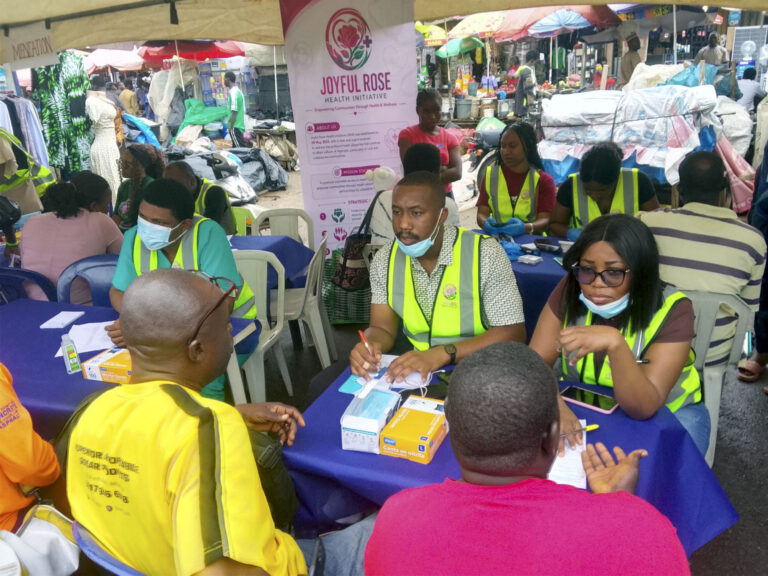
The Country Director, who was in Gombe for a medical outreach jointly organised by the state Ministry of Health and Rotary in Gombe, Kaltungo, and Yamaltu-Deba local government areas, further disclosed that for more than a decade, the organization has partnered with several states in running medical outreaches that combine awareness campaigns, diagnostic services, and treatment.
According to him, the programmes have targeted not just women but also men, encouraging fathers to support their wives in seeking skilled care during pregnancy and childbirth. He noted that the efforts are already bearing fruit. “We are witnessing cultural shifts. More women are attending antenatal and postnatal clinics. More men are accompanying their wives to hospitals instead of insisting on home delivery. These are the changes that save lives.”
As part of an effort to ensure community ownership and sustainability of the initiatives, the MPCDSR was embedded with a grassroots design. By involving ward leaders, community volunteers, and local health workers, the initiative aims to embed accountability at the community level. Reports generated from the surveillance system will feed into state planning, making health interventions more responsive to the realities on the ground.
Speaking further, Prof. Lufadeju stated that the project also aligns with global calls for countries to strengthen vital statistics and health information systems. For Nigeria, where over 65 percent of births still take place outside health facilities, the system could be a turning point.
For communities where maternal death has been normalized as “God’s will,” the MPCDSR also carries a symbolic weight by acknowledging that every loss matters. “Beyond the numbers, it gives dignity to those lives. It says to every family, your pain is seen, your story is heard, and we are working to make sure others do not suffer the same fate,” Lufadeju emphasized.
As the programme begins to roll out, health workers and community leaders in Gombe are hopeful. If successful, the model could be replicated in other states, offering Nigeria a pathway to tackle one of its most persistent public health challenges. Meanwhile, for now, families across rural communities in Gombe who once mourned in silence may find their tragedies transformed into data, lessons and, ultimately, change.