Follow Us on Google
By Josfyn Uba
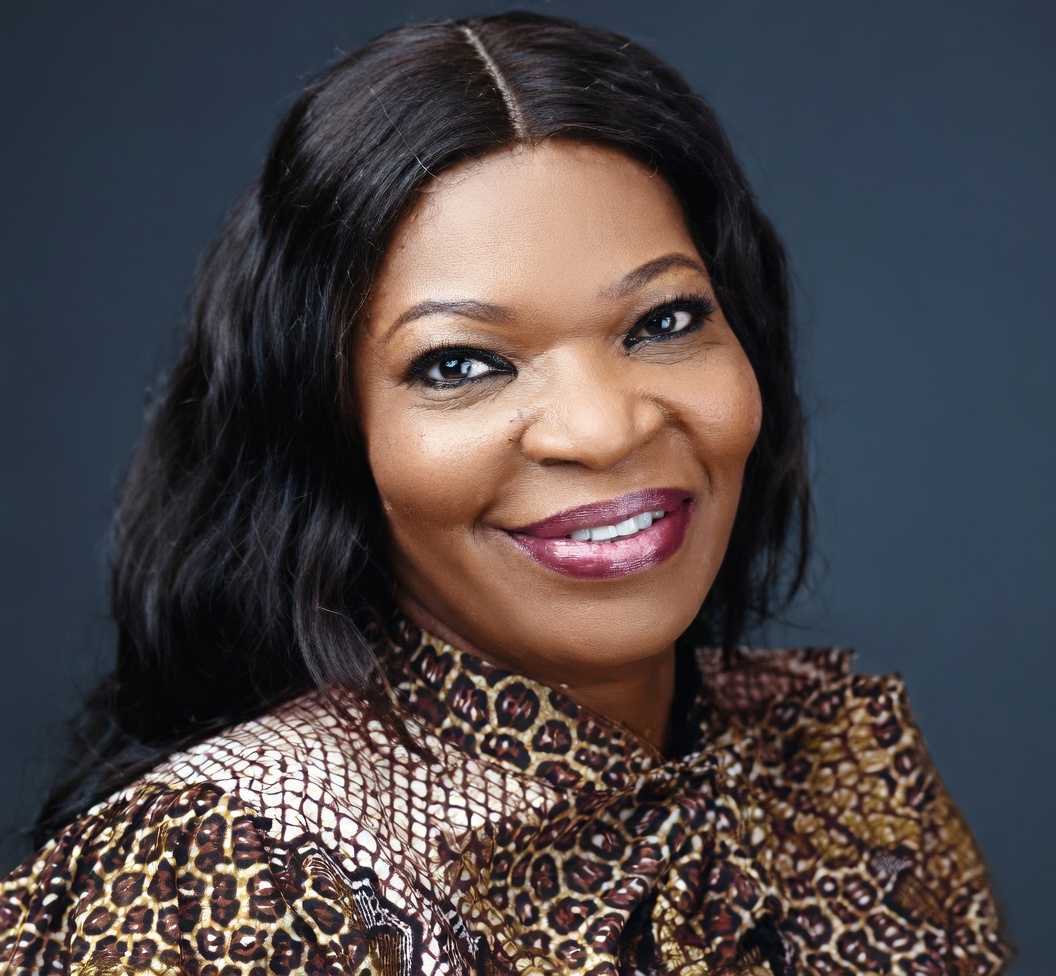
The landscape of Nigeria’s green economy is fast evolving and sustainability is no longer just a buzzword; it is a critical economic imperative. At the forefront of this shift is Lande Abudu, a Senior Energy Specialist, seasoned sustainability practitioner and European Energy Centre-accredited expert, Abudu has spent years at the intersection of policy, advocacy, and implementation.
Aptly described as a powerhouse in the world of Nigerian sustainability, Lande Abudu has worn many hats¬-From her influential tenure as CEO of the Renewable Energy Association of Nigeria (REAN) to her pivotal role as Component Lead for the World Bank-funded Nigeria Electrification Project, she has been instrumental in deploying over one million solar home systems across the country.
For a woman whose work is literally lighting up millions of Nigerian homes and her deep commitment to both environmental preservation and educational development, Abudu joined Daily Sun recently to discuss the future of the ‘Green Nigeria’ and the challenges of powering a nation through sustainable innovation.
Sustainability is shifting from reporting to execution. What practical changes should businesses make this year?
Invest in renewable energy infrastructure powering digital infrastructure is top of that list and to link sustainability to profitability, not just compliance.
To remain competitive, companies need to treat sustainability as a strategic investment.
One of the biggest challenges is the last-mile energy and digital gap. How do we reach rural or underserved communities with affordable, reliable energy, and with connectivity?
Another challenge is the intersection of energy and digital infrastructure. Smart grids, energy data, and digital finance are becoming central to the transition. If women are underrepresented in both sectors, we risk designing systems that overlook half the population.
We are four years away from the 2030 SDG deadline. Are you optimistic?
I am cautiously optimistic. There is momentum that has created awareness, but we need to accelerate the pace across all the goals and specifically SDG 5, gender equality, that is the focus of IWD. There have only been two women in Africa directly elected as president. Gender parity in African cabinets still generally remains below 50% but we are encouraged by those countries that have achieved parity or near, such as Rwanda, South Africa, Ethiopia, and Seychelles.
If there is one thing you want governments and the private sector to “give” to women this year, what would it be?
If there is one thing you want governments and the private sector to “give” to women this year, I would say, opportunity.
Not just symbolic commitments, but real investment in women’s participation that encompasses training programmes, financing for women-led businesses, and leadership pathways.
To go back to this year’s theme of “Give To Gain.” when we invest in women, we unlock progress for entire societies.
The theme for International Women’s Day (IWD) 2026 is “Give To Gain”, which emphasizes the power of reciprocity—the idea that when we invest in and “give” to women (through resources, mentorship, and opportunity), the entire community “gains.”
How does the philosophy of “Give To Gain” resonate with your work in the energy sector?
In energy, the idea of “give to gain” goes beyond the slogan. When you give communities reliable energy, you don’t just power homes; you power opportunity. Small businesses stay open after dark, clinics can refrigerate vaccines, and children can study at night.
Energy access impacts positively across the verticals of healthcare, education, small business growth, food systems, and digital connectivity. When the lights come on in a community, multiple sectors begin to move forward at once.
Around 600 million people in Africa still lack access to electricity, and women often spend hours collecting fuel or managing household energy needs.
When we “give” women access to energy, financing, and technical skills, the entire community gains. Energy access quite literally transforms lives.
In what ways has “giving” back helped you “gain” as a leader?
Leadership doesn’t mean having all the answers. Over time I realized it’s much more about creating space for others to contribute.
I have been fortunate to mentor several young talents, engineers working on rural energy projects, a doctor seeking to use her knowledge to help African children among others. Often, the belief is that as mentors there to guide them, but the reality is that mentees bring ideas and insights that I also learn from.
Leadership becomes stronger when you share knowledge.
Can you recall the moment that led you to pursue a career in energy?
I have shared over the years that I am an ‘accidental’ renewable energy professional. Having spent many years in the third sector, the opportunity came up to work at the intersection of energy and social enterprise where I was fortunate to see the progress that energy access delivers, especially to women and girls in rural communities. The fulfillment that comes from seeing communities grow because of a seemingly simple connection to power can’t be quantified and I feel privileged to still be in a sector that contributes to the attainment of several development goals. In my present role working across energy and connectivity, it has opened my eyes to even more opportunities presented if we continue to reduce the digital divide.
Energy isn’t abstract infrastructure, it shapes livelihoods, education, and health, it’s about people.
What are the most pressing industry challenges in our local context, and how are women uniquely positioned to solve them?
Women are uniquely positioned here because they often manage household energy use. They understand the practical realities of cost, reliability and safety that determine whether a solution actually works. In Sub-Saharan Africa, our 2025 Mobile Gender Gap Report tells us that there is a 13% gender gap in mobile ownership, translating to 105 million women who do not own a mobile phone.
Can you share a project where a woman-led initiative outperformed traditional approaches?
I can point to the work of Solar Sister, whose model focuses on training women to become clean energy entrepreneurs, essentially killing two birds with one stone. Reducing energy poverty while fostering economic growth. The women in the various communities are at the heart of the initiative and that has been the game-changer.
Who was the woman who “gave” to you early in your career?
I am happy to say it was more than one woman. But if I were to share the recurring theme, it would be that they supported me to ensure that I stayed in the room, giving me opportunities to lead rather than be one of a large throng of supporting cast members.
For a young girl who wants to “save the world,” what is the first step?
Stay curious about how the world works.
Whether it’s science, engineering, economics, or policy, the most important thing is to believe that these spaces belong to you. And don’t underestimate the power of small steps.