Follow Us on Google
•How issue-based election campaigns have given way to theatrics
By Olakunle Olafioye
The frenetic season of political electioneering is here once again. With the Independent National Electoral Commission (INEC) scheduling the commencement of campaigns for the 2027 general elections for August 19, 2026, political parties and their candidates are already deploying their arsenal in the battle for votes.
For the electorate, however, electioneering should be much more than rallies, slogans, posters, social media campaigns and promises. Ideally, campaigns should provide citizens with political education and the information needed to make informed choices at the polls. For political parties and candidates, they offer an opportunity to sell their programmes, mobilise supporters, persuade voters and compete for political power.
But over the years, the character of political campaigns in Nigeria has undergone a dramatic transformation. What was once largely a contest of ideologies, policies and competing visions for governance has increasingly become a struggle for political power, characterised by personality politics, campaign of calumny, empty promises, vote-buying, threats, abuse and carefully choreographed populist stunts.
As another election cycle sets in, political analysts and scholars fear that the 2027 campaigns may not be significantly different from what Nigerians have witnessed in recent years unless political parties, candidates, the media and the electorate deliberately demand a return to issue-based electioneering.
When campaigns were about ideas
A scholar and Vice-President, Southwest, of the Historical Society of Nigeria, Dr Fidelis Enang Egbe, said Nigeria’s earlier political campaigns were markedly different from the personality-driven contests of today. According to him, politicians in the First and Second Republics largely sought the support of voters by presenting their ideas, programmes and records in office.
“Politicians such as Chief Obafemi Awolowo, Dr Nnamdi Azikiwe and Sir Abubakar Tafawa Balewa operated in an era when political campaigns involved attempts to persuade citizens through competing visions of governance,” Egbe recalled.
He added that, the ideological differences between Awolowo and Chief S.L. Akintola were central to the political crisis that engulfed the Western Region. This, he noted underscored the extent to which political ideas and differences in governance could shape political contests.
He explained that Awolowo believed the opposition had a responsibility to scrutinise the government in power, expose its shortcomings and present an alternative programme to the electorate, while Akintola favoured collaboration with the government.
According to him, campaigns also provided an opportunity for politicians seeking re-election to return to the electorate and account for their stewardship.
“Political campaigns in that era were such that politicians went back to the people who gave them the authority and mandate, telling them: ‘We promised A, B, C and D during our campaign. We have been able to do this; we have not been able to achieve this for these reasons, and we are asking you to give us another tenure to enable us to achieve the rest.’
“The opposition would then say: ‘Don’t vote for these people because they promised A, B, C and D. They have been able to fulfil A and B but have not achieved D. Vote for us and we will do better.’
“That was the political campaign in the First and Second Republics,” he said.
Such an arrangement, he argued, gave voters the opportunity to compare programmes, assess performance and make decisions based on evidence rather than emotion. “The masses were following and were able to elect politicians that they could trust into power and government,” he added.
From ideology to politics of survival
But military interventions, the annulment of the June 12, 1993 presidential election, corruption under successive military regimes and the collapse of the aborted Third Republic, according to Egbe, contributed to a major transformation in Nigeria’s political culture.
With the emergence of the Fourth Republic in 1999, political campaigns increasingly became less about ideology and more about winning elections and capturing political power. “Political campaigns and ideologies gave way to what you could refer to as a campaign for victory,” he said.
In the process, he argued, the accuracy and feasibility of campaign promises became less important, while lies, empty promises, political muscle and abuse increasingly became part of the contest.
The ultimate objective, he said, shifted from securing political power to provide good governance to securing offices for personal interests. “Politicians became terribly desperate, no longer to provide good governance, but simply to get into political power and occupy political offices for their self-interest, no longer for the interest of the masses or for proper governance.
“The consequence is an electorate often confronted with campaigns that say little about what candidates intend to do once elected” he noted.
Campaigns without accountability
The decline of issue-based campaigns has also created an accountability crisis. Egbe argued that politicians could hardly be held accountable for promises they had not clearly articulated before elections.
“You cannot really expect politicians to be held accountable when they do not clearly state what they intend to do when they get into office,” he said. A serious campaign, he maintained, should enable citizens to understand the vision, policies, priorities and strategies of candidates.
Rather than relying on slogans, personality politics and attacks on opponents, candidates should explain how they intend to address insecurity, unemployment, poverty, education, healthcare, infrastructure, agriculture and other challenges confronting Nigerians.
This position is shared by Professor Abiodun Michael Oni, who called for an urgent shift from populist rhetoric and crowd mobilisation to issue-based electioneering.
Oni said political parties should make their manifestos the centrepiece of their campaigns instead of abandoning their programmes once electioneering begins.
“The campaign should be issue-based. What problem is facing Nigeria? You identify the problem, you identify the process to solve it, and then the solution, and how will the solution be applied,” he said.
He urged candidates to explain their programmes for critical sectors such as education, healthcare and agriculture and provide details of how those policies would be implemented.
“What do we know about our programme on education? This is it, and this is how we go about it, this is how we do it. Our programme on health, our programme on agriculture. That’s what is expected the campaign to look like,” he said.
When crowds replace ideas
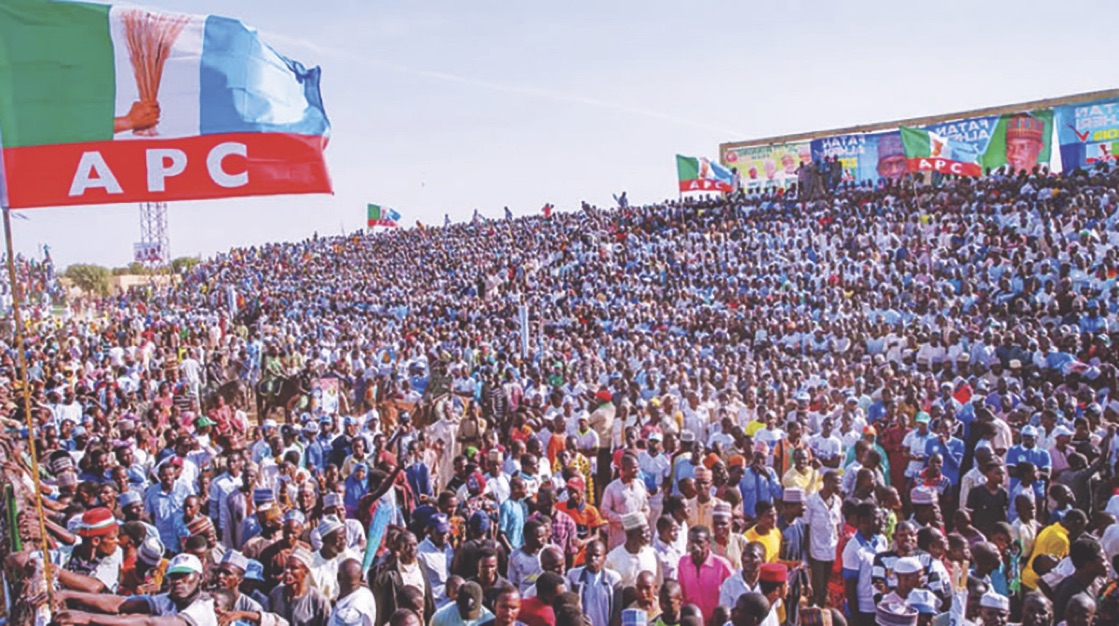
For Oni, the growing emphasis on huge rallies is another indication of the declining substance of political campaigns.
He questioned the value of rallies where thousands of people are mobilised without voters being given a clear explanation of what candidates intend to do if elected.
“I’ve just watched a campaign in Osun State. I did not even hear what they said. Just a sea of heads. It is just to intimidate people that we have arrived,” he said.
He argued that the size of a rally should not be mistaken for the popularity or acceptability of a candidate. The essence of democracy, he maintained, is persuasion, and politicians should convince voters through workable solutions rather than attempt to demonstrate political strength through the size of their crowds.
The politics of boli, akara and buns
Other News
Perhaps one of the most visible manifestations of contemporary populist politics is the tendency of politicians to stage public displays of familiarity with ordinary Nigerians during election periods.
Candidates are frequently photographed buying or eating roadside foods such as roasted plantain, popularly known as boli, corn, akara and buns. Others ride commercial motorcycles, use public transport, visit markets or engage in activities designed to project humility and grassroots connection.
Such stunts have become familiar features of Nigerian electioneering, but Egbe dismissed them as largely artificial. He described the practice as “an embarrassment” and “self-deceit”, arguing that politicians who ordinarily do not live such lifestyles cannot suddenly adopt them during campaigns and expect voters to interpret the gestures as evidence of genuine solidarity.
“If you are coming to identify with the people and you deliberately go to the roadside to eat akara or buns when everybody knows that this is not your normal lifestyle, who are you trying to deceive?” he asked.
He argued that such gestures could ultimately insult rather than impress the intelligence of voters. The same criticism applies, he said, to the distribution of campaign-branded food items, which he noted, reduces the relationship between politicians and citizens to a crude transaction.
Vote-buying and the monetisation of elections
Beyond populist stunts, the growing influence of money on elections has emerged as one of the biggest threats to meaningful political campaigns.
Political analyst Martins Obolo said the experience of recent elections should worry every politically conscious Nigerian, arguing that controversial campaigns often appear to enjoy greater political traction than attempts to sell candidates through manifestos.
“Our experience in recent past, as far as political campaigns are concerned, should be a major source of worry for every politically conscious Nigerian. Nigerian politicians have shifted totally away from issue-based campaigns which defined the First and Second Republics to a more controversial approach characterised by campaign of calumny, the use of threats against political opponents and their supporters, vote-buying and vote-selling,” Obolo noted.
Oni similarly linked the declining relevance of campaign promises to the monetisation of elections. He argued that some voters now approach elections as opportunities to negotiate financial rewards rather than assess candidates based on competence, programmes and capacity to govern.
“I have been a professor of political science, and I’ve been voting consistently. What most of them are out for on the day of the elections is vote selling. They want to buy, they want to sell their votes, and they are looking for a buyer,” he said. The practice, according to him, has created a cycle in which politicians concentrate more on the financial mobilisation of voters than on persuading them through policies.
Is the electorate to blame?
While voters are often blamed for accepting money and other inducements, Egbe argued that poverty and vulnerability must be taken into account. “There is no electorate who genuinely wants to mortgage his or her future, or the future of his or her children, for the temporary hand-outs that politicians provide,” he said.
According to him, economic hardship can force citizens into circumstances in which they accept things they would ordinarily reject. “That is why the masses are sometimes described as gullible. But I do not think that is an accurate description of the Nigerian electorate,” he said.
He maintained that Nigerians would be prepared to endure temporary hardship if they were convinced that a policy would eventually produce better governance and improved living conditions. His argument was that citizens ultimately want competent leadership and a better quality of life, not temporary hand-outs.
Media and missing campaign agenda
For Dr Emmanuel Ona, an Associate Professor of Political Science at the University of Lagos, the media also bears significant responsibility for the decline in the quality of political campaigns.
Ona noted that journalists historically played an important role in setting the agenda for electioneering by compelling political parties and candidates to address issues of public interest. He however, lamented that the media had increasingly abandoned that responsibility, allowing political discourse to become dominated by ethnicity, religion, personality attacks, insults and other sentiments.
“In the past, some of us were also journalists. We used to set the tone for campaigns. Journalists used to set the tone for campaigns. But these days, journalists have left that duty. They have teamed up with the so-called electorate and the parties,” he said.
According to him, the media should be asking candidates difficult questions about their manifestos, records, policies and plans instead of giving disproportionate attention to sensational statements, political quarrels and theatrics.
A stronger media agenda, he suggested, could force candidates to compete over ideas and compel parties to explain how their proposed policies would improve the lives of Nigerians.
The role of electoral law
Oni also called for stronger enforcement of electoral laws to check misleading, reckless and unsubstantiated claims during campaigns. He argued that candidates should be held accountable for promises and statements made while seeking votes. The law, he maintained, should provide a safeguard against campaign practices that mislead voters or undermine the integrity of elections.
Obolo, however, expressed concern that despite the campaign infractions recorded during previous elections, there appeared to be insufficient sanctions against political parties and individuals who violated electoral rules.
“Despite the obvious and massive campaign infractions recorded in the build up to the last elections, we are yet to hear of any sanction against erring political parties neither did we hear of any prosecution or conviction of election offenders arrested before, during and after the elections,” he said.
He warned that the absence of effective sanctions could encourage political actors to repeat or even escalate such practices during the 2027 elections.
A democracy at a crossroads
As the 2027 campaign season begins, the debate is therefore not simply about rallies, posters, television advertisements or social media campaigns. It is about the kind of democracy Nigerians want and whether political campaigns can once again become platforms for serious conversations about governance.
The challenge, according to analysts, is particularly significant in a country confronting insecurity, unemployment, poverty, food insecurity, poor infrastructure, healthcare challenges and an education crisis.
For the electorate, analysts are of the opinion that the real value of a campaign lies in its ability to answer a basic question: What will this candidate or party do differently if given the mandate to govern?
And for political parties, the challenge is to provide credible answers instead of relying on slogans, personality cults, ethnic and religious sentiments, inducements or theatrical displays of solidarity with the poor.
For the media, the responsibility is to set the agenda and insist that candidates discuss issues that matter to citizens.
And for voters, the challenge is to demand accountability and resist the temptation to judge candidates solely by the size of their rallies, the money they distribute or the roadside food they eat for the cameras.
Nigeria’s political history shows that campaigns can be about ideas. The First and Second Republics demonstrated that voters could be presented with competing programmes and asked to choose between alternative visions of governance.
The question ahead of 2027 is whether Nigeria can recover that politics of ideas.
As politicians once again hit the campaign trail, Nigerians may have to decide whether the next election will be another contest of slogans, stunts, inducements and political muscle—or an opportunity to revive electioneering as a serious marketplace of ideas, policies and competing visions for the country’s future.