Follow Us on Google
By Rita Okoye
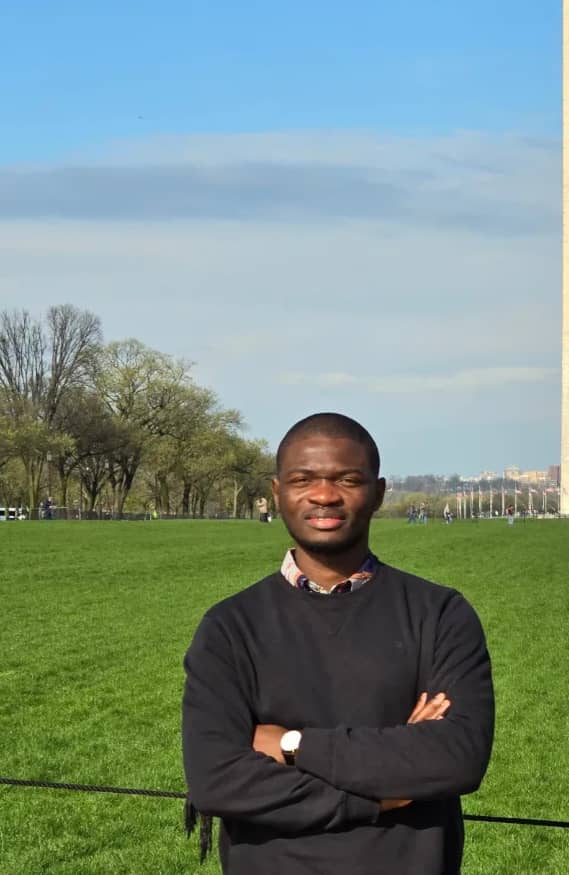
When Matthew Chidera Ugwuanyi began his academic journey at the University of Nigeria, Nsukka, he never imagined that his work would one day influence health policy in the United States. But today, his pioneering research into lung cancer disparities in Wisconsin has positioned him as a rising voice in geospatial health analytics.
Ugwuanyi’s recent study—completed as part of his Master’s degree at the University of Wisconsin-Milwaukee—uses GIS tools to unravel complex spatial patterns in lung cancer mortality. Drawing from CDC and SEER data, the research links poor health outcomes to socio-economic factors like smoking prevalence, poverty, and access to medical infrastructure.
“Cancer does not occur in a vacuum,” Ugwuanyi said. “It’s often the result of environmental neglect, policy gaps, and unequal service delivery. With GIS, we can visualise that inequality.”
The study found that lung cancer deaths were significantly higher in the state’s northern counties. These areas also had fewer screening centres and higher poverty rates. SaTScan analysis revealed clear clusters of high mortality, prompting calls for better resource allocation in rural zones.
A trained GIS technician currently working in Highlands County, Florida, Ugwuanyi has always approached geography as a practical science. “The goal is not just to map, but to fix,” he said. “Every map I create is meant to solve a real problem.”
His journey has been defined by a blend of academic excellence and practical application. At UW-Milwaukee, he served as a teaching assistant, helping students understand physical geography and GIS technologies. His leadership roles with the GIS Club and Gamma Theta Upsilon further reflect his passion for mentoring and collaboration.
Beyond his lung cancer work, Ugwuanyi has investigated phenological changes in vegetation, analysed income-environment relationships in California, and monitored water depletion in Lake Chad—all through a geospatial lens.
His international perspective gives him an edge. “Growing up in Nigeria and studying here in the U.S. allows me to connect dots others might miss,” Ugwuanyi noted. “I see the universal struggles of underserved populations, whether in rural Wisconsin or Enugu.”
This empathy drives his research. As a contributor to the Geospatial Professional Network blog and a member of the Vanguard Cabinet, Ugwuanyi often advocates for inclusive data practices that empower local communities.
His accolades are impressive: from the NLNG Undergraduate Scholarship to top JAMB student honours and the Chancellor’s Graduate Award at UW-Milwaukee. Yet, he remains focused on impact, not accolades.
“Success to me is seeing data drive change,” he said. “If one county adds a screening centre because of my findings, that’s a win.”
Ugwuanyi is also involved in various training initiatives. He’s earned certifications in drone operations, environmental management, deep learning for classification, and regression analysis in ArcGIS—tools he routinely applies in his health research.
Looking forward, he plans to scale his research across states and eventually back to Africa, where data gaps in cancer and other diseases remain a challenge. “I want to bring this model to developing countries. Spatial health analytics has the power to transform how we plan care,” he affirmed.
At a time when health inequality continues to dominate global discussions, Matthew Ugwuanyi stands out—not just as a researcher, but as a data-driven advocate for equity.