Follow Us on Google
By Chinenye Anuforo
For 200 Nigerian teachers, returning to the classroom after graduation will mean more than resuming lessons, marking scripts and preparing students for examinations. They are expected to return as changemakers, equipped to help their students identify problems, develop solutions and take greater responsibility for transforming their communities.
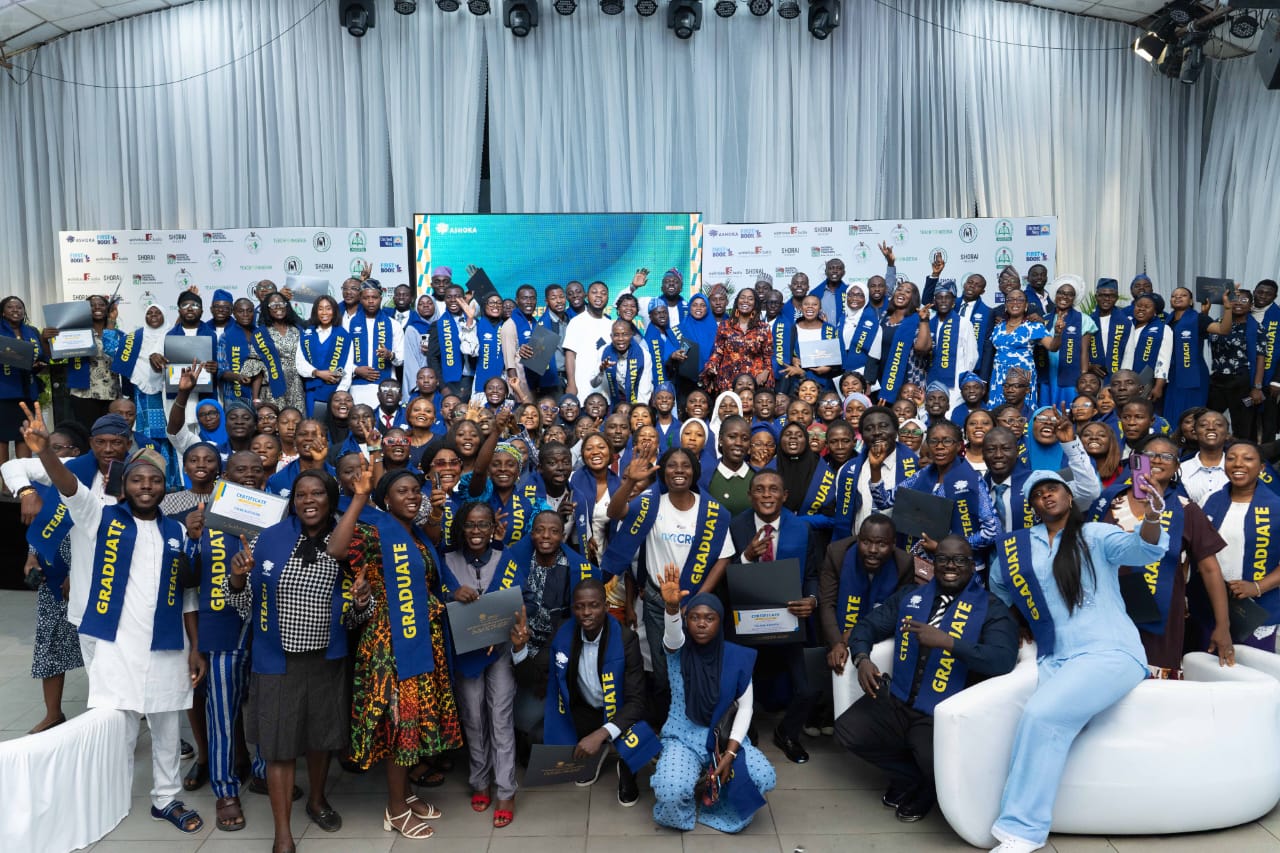
This was the central message at the graduation and award ceremony for Cohort 3 of Ashoka Africa’s Changemaker Teacher Activation Programme (CTEACH), where 200 educators were celebrated for completing a programme designed to strengthen Nigeria’s education ecosystem.
The graduates emerged from an initial 400-member cohort and were described by Angelou Ezeilo, Co-President of Ashoka Africa and Director of CTEACH, as “Digital Pioneers” for their resilience and adaptability throughout the programme.
Speaking at the ceremony in Lagos, Ezeilo commended the teachers for overcoming significant challenges to acquire empathy and changemaking skills that can help them and their students thrive in an increasingly competitive world.
Unlike conventional teacher-training programmes, CTEACH was delivered virtually through WhatsApp and the Thinkific digital platform. Ezeilo said the experience of the participating teachers was itself valuable to the programme, as their feedback helped shape and strengthen the curriculum.
The programme is built around the belief that meaningful transformation in education requires more than improving academic outcomes. It seeks to empower teachers, students, families and community stakeholders to become active problem-solvers and agents of change.
For Ezeilo, the decision to begin the programme in under-resourced public schools was deliberate, given the need to equip school communities with practical skills that can help them tackle challenges from within.
“Our programme is making an impact. We started with under-resourced public schools because we wanted to provide them with the skills to impact changemaking among teachers and the whole school community,” she said.
However, sustaining and expanding the initiative will require broader support. Ezeilo appealed to the private sector and communities to invest in programmes that can strengthen teachers and school communities.
“We need the support now from the community and private sector to keep these programmes going in these schools. I need another partner to step up, believe in what we are doing, and support it,” she said.
CTEACH is the Nigerian adaptation of the global “Time for Change” initiative, a collaborative project involving Teach For All, Ashoka Global and First Book, with funding from Audemars Piguet.
In Nigeria, the programme is delivered in partnership with a coalition of local organisations and stakeholders, including the Lagos State Ministry of Education, Nigerian Union of Teachers, ANCOPSS, Lantern Books, Wombaugh Studios, United Way of Greater Nigeria, Teach For Nigeria and the Lagos State Parent Forum.
The emphasis on local partnerships is expected to become increasingly important as the programme expands and becomes more locally led.
Ezeilo urged the graduating teachers not to regard the ceremony as the end of their engagement with CTEACH. Instead, she challenged them to mentor incoming cohorts and continue applying the principles of changemaking in their schools.
For Oluwadamilare Alamu, the valedictorian of the CTEACH 2026 cohort, the significance of the programme goes beyond receiving certificates.
He said the experience had fundamentally changed how participating educators view their responsibilities and challenged his colleagues to ensure that the lessons learnt translate into action when they return to their schools.
“The real test of this programme begins when the teachers return to their schools and continue to innovate, listen to their learners, and create platforms for them,” Alamu said.
He urged the teachers to continue challenging the status quo and supporting children who may lack confidence in their own abilities.
“We will continue to challenge the status quo, to believe in children who do not yet believe in themselves,” he said.
For Opeyemi Adeniyi, a teacher at Araromi Junior Secondary School, Lagos, and an Ashoka CTEACH Ambassador, one of the most important benefits of the programme is the practical approach to helping students become problem-solvers.
She said teachers are now better equipped to guide students to identify challenges in their communities and think creatively about how to address them.
Adeniyi believes that if this approach can be replicated across schools in Nigeria, the impact could extend far beyond the education sector.
“As nation builders, if we are able to guide every student in this country to provide solutions to different problems in different corners, then we are going to change Nigeria for good,” she said.
The ambition behind CTEACH is therefore larger than producing better-trained teachers. It is about creating school communities where teachers, students, parents and other stakeholders see themselves as capable of identifying challenges and contributing to solutions.
As Ashoka Africa prepares to expand the initiative into more public and private schools, Ezeilo called on corporate organisations, community leaders and education advocates to join the movement towards building an “Everyone a Changemaker” world.
For the 200 graduates, however, the most important phase of the journey is only beginning. Their certificates may mark the completion of the training, but the real measure of its success will be seen in what happens when they return to their classrooms, listen to their learners, challenge old ways of doing things and empower young Nigerians to believe that they too can change the world around them.