Follow Us on Google

From Noah Ebije, Kaduna
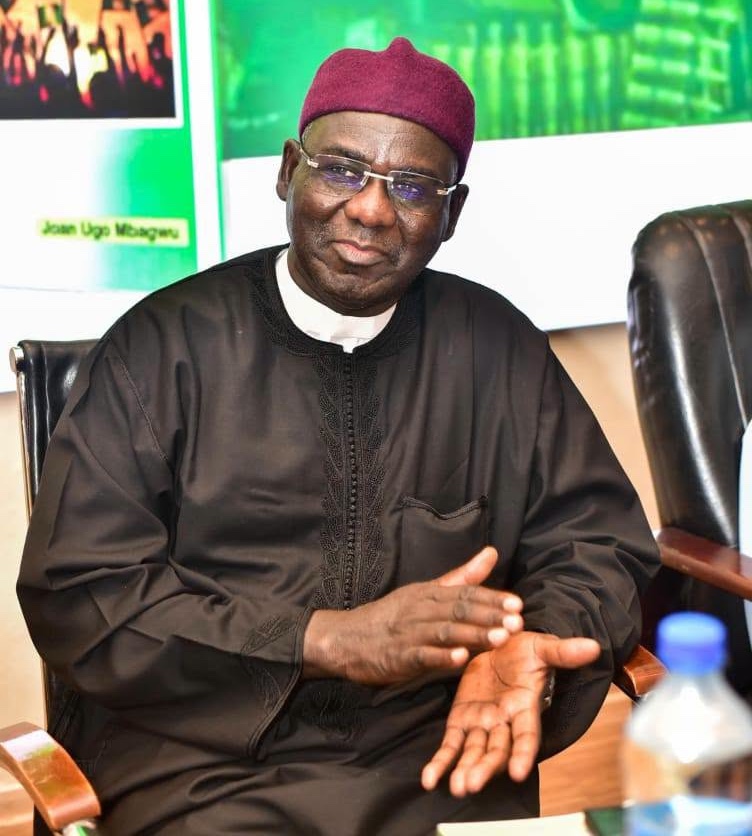
Former Chief of Army Staff Lt. Gen. Tukur Buratai (retd) has called for a comprehensive approach to tackling terrorism in Nigeria, insisting that military force alone cannot guarantee lasting peace without good governance, economic empowerment, community participation, and regional cooperation.
This was contained in a statement made available to newsmen in Kaduna by Buratai’s Media Adviser, Dahiru DanFulani, following Buratai’s call on Friday in Lagos at the public presentation of Beyond Military Force: A Strategy for Countering Terrorism in Nigeria, a new book authored by Professor Joan Ugo Mbagwu of Chrisland University, Abeokuta, Ogun State.
The former army chief described the publication as a significant intellectual contribution to Nigeria’s counter-terrorism efforts, stressing that military operations, though indispensable, must be complemented by measures addressing the socio-economic conditions that fuel extremist recruitment.
“Military force, however professional, is a shield, not a substitute for governance.
“It can create the conditions for peace, but it cannot by itself build peace. It can degrade a terrorist group; it cannot alone remove the grievances of poverty, ignorance and manipulation from which such groups recruit,” he said.
Buratai, who served as Chief of Army Staff between 2015 and 2021, identified credible intelligence, community trust and respect for human rights as critical ingredients for successful counter-insurgency operations, particularly in the North-East and North-West.
He maintained that local communities remained indispensable partners in the fight against terrorism, declaring that “no amount of firepower can compensate for poor intelligence.”
According to him, communities can only provide actionable information when they trust security agencies and are treated with dignity during military operations.
He also advocated stronger counter-terrorism capacity for the Nigeria Police Force, warning against the continued deployment of the military to perform duties traditionally reserved for civilian institutions.
“The military is not the police; it is not the social welfare agency; it is not the school system. When the military is deployed to perform tasks that belong to civil authorities, it becomes overstretched, and the roots of the conflict remain untouched,” he cautioned.
He further called for transparent, community-based deradicalisation and reintegration programmes that would not compromise justice for victims of terrorism.
Drawing on his experience as commander of the Multinational Joint Task Force headquartered in N’Djamena, Chad, Buratai stressed the need for stronger regional collaboration through the Economic Community of West African States, the African Union and countries within the Lake Chad Basin, noting that terrorist organisations such as Boko Haram operate across national boundaries.
Other News
He also endorsed the book’s recommendation for a state of emergency on poverty in Northern Nigeria, urging governments to prioritise out-of-school children, reform the Almajiri system, tackle youth unemployment and expand vocational training and social protection.
“Poverty is not an excuse for terrorism, but it is a fertile ground for recruitment and manipulation. We must treat it with the seriousness it deserves,” he said.
Highlighting the book’s research findings, Buratai disclosed that field surveys were conducted across Adamawa, Borno, Yobe, Kano, Kebbi, Kogi, Niger and the Federal Capital Territory.
He revealed that 86 per cent of respondents believed negotiation could help address terrorism, while 92 per cent agreed that community members could make significant contributions to intelligence gathering.
Additionally, 84 per cent linked terrorist recruitment to poor economic conditions and the Almajiri situation, findings he said reinforced the need to approach counter-terrorism as a struggle for public confidence and legitimacy rather than merely a contest of military strength.
Earlier, the author, Professor Mbagwu, said the book was conceived to broaden national understanding of counter-terrorism beyond the conventional reliance on military operations.
She advocated greater attention to deradicalisation, negotiation, improved socio-economic conditions and stronger partnerships among government institutions, communities and civil society organisations.
Mbagwu, who disclosed that she had conducted research for the Ford Foundation and the Institute for Development Studies, and served as a Process Evaluator for the United Nations Peacebuilding Fund in Africa, said her experience in peacebuilding, conflict resolution and security studies informed the publication’s recommendations.
The book was formally unveiled by retired Major General R.O. Yusuf, while the Chairman of the occasion, Olubunmi Ajala, commended Buratai for his commitment to security-related issues and described the publication as a timely contribution to addressing Nigeria’s security challenges.
According to the statement, the event also featured the presentation of an award of appreciation to the former army chief in recognition of his contributions to counter-terrorism during his military career.
The publication is expected to stimulate fresh national conversations on a sustainable security framework that integrates military operations, effective governance, economic development, community engagement and lasting peacebuilding.