Follow Us on Google
• How Nigeria’s conservation assets slide into criminal haven
By Oluseye Ojo
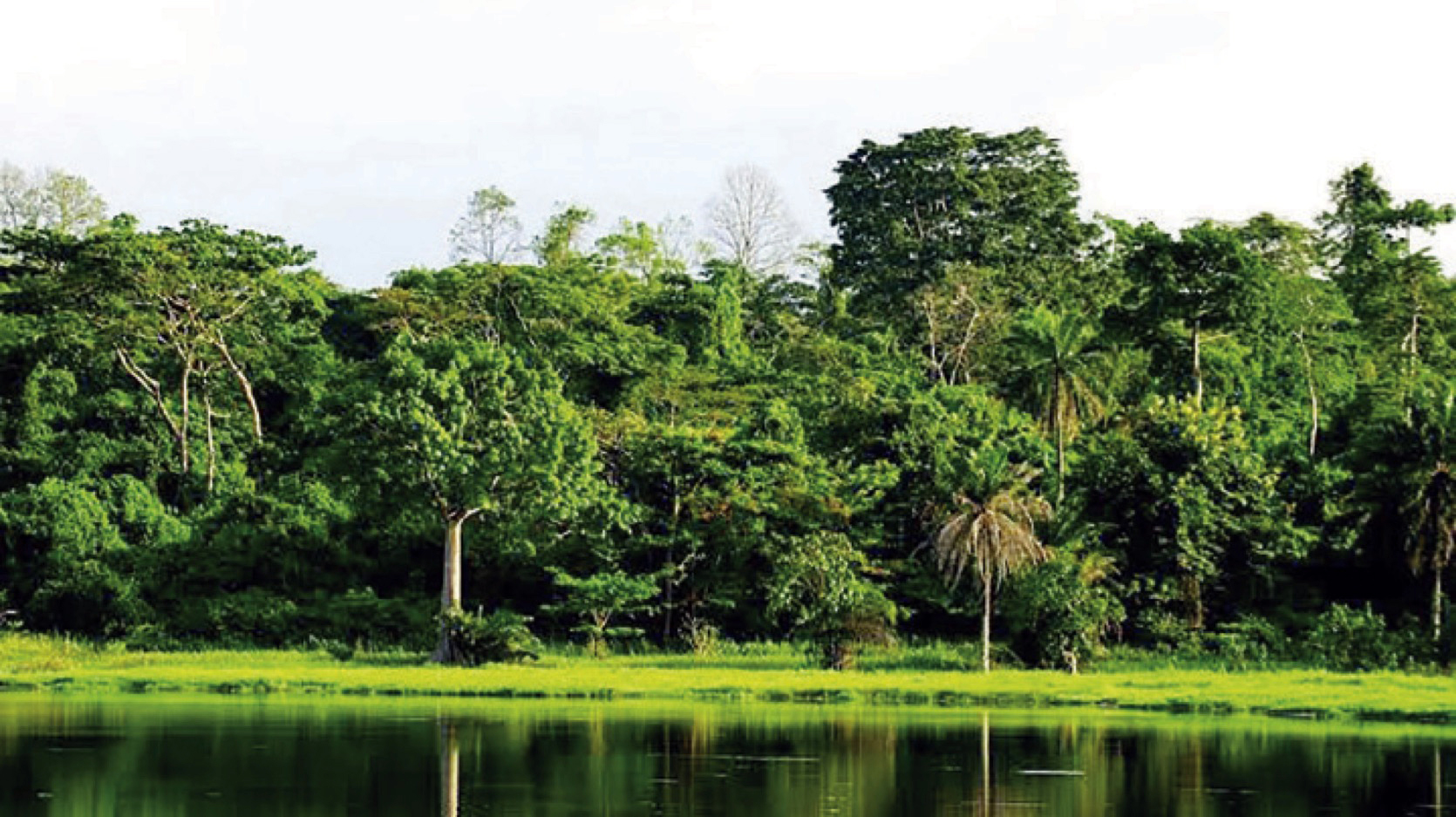
For decades, Nigeria’s forest reserves represented a quiet but powerful pillar of national survival. They stretch across savannah belts, rainforest zones, river basins and mangrove ecosystems.
Studies revealed that the vast ecological estates were established to preserve biodiversity, regulate climate, protect watersheds, and sustain rural economies.
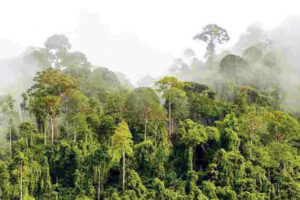
But today, many of the same forests have taken on a darker identity. As gathered, across several regions nowadays, forest reserves are increasingly referenced not as conservation sanctuaries, but as hideouts for armed bandits, kidnappers, illegal miners, arms traffickers and criminal syndicates.
What was once a national ecological shield has, in parts of the country, become an ungoverned frontier.
Landmass and forest footprint
Nigeria covers an estimated land area of about 923,768 square kilometres, according to widely referenced figures from national geographic datasets and international statistical compilations, including the Food and Agriculture Organisation (FAO) and global land-use databases.
Within this vast landmass lies Nigeria’s forest estate, which includes gazetted forest reserves, forest plantations, protected forests and conservation areas.
According to FAO assessments and Nigerian forestry records, the country’s forest estate has traditionally been estimated at about 10 million hectares, which is 100,000 square kilometres, representing roughly 10 per cent of Nigeria’s land mass.
Although newer FAO estimates suggest a larger forest footprint, experts note that differences in methodology and definitions of forest cover account for variations in reported figures.
However, experts have cautioned that the actual ‘closed forest’ cover is much lower due to deforestation, land conversion, agriculture expansion and illegal logging.
Reasons behind creation of forest reserves
Investigation showed that forest reserves in Nigeria date back to the colonial administration. Then, authorities reportedly introduced structured land management systems to prevent uncontrolled exploitation of timber and wildlife resources.
The objectives include prevention of deforestation and land degradation, protection of watersheds and river systems, preservation of wildlife habitats and biodiversity, sustenance of timber production under regulated conditions, combating desertification, especially in northern regions, as well as support for long-term environmental stability.
After independence, successive governments retained the system, and expanded it through state forestry departments and national environmental policies.
At their core, forest reserves, it was gathered, were never meant to be empty wilderness. They were designed as managed ecosystems, which are spaces where human activity is controlled, regulated, and monitored.
Economic and environmental value of forests
Records showed that forests play a critical role in carbon sequestration and climate regulation, rainfall formation and weather stability, as well as soil preservation and erosion control, apart from flood mitigation in river basins.
When properly managed, according to sources, forest reserves provide timber and lumber industries, non-timber forest products like honey, fruits, herbs, and resins, as well as medicinal plants used in traditional and modern medicine. They also boost eco-tourism opportunities, research and academic activities.
Forestry systems also create jobs for forest rangers and guards, ecologists and environmental scientists, timber regulators and inspectors, tour guides and conservation workers, as well as rural community workers involved in sustainable harvesting.
How neglect opened doors to crime
Investigation revealed that the gradual decline of Nigeria’s forest governance did not happen overnight.
Over time, several structural weaknesses emerged, such as weak funding of forestry departments, insufficient manpower, poor monitoring infrastructure, difficult terrain, and inter-state jurisdiction gaps.
On the weak funding of the forestry departments, it was gathered that state forestry agencies often operate with minimal budgets, insufficient vehicles, out-dated equipment, and limited personnel.
Nigeria’s forest reserves also cover vast land areas, yet forest guards and rangers remain far too few to provide meaningful surveillance.
Many reserves lack modern surveillance tools, such as drones, satellite tracking systems, motion sensors, or communication networks.
Dense vegetation, swampy regions, mountain belts and vast savannah corridors also make forest monitoring extremely difficult.
On inter-State jurisdiction gaps, some forests stretch across multiple states, creating coordination challenges among agencies. The stretch includes the one that joins Oyo State with Kwara and Niger States.
When forests became criminal infrastructure
Studies revealed that as governance weakened, forest reserves gradually became attractive operational bases for criminal groups, which probably stemmed from strategic reason, including dense vegetation for natural cover, remote locations for reduction of risk of immediate detection, poor road access that always limits security response time, and large land mass that allows hidden camps and movement corridors.
It was further gathered that over time, some forests became linked in public discourse with kidnapping networks, armed bandit enclaves, cattle rustling operations, illegal mining sites, and arms trafficking routes
Security agencies have repeatedly reported the use of forest corridors in parts of the North-West, North-Central and other regions as staging grounds for violent crime.
It was argued that forests themselves are not criminal, but lack of governance within them creates opportunity for criminal occupation.
Geopolitical distribution of Nigeria’s land and forest reserves
Nigeria’s six geopolitical zones vary significantly in landmass and forest reserve distribution.
Figures below were compiled from widely cited Nigerian forestry studies, academic publications, and land administration datasets. While minor variations exist across sources, these figures are consistently referenced in forestry literature.
The total land area by geo-political zone showed that the North East has 278,148 sq km; North Central, 234,755 sq km; North West, 205,096 sq km; South South, 83,785 sq km; South West, 77,656 sq km, and South East has 28,613 sq km, totalling 923,768 sq km.
Available information on the estimated forest reserve distribution stated that North West has 31,190 sq km; North-Central, 24,085 sq km; North-East, 18,215 sq km; South South has 13,076 sq km; South West has 12,959 sq km, and the South-East has 446 sq km, totalling 100,000 sq km approximately.
What the number really means
The northern zones, particularly the North West and North Central, hold the largest forest reserve areas, and also currently experience some of the most intense security challenges linked to forest-based criminal activity.
The South-East, by contrast, has the smallest forest reserve coverage, largely due to high population density, urbanisation, and extensive agricultural land conversion.
The South-South and South-West zones, while smaller in land area, still retain significant forest ecosystems, especially mangrove forests and biodiversity-rich rainforest belts.
Taken together, it was gathered that Nigeria’s forest reserves represent a landmass comparable to some medium-sized African countries, yet much of it remains under-monitored.
Forests as safe havens for bandits
Security experts argue that the emergence of forests as criminal havens is not accidental. They said it came as a result of a structural vacuum, where state presence is weak or absent, surveillance is limited, intelligence gathering is inconsistent, and community engagement is insufficient.
Findings showed that bandits usually emerged from the forest to attack, abduct and retreat into the same forest as a strategic fall-back zone.
Forest reserves cut across 8 of 33 LGAs in Oyo – Education commissioner
Commissioner for Education in Oyo State, Mr Segun Olayiwola, at a recent public function, stated that the state has a population of about 10 million people, with a landmass of 28, 454 square kilometres.
The forest reserves, he added, has an area of 342,461 hectares, which is 12.29 per cent of the total area covered by Oyo State.
“By this, we are in trouble all over the state because the forest reserves cut across about eight local government areas of the state, and share boundaries with Kwara State. This is where problems are coming day-in-day-out.”
Olayiwola recalled how bandits attacked an office of forest guards at Old Oyo National Park, and killed some of them, before the kidnapping of schoolchildren and teachers was carried out.
Other News
Though people have been sceptical in going for tourism in the Old Oyo National Park in Oyo State due to security issues, findings revealed that tourists on daily basis have been patronising Yankari Games Reserves and Sumo Wildlife in Bauchi State. The Lame-Burra tourist centre, which borders Bauchi, Jigawa, Plateau and some parts of Kaduna, also hosts visitors regularly.
Forest guards debate
One of the most prominent policy discussions these days is the proposal to establish or expand forest guard units across Nigeria.
Proponents argue that forest guards would provide permanent presence in reserves, improve intelligence gathering, strengthen early warning systems, create employment for rural youth, support environmental protection, and local recruits are seen as particularly valuable due to their knowledge of terrain, languages, and community dynamics.
However, identified concerns remain the risk of poor training and coordination, funding sustainability challenges, possible infiltration by criminal elements, and overlap with existing security agencies
Experts insist that forest guards must not operate in isolation but as part of a coordinated national security framework.
Investigation revealed that the proposal for a revitalised Forest Guard system, spearheaded by the Office of the National Security Adviser (ONSA) under Mallam Nuhu Ribadu, marked a shift in Nigeria’s internal security strategy.
It was officially launched as the Presidential Forest Guards Initiative (PFGI) in May 2025. The programme moved into full operational status in early 2026.
The core objective is to reclaim Nigeria’s ungoverned spaces, which are vast forest reserves that have historically served as sanctuaries for bandits, kidnappers, and insurgents.
In late December 2025 and early 2026, the first batch of over 7,000 forest guards graduated and were deployed across seven frontline pilot states of Borno, Sokoto, Yobe, Adamawa, Niger, Kwara, and Kebbi.
A critical component of the proposal is that guards are recruited from their own local government areas. This ensures they have intimate knowledge of the terrain and local community networks, which conventional military forces often lack.
The primary goal is to make the forests uncomfortable for criminal elements by establishing a permanent, armed security presence where it was previously absent.
Beyond counter-insurgency, the mandate includes curbing illegal logging and the illicit exploitation of natural resources within the forest reserves.
Also media reports stated that the NSA has expressed intent to expand the force nationwide, with some security analysts suggesting a target strength of up to 300,000 personnel to effectively cover Nigeria’s extensive forest belts.
President Bola Tinubu recently approved the recruitment of an additional 1,000 forest guards for Plateau State, following security breaches in Jos North, and another 2,000 for Bauchi State.
Following the abduction of 39 pupils and seven teachers in Oriire Local Government Area of Oyo State by bandits, Tinubu also approved the recruitment of 1,000 forest guards for the state.
Investigation also showed that Kajuru or Shiroro forest axes are so vast that a few hundred guards could only monitor specific corridors, leaving other areas vulnerable.
Technology and modern forest security
An opinion poll among Nigerians stated that modern forest protection increasingly relies on technology-driven solutions. The technology, they said, include drone surveillance for aerial monitoring, satellite imaging for mapping movement patterns, GIS systems for terrain intelligence, communication networks for rapid response, as well as digital logging and access control systems.
The aggregate view concluded that the tools would help bridge the gap created by vast terrain and limited manpower.
Missing link in community intelligence
Sources stated that people living in communities around forest reserves are often the first to notice unusual movement patterns.
It was contended that no forest protection strategy could succeed without community reporting systems, trust between locals and security agencies, protection for informants, and economic incentives for cooperation.
The sources noted that without the layer, forests would remain partially invisible to formal security structures.
Reclaiming Nigeria’s forests
Experts generally agree that solving the forest security challenge requires a multi-layered strategy, which include recruitment and professionalisation of forest guards, strong inter-agency collaboration
Investment in surveillance technology, rehabilitation and reforestation programmes, crackdown on illegal mining and logging networks, sustainable funding for forestry institutions, and integration of forest security into national security architecture.
Nigeria must assess impacts of forest reserves – Prof Okey Okechukwu
Executive Director, Development SPECS Academy, Prof Okey Okechukwu, in a brief interview with this journalist at Continental Hotel, Abuja, during a two-day National Security Summit, organised by the Nigeria Union of Journalists (NUJ) held from June 18th to 19th, 2026, appraised the merits and demerits of forest reserves, and suggested what should be done to overcome criminalities in the ungoverned territories.
“The first thIng for every forest reserve, is to make a security ring around it; and maintain the ring for one month. Anybody inside it will not have food to eat. He will come out.
“Second, there is a question of whether we should have forest reserves anymore. To answer that question honestly, we have to assess the impact of forest reserves in the last 15 years. If we cannot determine the value, the land should be made open for other users.
“The third thing to consider is that before you even make it open for other users, ask yourself what would be the environmental impact of wiping that forest reserves because they help to maintain the ecosystem. They create the necessary balance of gases in an environment.
“So, if you are going to make them not to be forest reserves, are you going to convert them to residential or commercial area? If you are going to do that, what will be the overall impact on the ecosystem?
“But my substantive submission on this is that we should determine the value it has offered us in the last 20 years. If you cannot measure it, determine other uses it should be put.
“It is not even the question of bandits hiding there. Some people are actually taking advantage of it. Illegal logging is there. I got to know about illegal logging as far back as when I was in Year One in the university because there used to be a forest reserve in Umuahia in old Imo State. Some individuals were logging.
“I remembered, the South East does not have many forests, not to talk of South West and other places. There is a massive forest in Edo State and co. Who is motoring them? So, it should be re-evaluated.
“Assuming it is a functioning forest reserve, that means the perimeter will be monitored. But right now, criminals have taken up residence in the forest reserves. And they went in unchallenged. So, nobody is really paying attention. The government must determine whether it needs it, or it will be a mistake to wipe them out. But we must determine their value.
“We must also ask ourselves whether we are periodically getting certain species of trees, which is why it was reserved. I would understand that.
“Then, are there other areas, where tick and X trees are planted? If you had planted them and said for 30 years, nobody should touch anything there; who is monitoring it?
If nobody is monitoring it, rather than canceling it, let it be monitored to deliver. It would create jobs.
“We are too much on quick fixes, and that is part of the problem now.”
What FG, states can do to secure forest reserves – Mohammed Garba
Former Commissioner for Information in Kano State, Mallam Mohammed Garba, who served during the reign of Abdullahi Ganduje, in this exclusive interview, noted that there is a need for the government to look at the possibility of securing the forests, considering what has been happening in Nigeria nowadays.
“I think we have maps of all the forests in Nigeria, including the population of people, who are in the forests, basically most of them are Fulani.
‘What we supposed to do is that some parts of the forests should be left for conservation. Then, the other part, government can develop infrastructure, especially security training grounds, just like what Kano State Government has done in those years,” he said
Garba, a former National President of NUJ, also told a story of how Falgore Forest Reserves between Kano and Plateau States was transformed from a criminal haven to a secured place.
His words: “ If you have heard the story of Falgore Forest. It’s one of the most notorious forests if you are going to Jos from Kano. At that material time, the only route that was faster from Kano to Plateau is through Tundun-Wada, Dogwa, and Falgore Forest.
“But the government at that time discussed with Mr. President. I think President Muhammadu Buhari was still the President of Nigeria, and approved the request .
“The governor, I remembered vividly, discussed with Chief of Defence Staff, Chief of Army Staff and the Federal Government gave him go-ahead.
“So, the governor, in collaboration with the military, developed infrastructure as training grounds for military. As I speak to you today, annually the military uses the grounds for training of recruits.
“There are some parts of Falgore Forest that are being reserved. The Fulani are there and what a view. But it was properly secured. I think that is one of the basic reasons there is relative peace from that part of Kano State.
“ I believe that if the government can copy from what has really happened in Kano, especially in Falgore Forest, and look at other forests, especially the forests in Zamfara, Birnin Kebbi, Sokoto, and some parts of Kaduna as well as some parts of Bauchi, that problem can be solved.
We have various military formations and other security formations in the country. The NDLEA for instance can have a training ground and whatever in the forest. The Air Force can also do it, the police can do that, the civil defence can do that, and the customs can also do that.
“But the most important thing is for the forests to be secured. I am sure by so doing, it would reduce the issue of insurgency, banditry, kidnapping and what a view.”