Follow Us on Google
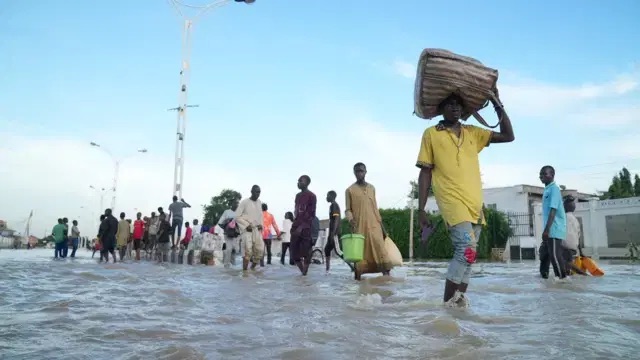
• Says 15 states facing flood disaster
By Philip Nwosu and Sola Ojo, Abuja
The Nigerian Meteorological Agency (NiMet) has issued an impact-based weather forecast warning of heavy rainfall and strong winds in several parts of the country between Friday, September 26 and Sunday, September 28, 2025.
According to the bulletin released yesterday, September 25, moderate to heavy rainfall is expected on Saturday, September 27, over Taraba, Benue, Ondo, Edo, Delta, Imo, Anambra, Enugu, Abia, Ebonyi, Rivers, Bayelsa, Akwa Ibom and Cross River states.
Light to moderate rainfall is likely to cut across most parts of the country, while Kano, Bauchi, Katsina, Jigawa, Gombe, Yobe and Borno are expected to experience low rainfall with minimal risk of flooding.
On Sunday, September 28, moderate to heavy rainfall will persist in parts of southern Taraba, Benue and Cross River states, while other regions will record light to moderate rainfall.
Northern states, including Sokoto, Katsina, Kano, Jigawa, Yobe, Bauchi, Gombe and Borno are expected to see low rainfall with little or no hazards.
NiMet also cautioned of a moderate risk of strong winds over parts of Yobe, Katsina, Kebbi, Gombe, Borno and Sokoto during the three-day period.
These winds could cause displacement of people, damage to weak structures and felling of trees.
The agency warned that flash floods, soil erosion, damage to infrastructure, displacement of residents and outbreaks of waterborne diseases are possible in flood-prone areas.
It advised disaster risk management authorities to remain on alert, update contingency plans, and intensify public awareness campaigns.
NiMet further noted that temperatures across the country today would remain within low to moderate levels, with little or no chance of heat-related hazards.
Other News
The agency urged state governments, emergency responders and residents to monitor updates closely and take precautionary measures to reduce potential impacts.
In the same vein, the Ministry of Environment’s National Flood Early Warning Centre, equally issued a fresh alert warning of heavy rainfall and possible flooding in 15 states and 69 communities between September 24 and 28.
It listed states at risk as Adamawa, Anambra, Bayelsa, Borno, Delta, Edo, Imo, Kano, Katsina, Ondo, Oyo, Rivers, Sokoto, Taraba, and Zamfara.
Communities expected to be affected include Yola, Yenagoa, Warri, Benin City, Oguta, Kano, Jibia, Akure, Oyo, Ahoada, Shagari, Serti, and Gusau, among others.
“The heavy rainfall forecast for these locations may lead to flooding in the identified communities and their environs. Stakeholders are, therefore, advised to prepare adequately and implement preventive actions,” the centre said in the advisory signed by Bokani.
The ministry noted that the alert was part of its routine early-warning system designed to reduce risks to lives and property during the peak of the rainy season. It urged residents, local government authorities, and emergency response agencies to take precautionary measures, including evacuation planning and safeguarding critical infrastructure.
The warning comes just days after torrential downpour submerged parts of Lagos, leaving homes destroyed, businesses disrupted and major roads impassable.
Flooding has become a recurring challenge in Nigeria during the rainy season. In 2022, the country experienced its worst flood disaster in a decade, which killed over 600 people, displaced 1.4 million and destroyed thousands of hectares of farmland, worsening food insecurity.
Experts attribute the rising frequency and impact of floods to climate change, poor drainage systems and unregulated urban expansion in vulnerable areas.
NiMet and the Nigeria Hydrological Services Agency (NIHSA) had earlier forecasted high flood risks in several regions of the country throughout 2025.
The Ministry stressed that early-warning alerts must be taken seriously to avert disasters. It advised state governments in the affected regions to activate their flood response mechanisms, while communities should avoid building on waterways, clear blocked drainages and relocate from flood-prone areas when necessary.