Follow Us on Google
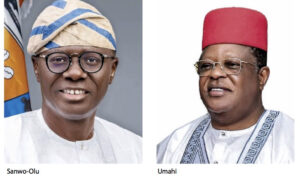
Gov. Sanwo-Olu, Umahi, stakeholders brainstorm on real causes and solution to Lagos’ annual flood crisis
By Lukman Olabiyi
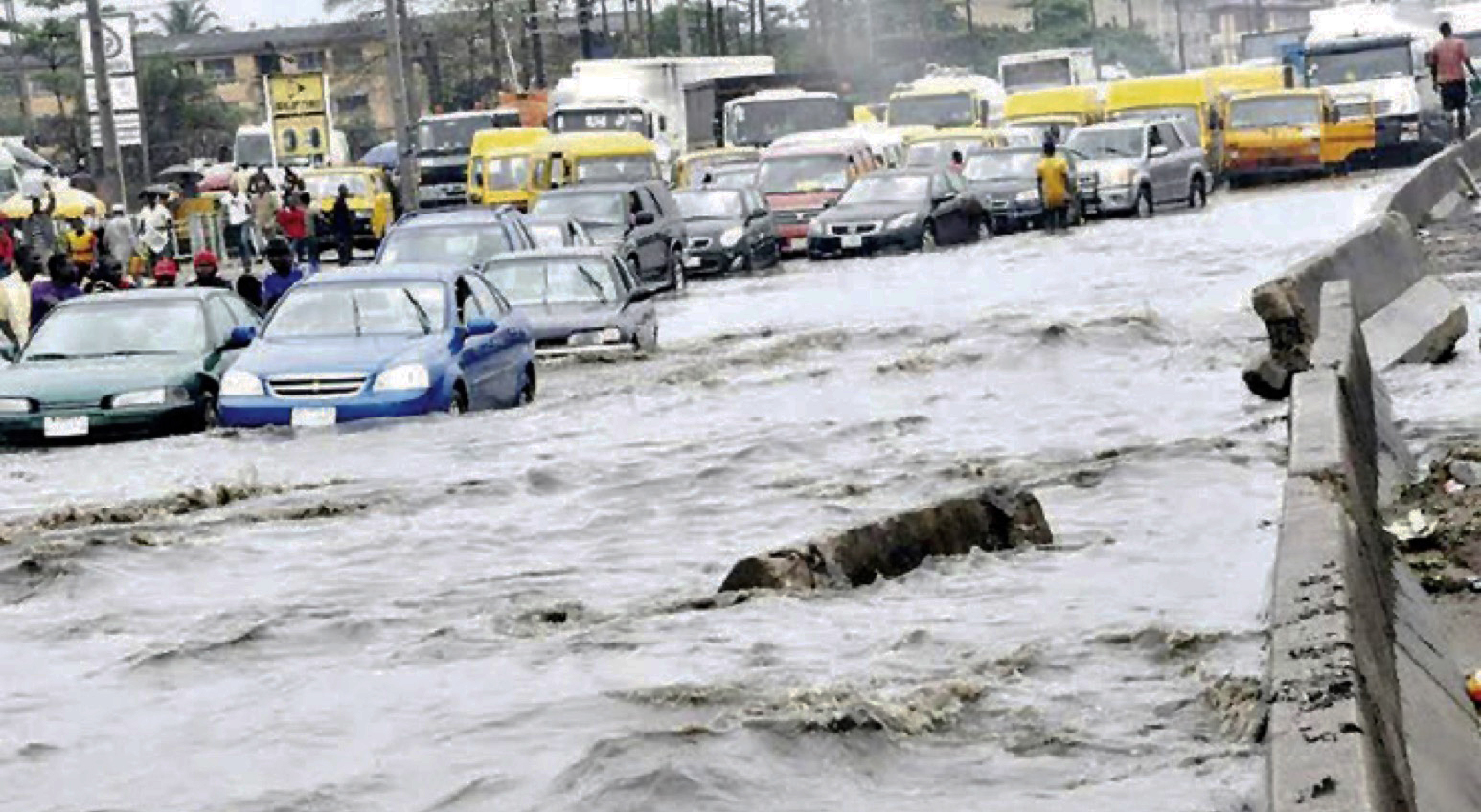
When torrential rains pounded Lagos for more than 12 hours recently, the familiar scenes returned with unsettling predictability. Major highways disappeared beneath muddy waters, businesses shut their doors, commuters abandoned vehicles and thousands of residents found themselves trapped in Nigeria’s commercial capital.
From Victoria Island and Lekki to Ikeja, Maryland, Ojota, Gbagada, Yaba, Agege, Oworonshoki and Ikorodu, the floods once again exposed the vulnerability of Africa’s fastest-growing megacity.
As economic activities ground to a halt and losses amounted to billions of naira, attention quickly shifted to a question that has dominated public discourse in recent years: What is really responsible for Lagos’ worsening floods?
For many observers, the answer seemed obvious. The ongoing Lagos-Calabar Coastal Highway project has repeatedly been accused of aggravating flooding in adjoining communities but this time the debate took a different turn.
Initially, when was Minister of Works David Umahi, an engineer, was reacting to the issue while speaking during an inspection of the Sokoto-Badagry Superhighway on Sunday, July 5, he challenged the narrative, insisting that the latest flooding in parts of the state could not simply be blamed on the coastal highway.
Instead, he argued that the disaster reflects a deeper combination of environmental neglect, weak urban planning, blocked drainage systems and the incomplete implementation of long-standing flood management strategies.
The minister said that he would, on July 7, evaluate the Lagos-Calabar Coastal Highway and its surroundings along with some members of the National Assembly.
“We will go and evaluate the coastal highway and the surroundings tomorrow, not that we are causing the flooding but because the President had directed that we go and technically evaluate it.
“We are calling the Lagos State Government because we found out that the master plan of Lagos State, in terms of flooding, is not being implemented.
“There are a number of designated points, lagoons that this water is supposed to be drained in. They have not been done,” Umahi said.
He expressed dissatisfaction at the amount of refuse on Lagos roads, saying the indiscriminate refuse disposal contributed much to flooding of roads.
“You can see the amount of refuse even on our way. You can see the indiscipline of Nigerians that carry refuse to block drainage channels.
“This country belongs to all of us; so, we must work,” he said.
His remarks came against the backdrop of one of the most severe rainfall events Lagos has experienced in recent years.
The prolonged downpour submerged roads, residential estates and commercial districts, forcing schools to record low attendance while businesses suspended operations. Motorists abandoned vehicles as floodwaters overwhelmed major roads, leaving thousands stranded.
The disruption once again highlighted the enormous economic cost of flooding in Nigeria’s commercial nerve centre.
The Lagos State Government, while acknowledging the scale of the disaster, attributed much of the problem to climate change.
Commissioner for Environment and Water Resources, Tokunbo Wahab, said residents should expect increasingly frequent flash floods as changing climate patterns continue to produce heavier rainfall.
According to him, the flooding was compounded by illegal construction on wetlands, encroachment on drainage channels and indiscriminate waste disposal.
He disclosed that government officials had reopened blocked drainage channels after construction activities temporarily restricted stormwater flow around Ikorodu Road, while reaffirming the state’s commitment to expanding drainage infrastructure, intensifying desilting operations and investing in flood-resilient projects.
Based on the minister’s earlier promise to visit the coastal highway for evaluation, Umahi did and also met with the state governor.
However, following the inspection of the coastal highway and a meeting with Lagos State Governor Babajide Sanwo-Olu, Umahi’s position became more nuanced.
Rather than criticising the state’s flood management efforts, both the minister and the governor jointly dismissed claims that the Lagos-Calabar Coastal Highway caused the flooding, describing the allegations as misinformation amplified on social media.
Sanwo-Olu explained that the’ unique geographical location of Lagos makes seasonal flooding inevitable. According to the governor, Lagos occupies less than 0.4 per cent of Nigeria’s landmass, with nearly one-third of the state is covered by water, while its rapidly growing population continues to exert enormous pressure on available land and infrastructure.
“Lagos is a coastal city. Whenever people say Lagos has been flooded, we must understand that some level of flooding is inevitable. We only hope it does not become severe. These are natural realities associated with coastal environments across the world,” he said.
The governor noted that exceptionally heavy rainfall can temporarily overwhelm even well-designed drainage systems but maintained that floodwaters generally recede after a short period.
Other News
He also criticised what he described as misleading social media narratives, arguing that many photographs circulated online captured only the peak of the flooding without showing how quickly water levels subsided.
“We cannot allow social media to define who we are. That does not mean we ignore our challenges. Whenever there are problems, we must confront and solve them, but we must also appreciate the realities of our environment,” he stated.
Sanwo-Olu reiterated that indiscriminate refuse disposal remains one of the leading causes of blocked drainage channels and urban flooding. He recalled the state’s ban on styrofoam because of its environmental impact and disclosed that additional environmental regulations would soon be introduced.
On the maintenance of the coastal highway, the governor announced that Lagos had signed an agreement with a mechanised street-cleaning company that would deploy specialised six-lane sweeping machines to clean the corridor daily. He assured residents that the state would continue protecting critical infrastructure through regular maintenance.
Speaking at the meeting with the governor, Umahi disclosed that it was President Tinubu who ordered for the assessment following widespread social media reports blaming the coastal highway for the flooding.
He described the allegations as false and misleading, noting that heavy flooding had also occurred in several other states following unusually intense rainfall.
According to the minister, the coastal highway was deliberately elevated to withstand ocean surges and protect surrounding communities from flooding over the next two to three decades.
He explained that many of the affected areas were naturally swampy long before construction of the highway commenced, warning that buildings erected below approved flood elevation levels would remain susceptible to flooding regardless of the road project.
Umahi also commended Lagos State’s drainage master plan, particularly its strategy of directing stormwater into lagoons, instead of discharging directly into the Atlantic Ocean.
He disclosed that more than 80 per cent of the major drainage evacuation channels leading to the lagoons had already been completed.
The minister added that the Federal Government and Lagos State would collaborate to construct additional drainage channels and service lanes along both sides of the Coastal Highway.
He, however, acknowledged that some existing structures would have to be removed to accommodate the expanded drainage infrastructure and service roads, adding that stakeholder consultations had already been scheduled.
The recent floods were hardly unexpected. Months earlier, the Nigerian Meteorological Agency (NiMet) had forecast above-normal rainfall across several states, warning that Lagos and other coastal states faced heightened risks of flash floods.
The agency urged residents in vulnerable communities to prepare for severe weather while advising governments to strengthen drainage systems and emergency response mechanisms.
The Federal Government also warned that rainfall would intensify during the season and advised residents in flood-prone areas to relocate, where necessary.
Beyond the immediate effects of heavy rainfall, environmental experts argue that decades of unchecked urban expansion have steadily eroded Lagos’ natural flood defences.
Wetlands and mangrove forests that once absorbed excess water have increasingly disappeared under residential estates, commercial developments and land reclamation projects. Illegal construction on floodplains and drainage corridors, coupled with poor waste management practices, has significantly reduced the city’s ability to cope with extreme rainfall.
Environmental resource management expert, Gbenga Oloniniran, believes the disappearance of these natural ecosystems has made low-lying communities increasingly vulnerable to fast-moving surface runoff during prolonged downpours.
According to him, engineering infrastructure alone cannot eliminate flooding, if environmental degradation continues unchecked.
The financial implications are equally alarming. According to estimates by the National Bureau of Statistics, floods and related disasters cost Nigeria about $31.65 million annually.
The devastating floods of 2022, the worst in decades, claimed hundreds of lives and inflicted an estimated $9 billion in damage, based on government and international assessments.
The Federal Ministry of Humanitarian Affairs estimated economic losses at approximately N4.2 trillion, with agriculture, transportation, education, healthcare and commerce among the hardest-hit sectors. Nearly two-thirds of affected households suffered severe disruptions to their livelihoods.
Experts fear that without stronger preventive measures, the 2026 flood season could approach the scale of that national disaster.
Perhaps the greatest significance of Umahi’s intervention is not whether it absolves the coastal highway of responsibility, but that it has reopened a broader policy conversation about the future of Lagos.
Increasingly, engineers, environmental specialists and public officials agree that no single factor explains the city’s recurring floods.
Instead, Lagos confronts a complex web of challenges: rapid urbanisation, inadequate drainage infrastructure, climate change, disappearing wetlands, indiscriminate waste disposal and inconsistent enforcement of environmental regulations.
Addressing these problems will require more than emergency responses whenever heavy rains fall.
Experts advocate stricter enforcement of planning regulations, protection of wetlands, expansion of drainage networks, full implementation of existing flood management master plans, improved waste management systems and rigorous climate vulnerability assessments for all major infrastructure projects.
As climate change intensifies extreme weather events across the globe, Lagos now faces one of the greatest tests of its urban resilience.
Whether the latest floods become another chapter in the city’s cycle of annual disasters or the catalyst for a more coordinated and sustainable flood management strategy may ultimately depend on how governments, developers and residents respond to the difficult questions now dominating the national conversation.