Follow Us on Google
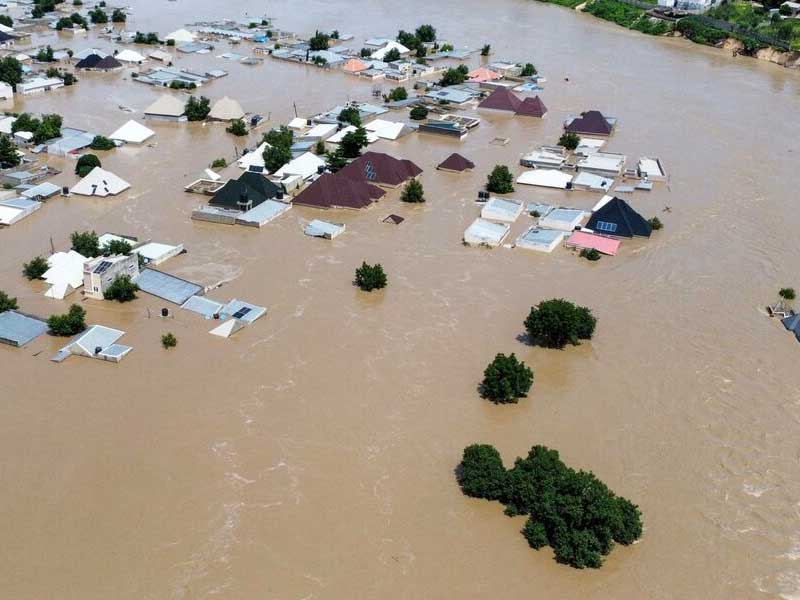
The Federal Government has alerted residents in 24 states and the Federal Capital Territory (FCT) on possible flood between September 27 and October 10, 2026. The alert follows forecasts of heavy rainfall, rising river levels, saturated soil and increased surface runoff in the affected states. The notice was contained in a flood prediction issued by the National Flood Early Warning Systems Centre, under the Erosion, Flood and Coastal Zone Management Department.
The advisory, signed by the department’s Director, Usman Abdullahi Bokani, classified several communities across the country as critical, high or moderate flood-risk areas during the period. States with communities listed in the critical-risk category include Benue, Kogi, Kwara, Niger, Adamawa, Bauchi, Taraba, Rivers, Edo, Delta, Cross River, Bayelsa, Akwa Ibom, Abia, Anambra, Ebonyi, Enugu, Imo, Ekiti, Lagos, Ogun, Ondo, Osun and Oyo. The FCT, Nasarawa, Plateau, Bauchi, Taraba, Adamawa and Kebbi were among areas where communities were placed on the high-risk list.
Major urban centres covered by the warning include Makurdi, Lokoja, Minna, Port Harcourt, Benin City, Asaba, Calabar, Uyo, Aba, Onitsha, Enugu, Owerri, Ado-Ekiti, Lagos, Abeokuta, Akure, Osogbo and Ibadan. In the FCT, Abuja Municipal, Asokoro, Bwari, Garki, Gwagwalada, Gwarinpa, Kubwa, Kuje, Kwali, Lugbe, Maitama, Nyanya and Wuse were among locations listed as facing high flood risk. Riverine and coastal communities in Rivers, Delta, Bayelsa, Cross River and Akwa Ibom were classified as critical-risk areas.
Government also enjoined residents in critical-risk communities to maintain an immediate flood watch, identify evacuation routes and protect vulnerable persons and essential property. Residents were also advised to avoid settling, parking, trading or storing goods on floodplains, wetlands, riverbanks and low-lying drainage corridors.
Flooding remains one of the most devastating natural disasters in Nigeria with climate change accelerating its frequency and severity. Flooding has become a perennial problem. Every year, many states and communities are affected, with huge costs in human and material waste. Much of the flooding has been attributed to heavy rains and the release of dam water from neighboring countries. Failure to adequately prepare for climate change is also a contributory factor to the disaster. This is due to the non-implementation of environmental guidelines, lack of preventive infrastructure and the unhealthy attitude in tackling the flood menace.
The latest alarm came after the Nigeria Hydrological Services Agency had issued a seven-day flood advisory, warning of a medium flood risk in 17 states. The agency said the warning followed rising water levels at key river monitoring stations, increasing the likelihood of localised flooding along river channels and floodplains.
The impacts of flooding are already being felt in some states and cities. On Wednesday, September 23, a flash flood swept through Akaeze community in Ivo Local Government Area of Ebonyi State, displacing several families and destroying homes, farmlands and personal belongings. The flooding which occurred early in the morning, left no fewer than 60 houses destroyed and about 300 residents displaced.
Within the same period, houses and farmlands were destroyed in Pututa and other communities in Lafiagi, Edu Local Government Area of Kwara State by flooding occasioned by torrential rains. The affected communities include Tswako, Likpata, Godangi and Ekko. There was also heavy rainfall across Osun State which triggered flooding in several communities, destroying property and damaging a bridge linking Ijaregbe to Ilesa. Some parts of Osogbo the state capital, including Ayekale, Famson Area, Oke Baale, Sasa and Ilesa Garage, were equally affected.
The prediction by the National Flood Early Warning Systems Centre is therefore a wake-up call to states, councils and communities to act early enough. There is need for remedial measures to secure the citizens from the floods. Desilting the drains and opening the water channels, remains a mitigating strategy. Aggressive enlightenment campaigns also need to be embarked upon by relevant government agencies and communities on the people for proactive actions. Those living in the littoral regions should be encouraged to move to the upland to avoid being caught up by the floods.
There is need for the federal government and flood-prone states to engage in efforts to help minimise the impacts of the challenge. Dams should be constructed to conserve the flood water and harness same for farming and irrigation purposes. Also, water/flood barriers should be erected to minimise the movement of flood.
Prevention and control of flooding require institutional and attitudinal approaches. Let the government take necessary steps to ensure that water channels are left open always. State Controllers, State Emergency Management Agencies, local government environmental officers and community flood focal persons should intensify monitoring of rivers, streams, culverts, bridges, drains, estuaries, reservoirs and erosion-prone areas.
High-risk communities should intensify drainage clearance and monitoring of culverts and waterways, as well as prompt reporting of heavy rainfall, ponding, dam releases and changes in river levels. Those on the moderate-risk watchlist should remain vigilant because prolonged or consecutive rainfall could quickly increase local flood risk.
There is need for Nigerians to change their attitude to their environment. Government should take steps to ensure that water channels are left open always to allow free flow of water. Property owners and developers should desist from embarking on any form of physical development without adherence to laid down procedures. Let the National Emergency Management Agency (NEMA) and other relevant bodies act early enough to put preventive measures in place.