Follow Us on Google

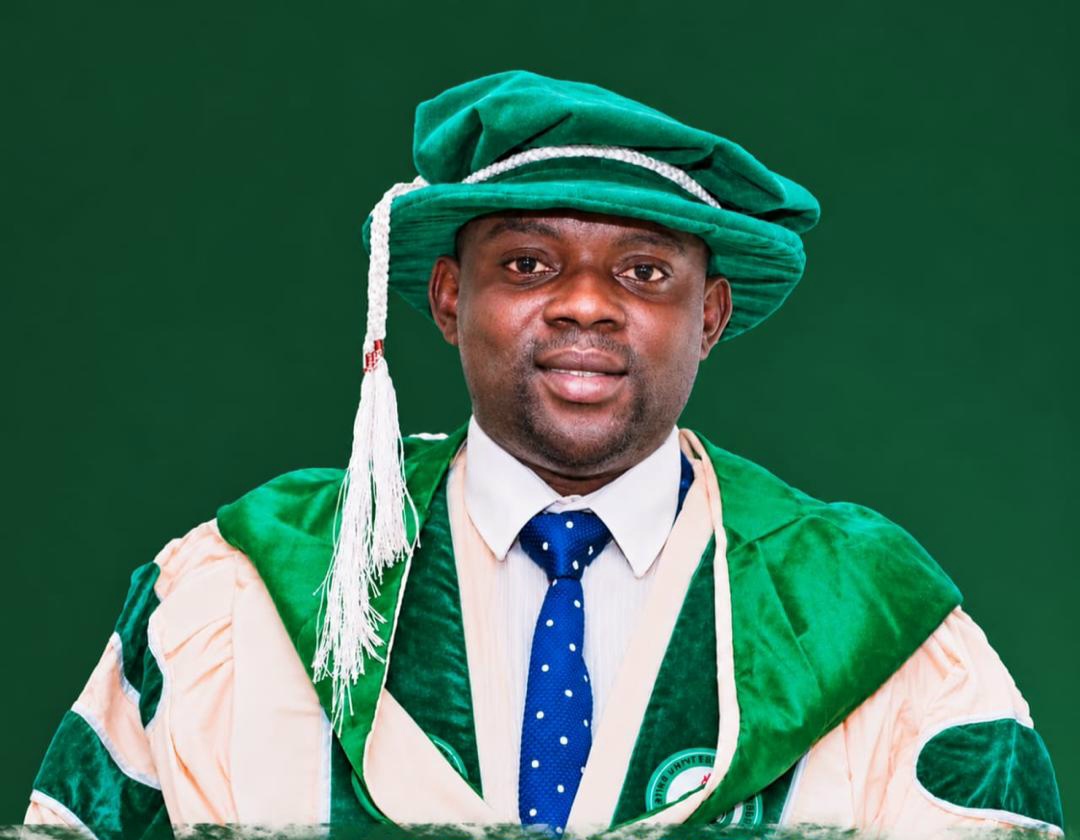
The journey of Dr. Ibilade Joel Adesokan from an education consultant in Ilorin, Kwara State, to Registrar of Atiba University, Oyo, reflects a career shaped by entrepreneurship, innovation, institutional development and a commitment to expanding access to higher education.
Adesokan began his journey by establishing INTO University Educational Consult, an educational advisory initiative focused on preparing prospective students for university admission and connecting them with opportunities across federal, state and private universities in Nigeria.
His work in student recruitment eventually brought him into contact with Atiba University, Oyo, where his contributions to student mobilisation and enrolment development opened the door to greater institutional responsibilities.
He was subsequently appointed Director of Basic and Advanced Studies, overseeing initiatives designed to expand educational access through remedial and advanced-level programmes.
His growing involvement in institutional activities and administrative coordination attracted additional responsibilities from the university’s leadership.
During a period of transition in the institution’s senior management, Adesokan was appointed Acting Registrar and subsequently confirmed as substantive Registrar.
The appointment marked a significant turning point in his professional career, providing an opportunity to apply his entrepreneurial experience to university administration, stakeholder engagement, academic development and institutional governance.
One of the most defining periods of his tenure came during the COVID-19 pandemic, when Nigerian universities were compelled to suspend physical academic activities.
Faced with the challenge of sustaining teaching and learning, Adesokan worked with academic and administrative colleagues to develop an accessible virtual learning arrangement using Google Meet and WhatsApp.
The initiative involved training teaching staff, supporting students’ transition to online learning and engaging parents to facilitate access to digital devices and internet connectivity.
The arrangements enabled the university to continue academic engagement during the shutdown and supported teaching, assessment coordination and communication of academic results.
Reflecting on the experience, Adesokan said the period reinforced his belief that innovation was not necessarily dependent on substantial financial resources.
“Sometimes, the most effective innovations emerge when people are prepared to think differently, maximise available resources and work collectively towards a common objective,” he said.
Beyond digital learning, Adesokan contributed to initiatives aimed at strengthening student recruitment and institutional engagement.
Drawing on his experience in educational consultancy, he helped facilitate an advanced-level examination exercise that brought more than 1,000 external candidates to the university campus.
The exercise introduced prospective students to Atiba University while generating economic activities for businesses within the surrounding community.
His administrative responsibilities also extended to supporting academic programme expansion and regulatory preparation.
During his tenure, the university undertook a resource verification exercise involving 16 proposed academic programmes, with 15 subsequently receiving approval.
Adesokan contributed to the administrative coordination of the exercise alongside academic and management teams.
He was also involved in preparations supporting the university’s Nursing programme, including clinical training arrangements, institutional partnerships, staffing requirements and professional accreditation processes.
He subsequently served as Secretary to the Board of Trustees during the process leading to the appointment of Professor Sunday Okeniyi as Vice-Chancellor.
The university later recorded important institutional milestones, including a successful Nursing accreditation exercise and the receipt of its full operational licence from the National Universities Commission.
For Adesokan, these experiences demonstrated the importance of teamwork, regulatory compliance, institutional resilience and effective administration.
He acknowledged the contributions of the university’s Founder, governing authorities, academic leadership, administrative personnel, students and other stakeholders to the progress recorded during his tenure.
“No meaningful institutional achievement belongs to one individual. Leadership is about creating an environment where people, systems and ideas can work together to deliver results,” he said.
His experience at Atiba University continues to influence his interests in educational leadership, entrepreneurship, institutional transformation and university–industry collaboration.
Reflecting on the journey, Adesokan described the experience as one of the most important chapters of his professional development.
“I arrived with experience in creating access to education. I left with a deeper understanding of building and strengthening the institutions that deliver it.”
His story illustrates how entrepreneurial initiative, institutional trust and collaborative leadership can create pathways to significant responsibilities within Nigeria’s higher education sector.