Follow Us on Google

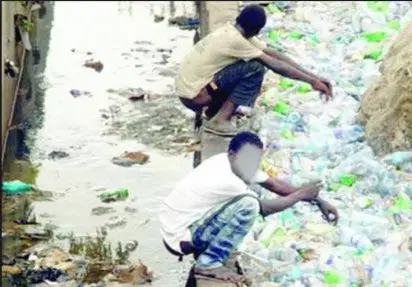
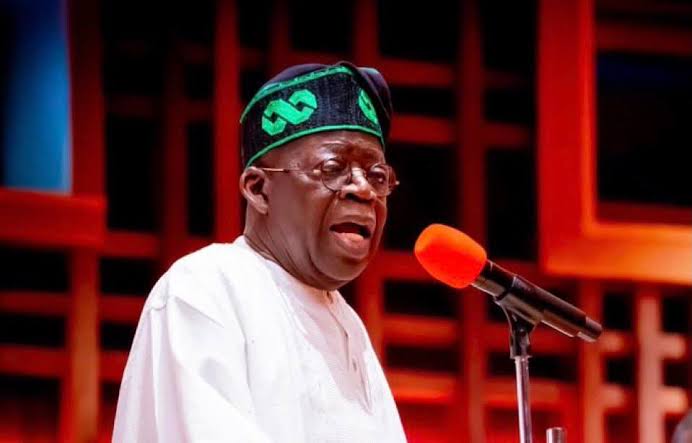
In a renewed bid to ensure that Nigeria is open-defecation-free, President Bola Tinubu recently signed an Executive Order to end the menace in the country by 2030. Minister of Water Resources and Sanitation, Engr. Joseph Utsev, disclosed this in Abuja during a media briefing to mark this year’s World Toilet Day and the seventh anniversary of the Clean Nigeria campaign.
The World Toilet Day is marked on November 19 to inspire action against global sanitation crisis and advance Sustainable Goal 6, which ensures water and sanitation for all. The theme for this year’s commemoration is: “Sanitation and gender equality,” while the campaign slogan is: “Safe toilets, equal futures.” This year’s campaign “highlights how safe, private toilets, handwashing facilities, and menstrual hygiene support, protect women and girls, safeguard their dignity, and help them stay in school and work.”
The 2030 target to end open defecation in Nigeria came on the heels of the earlier 2025 target established under Executive Order 009 in 2019. Speaking at the event, the Vice President Kashim Shettima called on state and local governments to step up efforts to end open defecation in the country by 2030. For the country to achieve open defecation-free status, Shettima enjoined all tiers of government to own the Clean Nigeria Campaign and adequately fund and ensure accountability in sanitation service delivery.
Globally, about 3.4 billion people still live without safely managed sanitation and hundreds of millions practise open defecation. About 45million to 48 million Nigerians are estimated to be practising open defecation. Nearly 1 in 5 adolescent girls share unhygienic toilets or practise open defecation, and fewer than 1 in 3 schools worldwide have menstrual waste bins. Experts point out that poor sanitation spreads water-borne diseases such as cholera, typhoid and diarrhea and contaminates water sources.
Out of Nigeria’s 36 states and 774 Local Government Areas (LGAs), only 185 LGAs with Jigawa and Katsina states had attained statewide Open Defecation-Free (ODF) status. Unfortunately, Nigeria is among top countries where open defecation is practised in the world. Despite the government’s “Clean Nigeria: Use the Toilet,” initiative to address the challenge, it has continued in most cities and towns across the country. There is still more work to be done.
It is sad and embarrassing that open defecation is practised in cities like Abuja, Lagos and others in spite of plans to end open defecation in the country by 2030. The absence of toilets in motor parks, markets and other public places can explain why many Nigerians are yet to stop the menace.
We urge schools, workplaces, and local governments to provide clean, accessible and well-maintained public toilets. There is a need for increased sanitation financing, reliable data collection and behavioural change by all and sundry to sustain recorded gains against open defecation.
Those implementing the executive order must examine why the earlier target of 2025 of ending open defecation did not work and ensure that the new deadline of 2030 is achieved. The gaps in policy implementation, monitoring and enforcement should be closed. Open defecation should not be the norm. Lack of public toilets in some schools, markets, motor parks, and city centres should be urgently addressed. The few available ones should be well-maintained.
In Nigeria, open defecation contaminates water sources. It is also a major cause of cholera, typhoid and diarrhea. It is also one of the leading causes of infant mortality in Nigeria. Open defecation costs Nigeria not less than 1.3 per cent of losses in its annual Gross Domestic Product (GDP). The poor sanitary condition might have prompted the Federal Government to declare a state of emergency in the Water, Sanitation, and Hygiene (WASH) in 2019 and launched the “Clean Nigeria Campaign” with the intention to end open defecation in 2025. However, the goal was not achieved hence the new 2030 deadline.
For Nigeria to end open defecation by 2030, all tiers of government must work in concert to ensure that WASH services are available in all the states and the local governments across the country. Government should make toilets available in all parts of the country. Provision of mobile toilets will go a long way in ending open defecation in the country. Local governments should intentionally build more toilets and increase access to water, sanitation services.
There is need to ensure that all buildings have enough toilets for the occupants. Where modern toilets are not affordable, pit toilets should be provided. Apart from spreading water-borne diseases, open defecation remains an eyesore that should be jettisoned forthwith.
We call other states to emulate Jigawa and Katsina states and achieve open defecation-free status. More toilets are required in public places, cities and rural areas. There is need for sustained public enlightenment against open defecation in all the states and local governments. Community, civil society and religious leaders should be carried along in the campaign. Market women should also be involved in the exercise. The campaign should be in English, Pidgin and local Nigerian languages, especially Hausa, Igbo, Yoruba and others.