Follow Us on Google

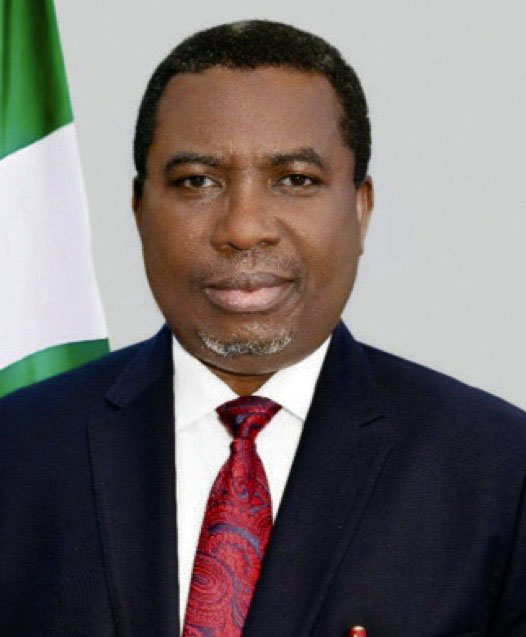
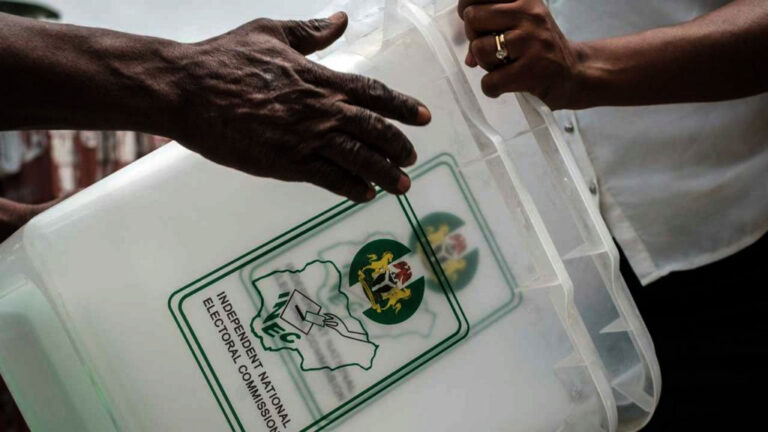
The Independent National Electoral Commission (INEC) has fixed November 28, 2026, for a nationwide mock accreditation and voting exercise ahead of the 2027 general elections to test upgrades to its Bimodal Voter Accreditation System (BVAS) and electronic results transmission. INEC National Chairman, Prof. Joash Amupitan, made the disclosure while speaking on the commission’s preparations for the 2027 general elections during a dialogue at Chatham House in London. The dialogue was held with the theme, “Nigeria’s 2027 Elections: Democratic Trajectory and Regional Stability Beyond the Ballot.”
According to Amupitan, the mock poll would simulate the presidential election and enable the commission assess the effectiveness of its accreditation and electronic transmission systems before the polls. “On the 28th of this month, we will conduct a mock accreditation and voting exercise across all states of the federation to simulate the presidential election and verify that we have gotten both accreditation and electronic result transmission right,” he said.
The INEC boss also disclosed that the commission had introduced technical safeguards to prevent inaccurate polling unit results and figures reflecting over-voting from being uploaded to its Result Viewing Portal. The commission assured Nigerians that only verified results from polling units will be uploaded to its Results Viewing Portal (IReV) ahead of the 2027 polls.
Amupitan added that INEC had identified polling centres as the major source of result-management problems during the 2023 elections and was introducing additional checks to ensure that figures were properly verified before transmission. The commission, he added, had learnt important lessons from the previous election and was determined to strengthen public confidence in the electoral process. To this effect, the electoral agency is introducing a new verification process to ensure polling unit results are verified by party agents before they are uploaded to IReV.
The mock poll arrangement by INEC is a step in the right direction. A mock election is a simulated voting exercise conducted to test electoral systems, educate voters, or demonstrate democratic procedures. Though the exercise does not produce legally binding results, the outcome will provide an opportunity to test-run the technological devices, security preparedness and assessment of the level of voter education. It also offers windows to test the equipment for the main election and assess its functionality.
The mock poll is a commendable move by the INEC chairman and his team. If not compromised, it will assist the commission in making assessments and taking decisions that will enable it deliver a free, fair and credible poll next year.
Other News
Instructively, INEC has done an audit of the 2023 elections and identified areas of challenges that need to be improved upon. According to the commission, the core problem of election result management and declaration in Nigeria is not even at the polling unit but at the collation centres. It has therefore devised a technical safeguard which ensures that if a result is not accurate at the polling unit, it will not go to IReV at all. He explained that the commission will upgrade its existing electoral technology rather than introduce an entirely new system, considering the limited time before the 2027 elections.
To guard against malfunctioning of BVAS, which occurred during the 2023 general elections, Amupitan said INEC was constructing climate-controlled storage facilities across the states to protect the devices from extreme temperatures. He said the commission had procured additional BVAS machines and reduced the maximum number of registered voters assigned to each device from 1,250 to 850. Under the revised arrangement, polling units with more than 850 registered voters would be provided with multiple devices.
The strategies announced by INEC are laudable. However, let the commission walk the talk and ensure that the adequate arrangements are put in place. The bane of Nigeria’s electoral system has been the corruption of the exercise which manifests in rigging, ballot-snatching, violence and manipulation of the voting processes. Some electoral agencies had promised delivering credible elections to Nigerians but failed to live up to their pledges.
The 2023 elections also fell below expectations. Before the polls, the then INEC Chairman, Prof. Mahmood Yakubu, had vowed that the days of election manipulation were over. The introduction of BVAS and IReV was particularly advertised as safeguards against rigging. However, at the presidential election of February 25, 2023, in particular, the systems failed to work. Similarly, the March 18, 2023 governorship election was characterised by rigging and violence. The outcome was not up to expectation. The pledge of free poll in 2027 by INEC is therefore timely and commendable. The voters do not expect anything less from Amupitan and his team.
The mock poll is good chance for INEC to assess its readiness for the daunting task ahead. The commission should ensure that the initiative is not sabotaged even from within. There is need for adequate public enlightenment on the nationwide exercise. Let all election logistics, including technology, security and others be tested during the mock poll. The lapses in the mock poll will be rectified before the general election. We urge eligible Nigerian voters to participate in the exercise.