Follow Us on Google
From Juliana Taiwo-Obalonye, Abuja
Other News
Federal Government has disclosed that it screened over 1.5 million Nigerians for vision issues and handed out 1.4 million free reading glasses in just one year through the Effective Spectacle Coverage Initiative Nigeria (ESCIN), known as Jigibola 2.0. Officials also cautioned against fake or low-quality eyewear, urging citizens to seek services only at approved centers.
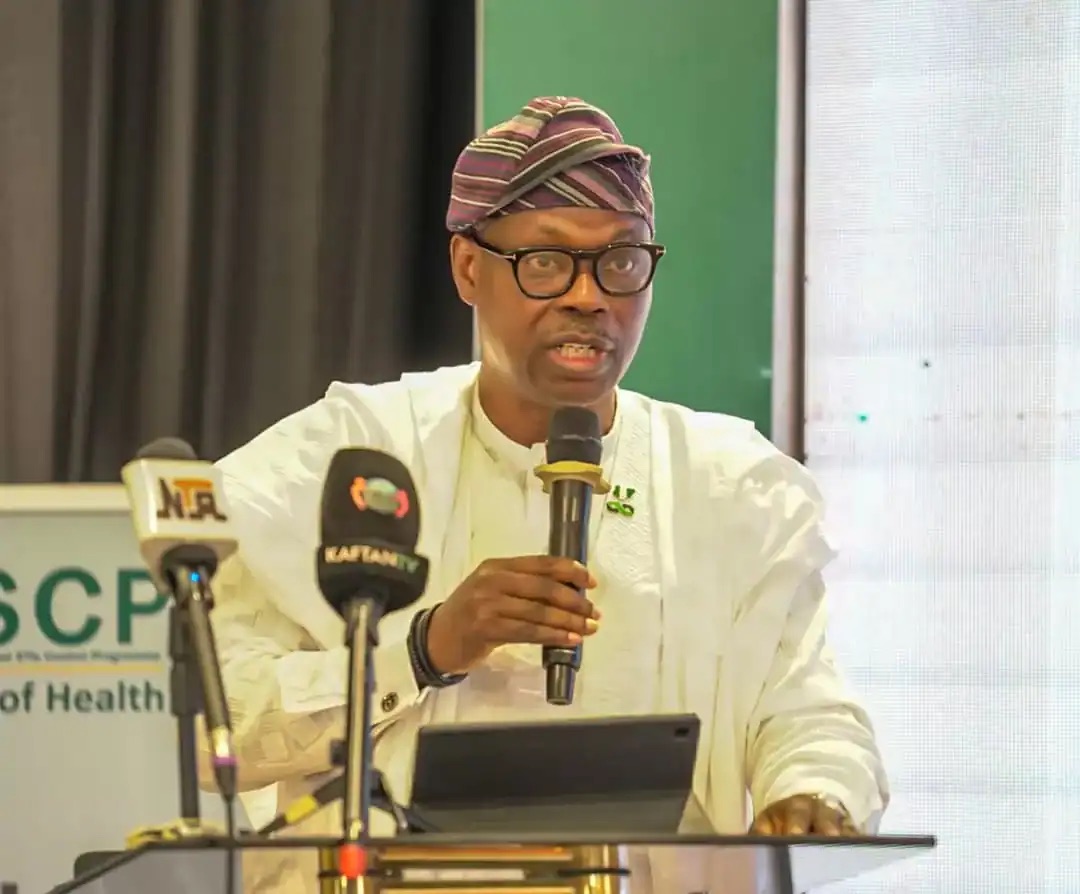
Minister of State for Health and Social Welfare, Iziaq Salako, shared these updates with State House Correspondents on Tuesday at the Presidential Villa.
Salako noted that 1,541,325 people were screened for presbyopia, with 1,444,581 pairs of glasses distributed across 16 states—Bayelsa, Delta, Ekiti, FCT, Gombe, Imo, Kaduna, Kano, Katsina, Lagos, Plateau, Ogun, Kwara, Benue, Sokoto, and Jigawa—achieving a 94% utilisation rate. He added, “65 per cent of beneficiaries received their first-ever pair of glasses, while 53 per cent were women, reflecting the programme’s contribution to improving access and equity in healthcare.”
The initiative relies on the Primary Health Care (PHC) system, empowering over 800 PHCs for vision screening, counseling, acuity tests, prescriptions, glasses distribution, and referrals. Salako reported that 2,216 PHC workers received training in primary eye care, and 811 facilities now offer routine eye services.
On substandard eyewear, he emphasised enforcement by agencies like the Standards Organisation of Nigeria and NAFDAC, assuring that Jigi Bola 2.0 glasses are certified and safe. He called on the public to “patronise only registered centres and appealed to the media to report any unregulated or substandard practices for swift government action.”
Salako reiterated the PHC focus for rural reach, explaining that these centers now handle screening, counseling, visual acuity measurement, prescriptions, and referrals. He also updated on the recent health sector strike, stating workers resumed last Friday, with many back at posts and joining the initiative.
National Eye, Ear and Sensory Functions Programme (NESHP) Director and Coordinator Okolo Oteri stressed the program’s deeper impact: “Jigibola 2.0 goes beyond statistics, describing it as a programme that restores dignity, productivity and inclusion.” She called visual impairment a “silent economic drain” for those aged 40-60, enabling artisans, traders, farmers, and workers to regain productivity. Oteri shared a beneficiary’s story of the glasses feeling like “a personal gift from the President,” plus gains in reading religious texts independently. She noted PHCs’ improved accuracy in services like immunizations when staff can see clearly.
Livelihood Impact Fund Executive Director Abigail Steinberg praised the effort, saying the fund was “overjoyed to celebrate Jigi Bola 2.0, describing it as an initiative whose significance was recognised by President Tinubu.” She highlighted that over 74 million Nigerians need eye care, with 25 million requiring cheap reading glasses (under ₦1,000 to produce). Globally, near-vision loss costs GDP $25 billion, but “for many individuals, all that stands between them and restored productivity is a simple pair of glasses.”
Steinberg credited Jigi Bola 2.0’s success in 16 states to presidential leadership, ministry partnerships, state support, and collaborators like Founders Pledge, CHAI, CHAN, RestoringVision, and MESH.