Follow Us on Google

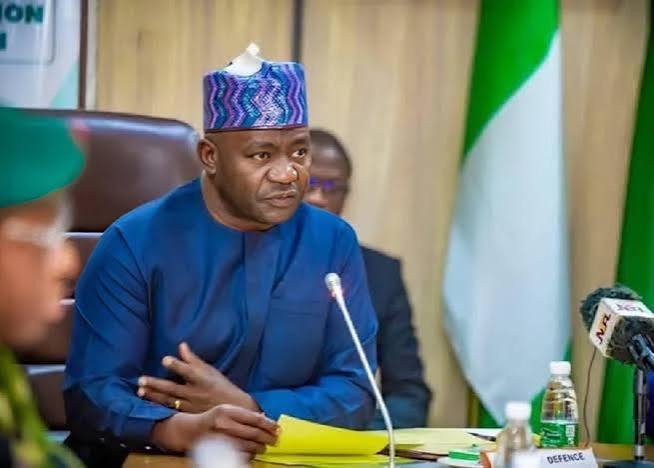
The Federal Government is considering the reintroduction of tollgates equipped with modern surveillance technology to help tackle kidnapping, banditry and other criminal activities on Nigerian highways.
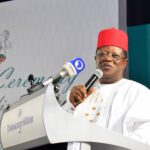
The Minister of Defence, Christopher Musa, disclosed this during an event organised by the All Progressives Congress (APC) and convened by the Chief Executive Officer of the Presidential Initiative on Compressed Natural Gas and Electric Vehicles, Ismaeel Ahmed.
The event, titled Promise to Proof: The Renewed Hope Conversation, focused on government policies and national development.
Musa said the proposed tollgates would serve a dual purpose, functioning as revenue collection points and security checkpoints where technology could identify and track vehicles.
He supported a suggestion that motorists could contribute to security funding through tollgate charges, saying the decision to dismantle the previous tollgate system might have been a mistake.
“We may have made a mistake by removing tollgates,” the minister said, adding that any new system must be supported by technology capable of identifying vehicles through their registration numbers and processing payments electronically.
He explained that motorists should not be required to stop for manual payments, as surveillance technology could monitor vehicles and support security operations.
The defence minister also advocated a stronger national identification system that integrates personal identification numbers, facial recognition and fingerprint technology to help security agencies establish identities and track criminal networks.
On the military’s prolonged involvement in internal security operations, Musa acknowledged that deployments across the country had stretched the armed forces beyond their traditional responsibilities.
He said the military was working towards a gradual withdrawal from internal security duties by strengthening the capacity of the Nigeria Police Force to handle responsibilities within its mandate.
According to him, the military was supporting the police through training, operational assistance and other capacity-building initiatives, while the government planned to recruit more personnel and procure additional equipment.
Musa disclosed that the 2026 budget provided ₦5.4tn for defence, alongside plans to recruit an additional 12,000 personnel.
He said the allocation would support the acquisition of modern weapons, surveillance systems and operational platforms to improve intelligence gathering, mobility, firepower and rapid response.
Giving an update on military operations, the minister said security forces had killed more than 300 terrorists and bandits, including over 10 commanders, in operations conducted in the week preceding his presentation.
He attributed the reported gains to improved intelligence gathering, joint military operations and stronger cooperation among security agencies.
Musa, however, identified porous borders as a major obstacle to tackling insecurity, particularly Nigeria’s extensive border with the Niger Republic, which he said criminal groups and arms traffickers exploited to move across the region.
He said Nigeria had maintained security cooperation with Niger, Burkina Faso and Mali despite their withdrawal from the Economic Community of West African States, particularly in military training and collaboration around border communities.
On local defence production, Musa said the government had strengthened the country’s defence industry through legislative reforms and partnerships with equipment manufacturers.
He urged Nigerians with expertise in cybersecurity, drone manufacturing and other defence technologies to present their innovations for possible collaboration with the Defence Industries Corporation of Nigeria.
He also called on residents to report suspicious activities in their communities, stressing the importance of public cooperation in supporting security agencies.