Follow Us on Google

By Chinenye Anuforo
In a significant move to accelerate its digital transformation, the Federal Government through the Ministry of Communications, Innovation, and Digital Economy has officially launched the National Broadband Alliance for Nigeria (NBAN). The initiative aims to bridge the country’s broadband gap and drive economic growth through increased internet access.
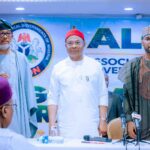
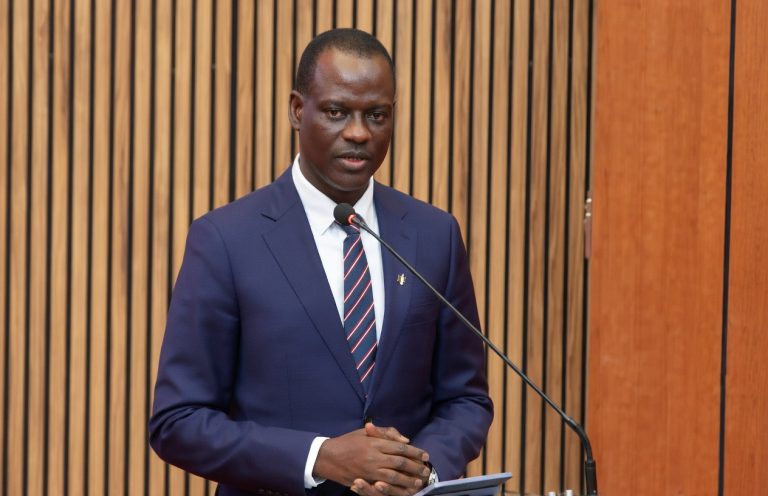
The launch event, held in Lagos on Tuesday, saw Dr. Bosun Tijani, Minister of Communications, Innovation, and Digital Economy, describe the NBAN as a “transformative journey” aligned with President Bola Ahmed Tinubu’s Renewed Hope Agenda. Tijani, who was represented by the Executive Vice Chairman of the Nigerian Communications Commission (NCC), Dr. Aminu Maida, emphasized the importance of innovation, technology, and collaboration in achieving the nation’s development goals.
“Nigeria’s broadband penetration has increased from just six in 2015 to 42 percent as of October 2024, but we must do more to ensure that every Nigerian can access reliable, high-speed internet,” Tijani stated. “The NBAN is not just about infrastructure; it is about ensuring that broadband becomes a catalyst for economic growth, social inclusion, and technological advancement.”
The National Broadband Plan (2020-2025) sets ambitious targets, including 70 percent broadband penetration by 2025, minimum internet speeds of 25 Mbps in urban areas and 10 Mbps in rural areas, and 80 percent population coverage by 2027. The plan also aims to increase broadband investments by 300-500 percent by 2027.
Dr. Maida announced that a Special Purpose Vehicle (SPV), approved by the Federal Executive Council (FEC), will drive investments and oversee the deployment of 90,000 km of backbone fiber across the country. This initiative aims to connect even the most underserved communities.
Tijani highlighted the paradox of underutilized broadband infrastructure, noting that despite growing investments, many fiber networks remain underused due to limited device access, low digital literacy, and regulatory challenges. The NBAN will act as a demand aggregator, ensuring broadband adoption in schools, healthcare facilities, businesses, and rural communities.
The minister called for collaboration between the government, private sector, and civil society to overcome barriers to broadband adoption. He commended pilot states—Edo, Ogun, Kwara, Katsina, Imo, Abia, Borno, and Nasarawa—for their efforts in addressing challenges like right-of-way fees and creating a favorable environment for broadband expansion.
“The NBAN is a commitment to a future where broadband is not a privilege but a fundamental right for all Nigerians,” Tijani affirmed. “Through collaboration and investment, we can transform broadband into a powerful tool for economic prosperity, job creation, and innovation.”
Dr. Maida echoed the importance of collaboration, emphasizing that broadband is “the cornerstone of progress in an increasingly digital world.” He noted that the NBAN provides a framework to address obstacles hindering broadband expansion, including infrastructure vandalism and investment barriers. Patience Fakal, Commissioner for Business Innovation and Technology, Kaduna State, emphasized that broadband connectivity is “the backbone of economic growth, innovation, and inclusion.” She highlighted Kaduna State’s proactive efforts in driving digital transformation, including the development of a 30-kilometer active connectivity network and partnerships to expand fiber optic infrastructure.
Naufal Ahmad, Director General, Katsina State Directorate of Information and Communications Technology, expressed his support for the NBAN, noting its potential to address broadband expansion challenges, particularly in rural areas. He cited Katsina State’s success in connecting government offices through a single ring network.
The launch of the NBAN marks a pivotal moment in Nigeria’s journey towards a digitally inclusive future, with stakeholders committed to working together to ensure that broadband access becomes a reality for all Nigerians.