Follow Us on Google
The Federal Government has defended its decision to redirect President Bola Tinubu’s proposed ₦100bn allocation for 3,000 compressed natural gas (CNG) buses, insisting that the revised programme has delivered wider benefits through vehicle conversions, tricycles and buses with larger passenger capacities.
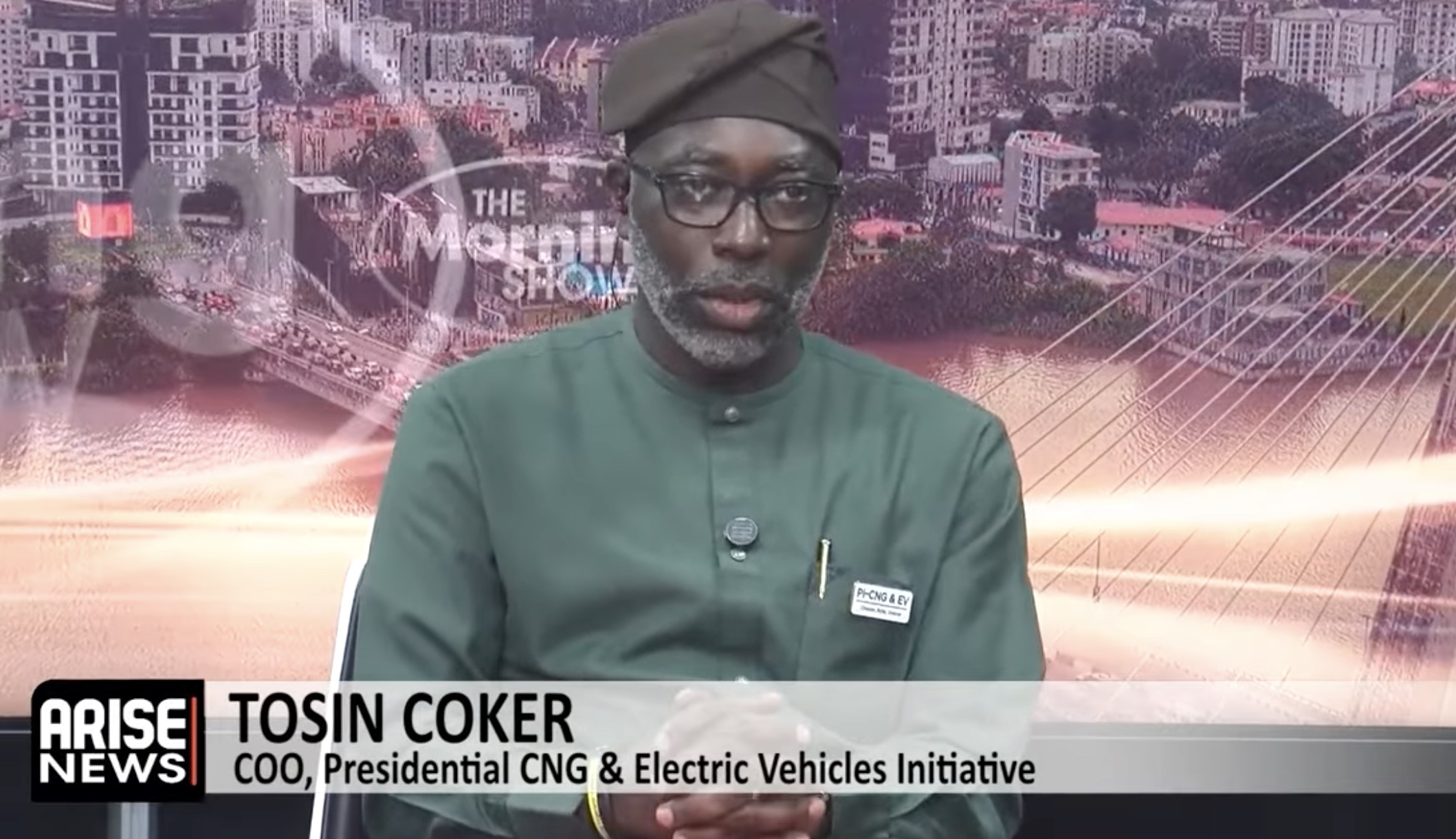
The Chief Operating Officer of the Presidential Initiative on Compressed Natural Gas and Electric Vehicles, Tosin Coker, said the government reviewed the original plan after establishing the initiative in October 2023, concluding that buying 3,000 buses alone would not adequately address Nigeria’s transportation needs.
Speaking during an interview with ARISE NEWS on Sunday, Coker said the money was redirected towards conversion kits, different categories of buses and other transport options designed to reach more Nigerians.
“That amount, that 100 billion was used more, put to better use in what I’ve just said, in the conversion kits, as well as buses, bigger capacity buses,” he said.
Coker explained that the revised programme initially prioritised commercial vehicles, with more than 25,000 conversions carried out during its first phase. He said the initiative had since recorded more than 120,000 vehicle conversions and introduced over 650 buses nationwide, alongside tricycles.
According to him, the buses include smaller vehicles carrying between 15 and 18 passengers, 50-seater buses and larger high-capacity models capable of carrying about 90 passengers. He said the initiative had deployed at least 60 buses in Lagos and between 40 and 50 in Abuja, while additional deployments were planned for other states.
The official acknowledged, however, that the number of CNG buses and tricycles on Nigerian roads remained insufficient. He said additional CNG and electric vehicles had been ordered, with the government expecting a visible expansion of alternative-fuel transport in the coming weeks and months.
Coker also said the initiative was working with the Nigerian Consumer Credit Corporation and financing providers to make vehicle conversions more affordable. He put conversion costs at about ₦350,000 and above, depending on the vehicle, adding that some customers could pay in instalments over three, six or 12 months.
He explained that buses were being deployed according to the availability of gas infrastructure, warning that sending CNG vehicles to locations without adequate refuelling facilities would undermine their effectiveness. He also urged state governments to invest more in public transport, saying the Federal Government could not meet the country’s needs alone.
The defence comes amid concerns over whether the government’s alternative-fuel programme is translating into cheaper transport for commuters. Coker acknowledged that Nigerians were more interested in lower fares than official statistics, saying the initiative needed to do more to ensure that its interventions reduced the cost of daily travel.
President Tinubu had announced the ₦100bn plan for 3,000 CNG buses in July 2023, before the presidential initiative was established. The government has since expanded the programme to include vehicle conversions and electric mobility as part of its efforts to reduce transport costs following the removal of petrol subsidy.