Follow Us on Google
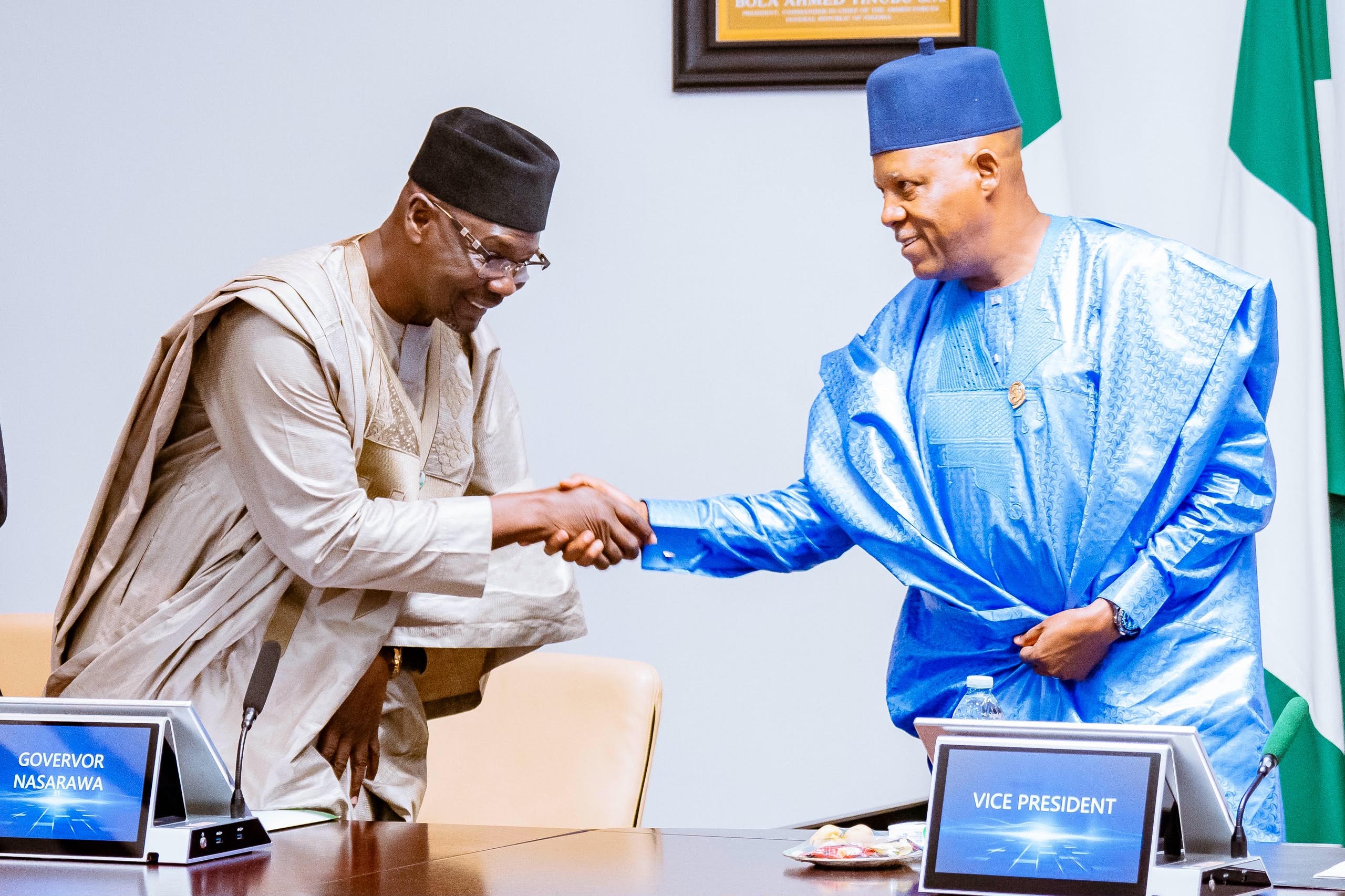
The federal government has accepted the final report of the National Technical Working Group (NTWG) for the World Bank-supported US$500 million Sustainable Agricultural Value Chains for Growth Programme (AGROW), signalling the end of the programme’s design phase and the start of implementation, Vice-President Kashim Shettima announced on Tuesday.
Receiving the report at the Presidential Villa, Shettima said AGROW is intended to “restore the farmer to the centre of our national economic reasoning” and shorten the distance between farmers and national planning and policy decisions.
“Today marks the transition of AGROW from programme design to implementation,” the Vice-President said. “The World Bank US$500 million Nigerian agriculture programme is targeted at developing a programme rooted in the realities of farmers, delivered through our States, and capable of attracting the private investment required to move agriculture from subsistence to scale.”
The programme’s design involved seven zonal consultations across 32 states, reflecting what the Vice-President described as growing subnational commitment to agricultural development. Shettima noted that of the US$500 million envelope, US$355 million — 71 per cent — will be implemented through participating state governments, placing them at the centre of delivery.
“US$500 million cannot meet the scale of demand or close the gaps accumulated over decades in extension services, infrastructure, technology, processing and market access. The appetite is evident. The resources are not yet sufficient,” he cautioned, while welcoming the level of interest from the states.
Shettima emphasised agriculture’s central role in the economy, noting that the sector accounts for 23 per cent of GDP and sustains 34 per cent of the workforce.
“When yields rise, food prices ease, rural incomes recover, industries receive raw materials, and the pressure on our cities and foreign reserves begins to relax. When yields fall, the entire economy discovers the price of hunger,” he said. “Productivity on the farm is therefore a question of growth, employment, food security and poverty reduction. What we do to the farm, we do to the nation.”
The Vice-President formally accepted the NTWG’s final report and approved the dissolution of the group, handing responsibility to the Federal Ministry of Agriculture and Food Security, which will chair the National Steering Committee and host the Project Coordination Office.
“The mandate has been fully and satisfactorily discharged,” Shettima declared, commending the NTWG for ensuring the programme was “inclusive, evidence-based and technically rigorous” by bringing together federal and state institutions, the private sector and development partners.
Nasarawa State Governor Abdullahi Sule told the Vice-President that the governors were committed to the initiative, saying earlier briefings by the World Bank had helped states align with the NTWG’s objectives.
“We thank the Vice-President for giving the respective states the opportunity to maximise the initiative,” he said.
Other News
Kaduna State Deputy Governor Hadiza Balarabe said Kaduna would establish a state-level coordination mechanism to ensure timely implementation.
“We already allocate more than 13 per cent of our budget to agriculture,” she noted, adding that the state is prepared to leverage AGROW to drive economic transformation.
The Minister of Finance and Coordinating Minister of the Economy, Wale Edun, described the presentation of the report as a critical step towards implementation and thanked partners for their commitment.
“This programme goes beyond food production; it is an integral part of Nigeria’s economic transformation, macroeconomic stability and job creation drive,” he said.
Minister of Agriculture and Food Security, Senator Abubakar Kyari, praised Vice-President Shettima’s leadership in mobilising stakeholders for the AGROW design and pledged the ministry’s commitment to successful implementation under the Renewed Hope Agenda.
Kyari said the next phase would focus on the borrowing plan, financing agreement and legal opinions needed to move from design to execution.
World Bank Programme Leader for AGROW, Bertine Kamphuis, briefed the Vice-President on the NTWG’s national assignment and reaffirmed the Bank’s continued support.
“With the final report, Nigeria can do more to ensure that interventions translate into improved food security while lifting Nigerians out of poverty,” she said, adding that stronger private-sector participation and the right policies are essential for scaling impact.
Technical Adviser to the Vice-President on Agriculture and Executive Secretary of the Presidential Food Systems Coordinating Unit (PFSCU), Marion Moon, said the NTWG developed an eight-indicator framework for prioritising value chains based on agroecological suitability and consolidated stakeholder feedback through seven zonal consultations to inform the final design.
The handover of the report to the Vice-President by the NTWG marked the high point of the briefing, after which responsibility for project coordination shifted to the Federal Ministry of Agriculture and Food Security.