Follow Us on Google
-
4.3m Nigerian girls at risk of FGM –UNPFA, UNICEF
-
Lawyer, groups task traditional rulers, elite, women leaders against practice
From Uchenna Inya, Abakaliki
The Southeast of Nigeria has produced a long list of illustrious sons and daughters, who have held several top positions, both at the state and federal levels. Distinguished indigenes of the states that make up the geopolitical zone are doing great things in different walks of life. Among them are medical doctors, nurses as well as experts in formulation and implementation of public policies. However, and regrettably too, female genital mutilation (FGM) still persists in the zone.
Female Genital Mutilation (FGM) comprises all procedures that involve altering or injuring the female genitalia for non-medical reasons. The practice is recognized internationally as a violation of the human rights, the health and integrity of women and girls.
It is a form of gender-based violence (GBV), a harmful practice against women and girls and public health challenge, often undertaken as a traditional rite of passage supposedly aimed at limiting sexual enjoyment and protecting female chastity.
FGM is prevalent in the Southeast with Imo State having the highest prevalence rate of 38 percent of females affected within the 15-49 years age group. Alarmingly, 9.7 percent of girls aged 0-14 years have also undergone genital mutilation in the state.
In comparison, the prevalence of FGM among women aged 15-49 years in other Southeast states is significantly lower: 20.4 percent in Ebonyi; 20.3 percent in Abia; 19.0 percent in Enugu, and 13.1 in Anambra. For girls aged 0-14 years, the prevalence rates are 3.7 percent in Enugu, 3.0 percent in Abia, 2.1 in Anambra, and 0.2 percent in Ebonyi.
Ebonyi State is supposed to have become free from the FGM because of the aggressive campaign carried out against the practice across the 13 local government areas of the state.
But the practice is still going on in the state, years after the campaign and published declarations made by communities in the state against the practice.
The National Orientation Agency (NOA), United Nations Children’s Fund (UNICEF), United Nations Population Fund (UNFPA), United States Agency for International Development (USAID) and other organizations had some years ago, carried enlightenment campaigns across the state against the practice after the Ebonyi State House of Assembly passed the Violence Against Persons (Prohibition) Law.
The organizations raised surveillance teams to monitor the 13 LGAs and 171 wards of the state to ensure that the practice did not continue to be observed in the state. Despite this, FGM is still being done in different communities across the state. The communities where the practice has been recorded recently include Ekpelu in Ikwo LGA, Amudo in Ezza South LGA, Amachi, Edda, Okpoitumo Ndiegu, Okpoitumo Ndiebor and Onuenyi Okpoitumo in Abakaliki LGA, and Nkomoro in Ezza North LGA, among others.
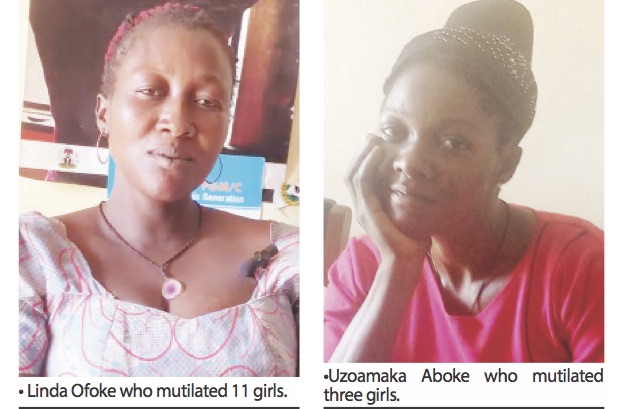
In Ndiegu Okpoitumo community, a 26-year-old female patent medicine dealer was arrested by two organizations – Tomorrow is a Girl Initiative (TIG) and AMURT Foundation. The woman, Aboke Uzoamaka, was detained in Eke-Aba Police Station in Abakaliki, the state capital.
In the course of interrogation, the pregnant mother of three said she was invited by a member of her community to circumcise her three children to enable them go back to school. Aboke said that she initially refused because she was not feeling fine. Later, after much persuasion as she claimed, she agreed to circumcise the girls for a fee of N6000. When she was done, Aboke disclosed that a midwife checked the girls and certified them okay.
In a chat with the Sun reporter, she said: “I wasn’t told that FGM is a crime now. I am pleading for mercy. I will not practice it again. I have signed before the traditional ruler of my community that I will not practice it again. I will not try it again.
“I was circumcised in 2010 and the woman who circumcised me, told me to watch how she was doing it and from there, l learned how to practice it. But I have never tried it since then until now that I did it on three secondary school girls.
“I have resolved that I will not do such a thing in my life again because of what I am passing through after doing it. I was arrested by the police. I was released because I am pregnant, if not, I would have been in detention because of it.
“I have already signed undertaking that I will not do it again and I have started campaigning against it, telling those who are still doing it that it is an offence. I have children and none of them will pass through female circumcision, I will not allow anyone to do it on any of my family members or relatives.”
How I mutilated 11 girls – practitioner
Another practitioner, Linda Ofoke from Onuenyim Okpoitumo in the local government was also arrested for mutilating 11 girls. She was later released like Uzoamaka. But few days after regaining freedom, she mutilated three more girls, bringing the number of girls mutilated by her to 11 within one month. She mutilated the girls in October, 2025.
Ofoke she said she has been FGM because she has no other means of earning a living. Ofoke is a widow and with an advanced pregnancy. Pleaded for help to enable her cater for her children having lost her husband to death.
Her words: “I was circumcising women and girls thinking that it is a culture. I was arrested by AMURT Foundation while circumcising female children. The foundation told me that it was bad to circumcise women and girls.
“They released me after the arrest. I was re-arrested after sometime when I was circumcising three girls. They took the three girls to the hospital for medical examination and told me that I have destroyed their genitals and warned that I will be imprisoned if I try such a thing again.
“The three girls made it 11 girls I circumcised within this month and I looked into it and discovered that it is actually bad to continue the practice. I will not try it again. I will not try what will disturb my peace again in my life because I have been dragged a lot because of this practice.
“I will stop female circumcision entirely and I will be joining AMURT and other organizations to campaign against this practice in our community because it is very common. I did what I did because of my condition. I was surviving with this practice because I have no other means of survival. I need help to survive now I have dropped the practice. I need help a lot.
“Anyone who knows how to help me to survive, including AMURT foundation, should do so because my husband is no more alive and nobody cares for me and my children. I am dropping whatever that will disturb my peace and those of my children from henceforth but we need help. I will not put any sharp object into a woman or girl private part anymore in the name of circumcision. I have stopped it entirely.”
Patent medicine dealers go haywire on FGM
In Amudo, Ezza South LGA, another patient medicine dealer allegedly mutilated a six months old baby which caused her death following heavy bleeding arising from the circumcision. The incident occurred in early October. The practitioner, identified as ‘Nurse’ Mercy, is said to be on the run to avoid being arrested by security agents.
“Yes, there is a woman that circumcised a child of about six months. The child bled profusely and died after the circumcision and the matter was reported to our community by the father of the baby. The father of the child said she warned his wife against circumcising the baby girl because of many implications but the wife refused and took the child to Nurse Mercy who circumcised her. After the circumcision, the baby started bleeding, she bled to death.
“We immediately began to look for Nurse Mercy. She got the information and left our community but we are still looking for her. Her shop has been locked since the incident happened. The nurse may not be a member of this community.
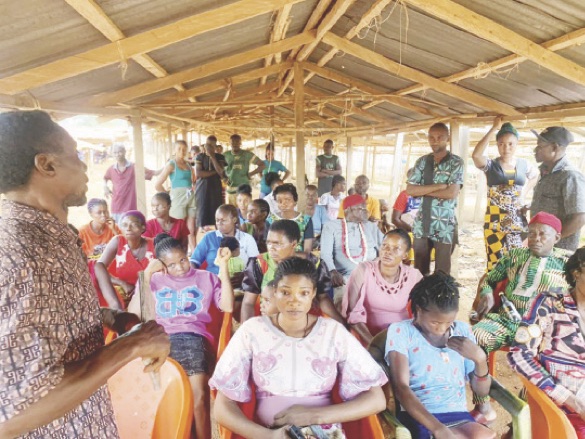
“There are so many patent medicine dealers in this community and most of them come from communities outside Amudo. Patent medicine is a lucrative business in this community and that is why we have a lot of patent medicine shops as you can see,” one of the residents of the community told the Sun.
Alarm over rising incidence of FGM
A girl-child advocate in the state, Lucy Ogodo, is understandably alarmed over the new cases of the FGM in the state despite aggressive campaign against the practice in the last few years.
Ogodo, the founder of Tomorrow is a Girl Initiative (TIG), a non-governmental organization (NGO), who called for adequate sensitization in various communities to end the practice expressed deep concern over the growing incidence of FGM in the state. Ogodo said 11 cases were discovered by the organization within one week, lamenting that despite public declarations in the communities against the practice, it has persisted.
Her words: “Every local government was doing public declaration so that they will tick the mark of the government. So, we realized that in any community we go, traditional rulers will tell you they want to do public declaration and they will gather and do public declaration.
Other News
“But what I noticed is that on the surface, they will do public declaration but inside the communities, the practice still persists.
“So, am now beginning to ask, did we do our due diligence before the public declarations or did the public declarations come first and shielded us from meeting the people who needed to hear this because the traditional ruler is one person but the villagers are individuals and they have their own mindset and they also need to be transformed as well.”
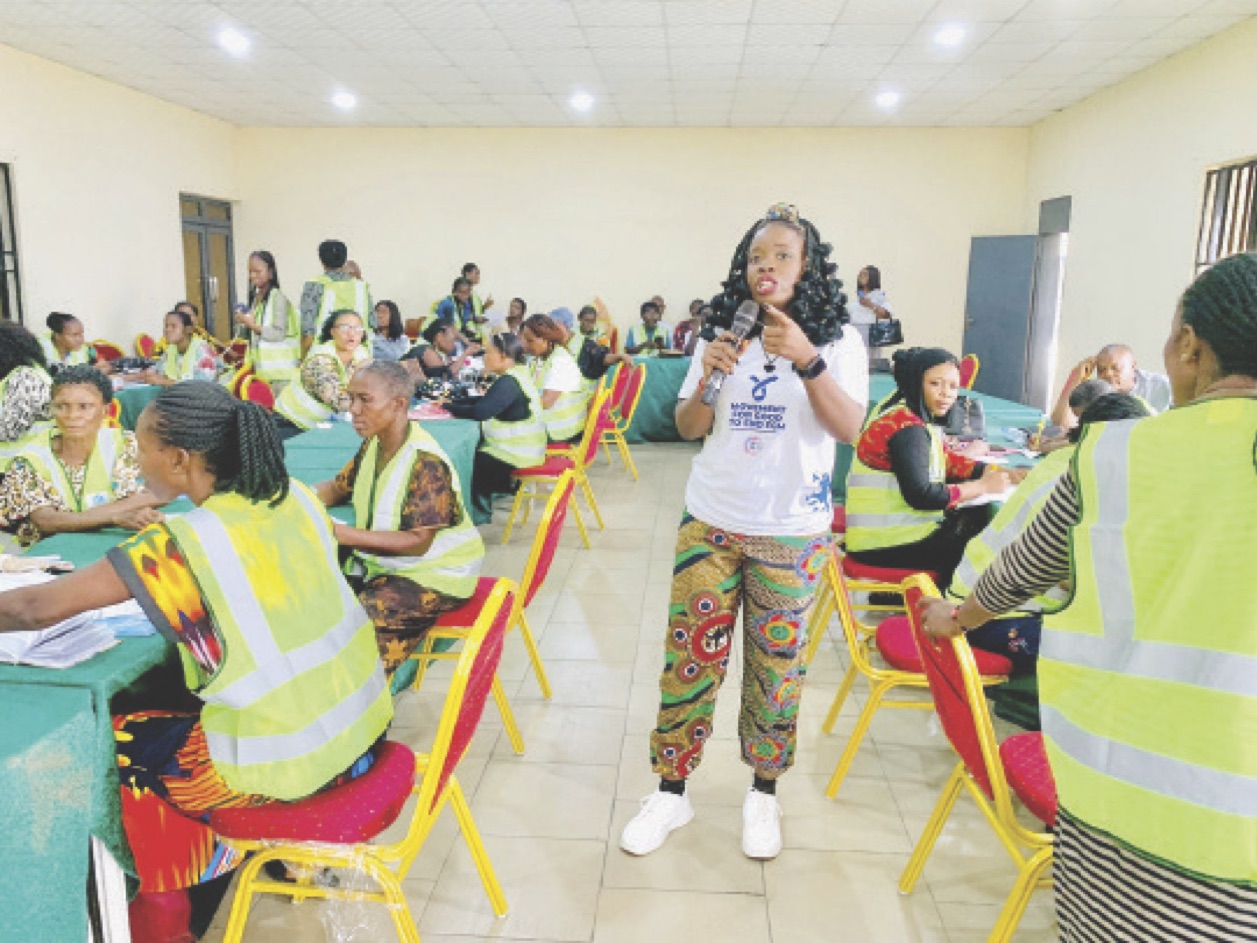
She disclosed that her organization including AMURT and the National Orientation Agency (NOA) have carried out sensitization in the communities where the new cases of the practice have been recorded.
“In Okpoitumo Ndiegu community, we have carried out sensitization and 35 practitioners who are patent medicine dealers, have signed undertaking that they will no longer practice the act and that any of their members who indulge in it, will be sanctioned in line with the law.
“The practitioners all signed undertakings that they are not going to practice the act anymore and anyone caught in the act, the law should take its course,” she said.
To deepen the impact of the efforts made her organization and its partners, and to achieve real deterrence of FGM in the area and the state at large, Ogodo, a medical laboratory scientist, told the Sun that a letter had been written to the Chairman of Abakaliki LGA, imploring him to take up the prosecution of the matter of the arrested pregnant female practitioner who later gave birth to a baby. According to Ogodo, the VAAPP Act mandates the LG chairman to ensure that people within his jurisdiction who perpetrate FGM are prosecuted to the full extent of the law and held accountable.
Chief Programme Officer of National Orientation Agency (NOA) in the state, Uchenna Unah, said some communities had fined some of the perpetrators and revealed how some of the practitioners were arrested over the act.
“Few weeks ago, we got a report from our of surveillance trained members specifically trained by AMURT on ending Female Genital Mutilation, that some children were mutilated in Ndiegu Okpoitumo community.
“So, we went there and we were able to see the victims (children) after going through the traditional rulers, the village head and town union president of the community. We also saw the person who mutilated them, a patent medicine dealer.
“The community has penalty for anybody who commits the act, which they told us they did at that level. The fine comprises one goat, alcoholic drinks and so many other things. The offenders paid the fine and were then handed over to us, and we took them to the police.
“After series of meetings with the police, they agreed to stop mutilating girls in the community and also join the campaign to end FGM by reaching out to other people in the community, to advocate and sensitize them on why FGM should end,” Unah said.
Lawyer speaks on prosecution handicaps
A lawyer in the state, Mrs. Ijeoma Mike-Ajanwachukwu, who interacted with the Sun on the issue of FGM, acknowledged that people had started to report cases of FGM in their localities, unlike in the past when reporting was very low.
She lamented that people who report the cases, don’t come out to testify when the perpetrators are being prosecuted.
Mike-Ajanwachukwu, who is Assistant State Counsel in the state’s Ministry of Justice and one of the warriors against FGM in the state, explained why some perpetrators were released without prosecution after arrest, saying: “As a result of the aggressive sensitization carried out against the practice few years ago, people are now aware of the dangers associated with FGM.
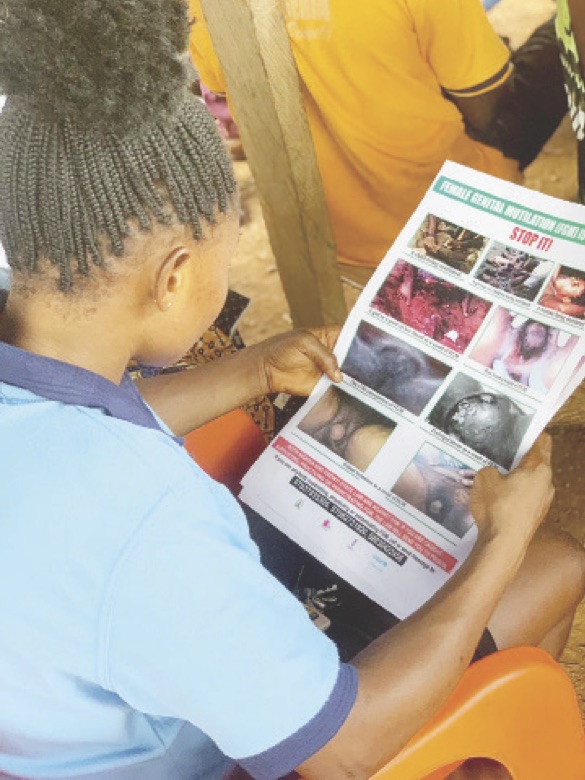
“Champions were inaugurated in all these communities and people are now reporting the cases in fact. We have arrested some people that were reported to us.
“We released them so that they can now be champions and begin to report the cases to us. We allowed them to go because as of now, we will not succeed in the prosecution of the matter. Those who reported the cases to us will not agree to testify against the perpetrators in court. When you take somebody to court as a lawyer, is it me that will give evidence? Is it not someone else that will do that?
“You need somebody that will come and say this woman hurt me. That is the problem we have in this fight against the practice in our state. And remember this thing is deeply rooted in the culture. This is why we are using dialogue, sensitizing people and encouraging them to stop this harmful practice.”
In 2024, United Nations Population Fund (UNFPA) and United Nations Children’s Fund (UNICEF) said 4.3 millon girls are at risk of FGM in the country. UNICEF and UNFPA made the revelation in a joint statement on the International Day of Zero Tolerance for FGM signed by Eddie Wright and Helen Wylie that 2024. The organizations said the 4.3 million figure is projected to reach 4.6million by 2030.
“This year, 4.3 million girls are at risk of Female Genital Mutilation according to the latest UNFPA estimates. This number is projected to reach 4.6 million by 2030, as conflict, climate change, rising poverty and inequality continue to hinder efforts to transform gender and social norms that underpin this harmful practice and disrupt programmes that help protect girls.
“Female Genital Mutilation remains widespread in Nigeria. With an estimated 19.9 million survivors, Nigeria accounts for the third highest number of women and girls who have undergone FGM worldwide, with the risk of cutting highest in the first five years (86% of girls circumcised before age 5 – NDHS 2018).
“FGM violates the rights of women and girls and limits their opportunities for the future in health, education and income. Rooted in gender inequality and power imbalances, it is an act of gender-based violence that harms girls’ bodies, dims their futures, and endangers their lives.”
“But we know that change is possible. With just eight years left to reach the global target of eliminating FGM, only collective and well-funded action across a diverse group of stakeholders can end this harmful practice.”
“Changing gender and social norms that encourage FGM is critical. Men and boys are powerful allies in the effort. Increasingly they are challenging power dynamics within their families and communities and supporting women and girls as agents of change”.
“The UNFPA-UNICEF global Joint Programme on the Elimination of FGM has supported over 3,000 initiatives within the last five years where men and boys actively advocate, to bring an end to the practice,” the statement read.
Chief of Field Office, UNICEF, Enugu, Mrs. Juliet Chiluwe during this year’s International Day of Zero Tolerance for FGM which was celebrated in Enugu for South East, emphasized that despite efforts to eliminate FGM, Imo and Ebonyi states continue to grapple with the practice.
She lamented that in spite of earlier commitments through policies and laws towards ending the practice, the prevalence was still on the increase in these southeast.
She noted that though there was a drop in the prevalence among women aged 15 – 49. “This is the most critical time to step up the pace, especially through strengthening alliances among grassroots activists, communities, governments, organisations, the private sector to build a powerful social movement that ends harmful norms and build movements even as we advocate and amplify our voices.”
In his presentation during the event, a public health expert, Dr Chikezie Obasi, urged the society to rise against the obnoxious practice saying it causes severe pain, infection, menstrual pain, child birth complications and psychological trauma to the victim, with no positive side.
He observed that the practice had continued in spite of the laws, revealing that about 20 million women in Nigeria have undergone the painful experience just as 230 million was the global data.
Obasi also revealed that $1.4 billion was the financial implication of managing the challenge globally, which he said was harmful and injurious to the girl child.
According to the World Health Organization (WHO), “female genital mutilation has no health benefits, and it harms girls and women in many ways. The practice involves removing and injuring healthy and normal female genital tissue, interfering with the natural functions of girls’ and women’s bodies. It can lead to immediate health risks, as well as a variety of long-term complications affecting women’s physical, mental and sexual health and well-being throughout the life-course”.
All forms of FGM are associated with increased health risk in the short and long terms. FGM is a harmful practice and is unacceptable from a human rights as well as public health perspective, regardless of who performs it.