Follow Us on Google

By Fred Itua, Abuja
When the Independent National Electoral Commission (INEC) commenced the declaration of results from last Saturday’s Federal Capital Territory (FCT) area council elections in the early hours of Sunday, the pattern that emerged was familiar. The ruling All Progressives Congress (APC) had swept five of the six chairmanship seats across the territory, breaking the 3-3 deadlock with the Peoples Democratic Party (PDP) that defined the 2022 cycle.
Only Gwagwalada, on the surface, bucked the trend, where the PDP’s Mohammed Kasim won with 22,165 votes against the APC’s Yahaya Shehu. Political observers see the outcome from Gwagwalada as solace for the opposition. The outcome, however, did not obscure the scale of the ruling party’s dominance.
The outcome, conducted under the newly enacted Electoral Act, 2026, signed into law by President Bola Ahmed Tinubu just three days before polling day, is believed to carry consequences that extend far beyond the six area councils. It is, in the most direct sense, the opening chapter in the story of the 2027 general election.
It is an unfolding story whose plot lines of incumbency muscle, alleged voter disengagement, opposition fracture and contested electoral reforms, are already being written in the nation’s capital.
APC candidate in AMAC, Christopher Maikalangu, secured the most affirmative victory of the day. In AMAC, the country’s most politically visible local government area, APC polled 40,295 votes against the ADC’s 12,109.
Maikalangu, the serving chairman and candidate, who defected from the PDP to the APC ahead of the election, won with a margin of over 28,000 votes. In total valid votes cast across AMAC, he secured roughly 64 percent. This is a sharp contrast in the same area where Peter Obi’s Labour Party won 59 percent of the presidential votes as recently as 2023.
Bwari was also decisive, with APC’s Joshua Ishaku polling 18,466 votes to the ADC’s 4,254. The margin suggests near-total control of the party machine in that council. Kwali and Abaji were competitive. However, it was also a comfortable win for the APC, with margins of about 1,600 and 2,900 votes respectively.
Kuje was the closest APC victory. Only 1,525 votes separated the winning APC candidate from the PDP’s Ishaku Tete Shaban. Key opposition leaders believe that they stand a chance there in next year’s general elections.
Only Gwagwalada is believed to have delivered a genuine upset. PDP’s Mohammed Kasim defeated the APC’s candidate by over 4,000 votes in a result that INEC Returning Officer Philip Akpen described as having been conducted peacefully.
In the history of FCT Area Council history, no single party has ever won all the six councils in one cycle. The APC, however, came closest to that record on Saturday. It only defaulted in Gwagwalada.
The Nyesom Wike factor in the days leading to the elections cannot be ignored. The former Rivers State governor, who still remains a leading member of the PDP, though he publicly aligns with President Tinubu’s administration, openly campaigned for APC candidates across all six councils. He publicly declared that he owed no apology for backing whoever supported the President’s agenda.
Wike’s influence, many election observers believe, was structural, and highly instrumental. In AMAC for instance, the PDP’s own chairmanship candidate, Zadna Dantani, withdrew from the race in favour of the incumbent APC candidate, Maikalangu.
In Bwari, PDP’s Julius Adamu stepped down for APC’s Joshua Ishaku. The strategic moves, were however denounced by a member of the NWC of the PDP, who described them as carried out without the party’s consent. Despite the protest, the damage was done. Opposition votes were fragmented before election day.
Election observers, civil society organizations and other stakeholders, have argued that the APC won Saturday’s election largely because of voter apathy. Across all the six Area Councils, turnout was abysmally low. In AMAC, where 837,338 voters are registered, just 65,197 ballots were cast, representing a turnout of under 8 percent.
At Polling Unit 006 in the City Centre Registration Area for instance, only seven voters had cast ballots as of 9:50 a.m. At Kubwa’s Polling Unit 053, 23 of 464 registered voters were accredited. That is less than five percent.
Yiaga Africa, the Nigeria Civil Society Situation Room, and multiple party agents, all reported the same problem across different councils. Nigerians stayed at home in large numbers. Ahead of the 2027 general elections, there are concerns that the implications of this apathy are profound.
The observers are of the view that Saturday’s figures suggest that the apathy has worsened rather than improved. They argue that “when elections are decided by thin percentage of the registered population, incumbency advantages in mobilisation, logistics, and access to resources become disproportionately decisive.”
The Nigeria Civil Society Situation Room reported that observers at AMAC’s Gwarinpa ward identified party agents, reportedly from the APC, seen calling voters aside and distributing what appeared to be white envelopes. A woman was arrested at Kabusa Primary School in AMAC in possession of more than 20 voter cards. Security agencies confirmed the arrest.
“These are not trivial incidents; they form part of a wider pattern of transactional politics that distorts voter choice and corrodes public trust in outcomes,” observers noted. Neither INEC nor the APC has formally responded to the specific allegations as at the time of filing in this report.
The Council elections, many believe, also tested the efficacy or otherwise of the new Electoral Act. President Tinubu signed the Electoral Act, 2026 into law on Wednesday, February 18, just three days before last Saturday’s polls. The speed of the assent, coming after weeks of intense controversy in the National Assembly, left many political pundits in doubt.
The new Act’s centrepiece is its formal codification of electronic transmission of polling unit results to INEC’s IReV portal as the primary mode of result management. For electoral reform advocates, this is a significant step forward, a recognition in the law of the technology that has been INEC’s most credible anti-manipulation tool since its introduction.
Other News
The Commission has uploaded results from Saturday’s elections to IReV in real time. With the general elections expected to be of larger scale, it yet to be seen if INEC will maintain the same momentum.
However, the Act’s most contested provision, Section 60(3), which retains manual collation through Form EC8A as a legal fallback when electronic transmission fails, has dented trust in the legislation’s integrity. The ADC described the law as signing “the death warrant on credible elections.”
Omoyele Sowore of the African Action Congress, speaking at a polling unit in Kabusa, linked the low turnout directly to public disillusionment following the law’s signing, saying: “Democracy needs one oxygen, and that is trust.”
Yiaga Africa and The Kukah Centre called the law a missed opportunity. Even telecoms operators, through their industry body ALTON, undermined the government’s infrastructure justification for the fallback clause by affirming that 2G networks are sufficient to transmit polling unit result data.
“The manual fallback provision does not merely create a technical exit ramp in a low-trust environment, it creates a political temptation. The 2027 test will be whether INEC has the institutional will to slam that door shut.”
The proponents of the law, Senate President Godswill Akpabio and the APC majority lawmakers, maintain that the Act strengthens transparency, while accommodating genuine infrastructure limitations. Observers believe that the foregoing argument would have been more persuasive if Nigeria’s electoral history did not show that collation centres, not polling units, have historically been the primary sites of result manipulation.
Saturday’s near-sweep of FCT Area Councils demonstrates that the APC retains a formidable capacity and the deployment of needed resources. With the Presidency, most governorships, and the National Assembly, the party is coming into 2027 elections with more electoral advantages that no single opposition actor can match alone.
“However, it is critical to note that the voter base for these victories was paper-thin. Winning 40,000 votes out of 837,000 registered AMAC voters is not a mandate; it is a mobilisation exercise,” Victor Giwa, a lawyer noted.
The cost of living crisis, fuel prices, naira devaluation, and food inflation that has defined everyday life since 2023, many observers believe, will be the primary currency of the 2027 presidential campaigns.
The PDP’s Mohammed Kasim may have defeated the APC in a head-on contest. Ironically, it was Wike’s faction of the party that produced the PDP candidate. The party’s performance across the other five councils, including the humiliation of watching its own candidates withdraw under political pressure, reveals a structural problem ahead of the 2027 general elections that the APC may likely explore to its own advantage.
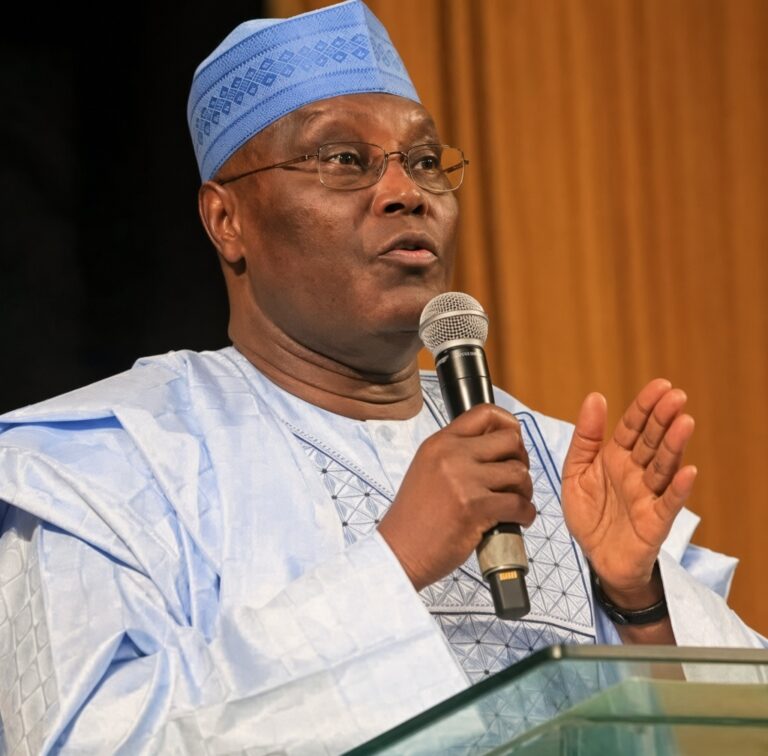
The defection of Atiku Abubakar to the ADC and the continued loss of state-level governors and legislators to the APC is bleeding the PDP of the structure it needs to compete nationally. It is believed that for the PDP to be a credible 2027 presidential contender, it must resolve its internal leadership crisis and rebuild its FCT base before the election date.
For the ADC, its performance in AMAC, many believe, makes it a serious 2027 wildcard. The ADC, buoyed by the defection of Atiku and other senior PDP figures, scored 12,109 votes in AMAC chairmanship, second only to the APC. Observers contend that for the ADC to have finished ahead of the PDP’s 3,398 in AMAC is remarkable and deserves careful attention.
Voter apathy which was obvious during the elections, is believed to remain an existential threat that no Electoral Act can fix. The single most alarming signal from last Saturday is not the APC’s margin of victory, but the depth of public disengagement from the electoral process. When less than 8 percent of AMAC’s registered voters participate in an election that determines who governs them at the local level, observers believe that it portends something dangerous for Nigeria’s democracy.
The Electoral Act 2026 addresses some procedural vulnerabilities. Unfortunately, it cannot, by itself, address the erosion of faith that leads Nigerians in their millions to conclude that their votes do not matter.
It is generally believed that no ruling party has ever won the presidential election in the FCT in recent times. During the 2023 presidential election, Peter Obi won the FCT decisively with approximately 59 percent of the votes, while President Tinubu secured only 19 percent. The Labour Party swept the FCT’s lone Senate seat and one of its two House of Representatives’ seats.
There are concerns that any opposition candidate who successfully re-activates FCT’s disengaged majority, particularly its urban, educated, and youth-heavy demographics, could replicate or exceed Obi’s 2023 performance. A poser, however remains: does the opposition have the organisational coherence and candidate quality to do so? Time will tell.
FCT Minister, Wike has demonstrated once again that his political acumen is a genuine national asset for the party in power, whatever the optics of his methods. INEC, for its part, conducted a largely peaceful exercise in which the BVAS performed credibly and the IReV portal received real-time uploads.
But questions remain. A sweep achieved on voter turnout of under 10 percent, amid credible allegations of vote buying and political intimidation, is not the mandate a ruling party needs heading into a presidential election where the stakes are existential for all parties.
The Electoral Act 2026, with its manual fallback clause, has introduced a contested legal framework that will require extraordinary institutional discipline from INEC to prevent from becoming a vehicle for the manipulation it was designed to foreclose, observers have noted.
The story of that election is already being told in the empty chairs at polling units in Nyanya and Kubwa, in the quiet collapse of PDP candidates before election day, and in the careful architecture of a ruling party determined never again to be caught unprepared in its own capital.
Whether that story ends in the deepening of democracy or its further erosion will depend on choices by institutions, politicians, and ordinary citizens that are made in the months ahead.