Follow Us on Google

By Bianca Iboma-Echefu
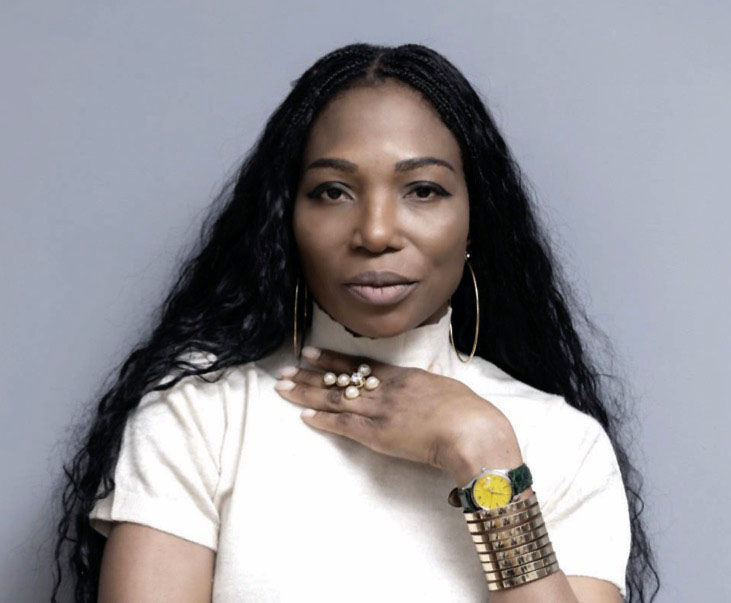
Balikisu Lawal, known simply as Bali Lawal, is a Nigerian-Italian former top model, entrepreneur and founder of A Coded World. Born in Lagos and raised between a large, complex family and later life in Italy, she walked for major fashion houses, including Giorgio Armani, Versace, Calvin Klein, Krizia, Bulgari and Chopard before stepping away from the runway to build a platform dedicated to diversity, emerging talent and genuine cultural exchange. Recently in Lagos for GTCO Fashion Weekend, she speaks with clarity about roots, reinvention, the realities of the fashion industry, and why the old narratives surrounding Nigerian and African women must finally be replaced.
In this conversation with Daily Sun, Bali reflects on growing up as the “black sheep” of a large family, the narrow standards she faced as one of the few Black models in early 2000s Milan, the decision to create her own table and her ongoing work to open doors for younger models, mothers and designers who are often overlooked. What emerges is the portrait of a woman who has refused to be reduced to her looks, her past, or other people’s limited expectations.
You were born in Lagos and later became one of the few Black models walking for major houses in Milan. What does it feel like returning home now?
It feels grounding. Lagos is still home in a deep way. When I was growing up, I never fully asked the questions about where we came from. After years in Italy and coming back, the first thing that hits you is, “Where are we really from?” Seeing the creativity, the passion and the energy at events like GTCO Fashion Weekend reminds me that the story did not end when I left. It is still being written here.
Growing up, your family background was quite unique. How did those early years shape you?
I come from a big family. My father is from the north, around Ilorin, and my grandfather was a very important Imam. There were many wives and more than 50 brothers and sisters. Every family had its problems, and every family has its black sheep. I was that black sheep. My mother left my father when I was about three years old. From that point, my life changed completely. I moved from one auntie to another. The aunties did what they thought was best, but I was a little girl crying deeply in her heart for her mother. That absence sealed my destiny in many ways. I did not really know who I was. I only knew the emptiness.
You moved to Europe as a teenager and began modelling. What was that transition like, and what challenges did you face as a Black African model in Italy in the early 2000s?
It was not glamorous at the beginning. I arrived in Italy and had to build everything from nothing. People see the runway and the big names, but they do not always see the fight for position and the constant knocking on doors.
In Italy at that time, the accepted image for a Black model was very limited. You could only look like Naomi Campbell or Grace Jones. That was the only frame they recognised. Natural hair was not accepted. When I started, there were usually only three Black girls on the runway in a season, sometimes up to six. We would go to castings knowing the client often wanted only one Black girl. Finding the right makeup shades and suitable hair solutions for our skin tones was extremely difficult.
I later worked in Germany, France, Spain, the United States and South Africa. In some of those places, especially Germany and the U.S., they did not question my age or origin the way they often did in Italy. I realised the limitation was not always about me. It was about mentality. After working in the United States, I asked myself whether I wanted to stay there for the rest of my life. I chose to return to Italy because I consider it my home. I was also adopted by an Italian family. That decision eventually led to the birth of A Coded World in 2013.
After modelling, you founded A Coded World. What pushed you to create that platform?
The question came from deep inside. I asked myself whether I wanted to keep chasing the same validation or whether I could build something that opened doors for others. A Coded World means Combining Our Diverse Ethnicities Differently. In practical terms, it is about creating space for emerging designers, models, artists and creatives from different backgrounds. It is about inclusion that is real, not just a slogan.
When we started, there were very few platforms that allowed young designers to promote themselves effectively in Italy. I was not interested in copying an existing idea. I wanted to create something new. Growing up between Nigeria and Italy, and having the chance to travel and build friendships across the world, I did not want to build a project that served only one continent. Everyone has value. Nigeria has its code, Italy has its code, and every individual has a personal code. The vision is that we can work together in harmony, share ideas, and create a creative world that is richer because of our differences.
You have spoken strongly about Nigerian and African women. Why is it important to challenge the old stereotypes?
African women, and Nigerian women in particular, are industrious, resilient and deeply enterprising. The outdated notion that reduces them to commercial sex workers must be erased. It is a stereotype that neither reflects the reality of who we are nor honours the strength, creativity and ambition that define so many of us.
I work in fashion. Around me are professionals — designers, models, entrepreneurs and creatives — who are building with skill, vision and discipline. Through A Coded World, I am intentional about creating space for younger models and emerging fashion entrepreneurs to develop their brands. Whatever challenges some women from Nigeria, Benin and other parts of Africa faced in the past as they sought better lives should never be used as a measuring stick for the worth of an entire generation. Those stories of struggle do not define the present. Nigerian women in Italy and across the diaspora are building businesses, leading projects and contributing meaningfully to the societies they live in. Their work, not historical stereotypes, should shape how they are seen.
You have deliberately opened doors for models of different ages, including mothers. Why was that important to you?
During casting, I intentionally asked the fashion agency to send me mothers and women who were no longer being considered in the fashion world. I saw girls of eighteen and women of thirty. Many mothers, both young and older, are still out there waiting for a call. They want to be part of the industry. Models come from Canada, Brazil, northern Europe, southern Europe — from all over the world — to Milan during fashion week. The reality is that about ninety per cent of them return home without a job.
I have been in that position myself. You prepare intensely and still may go months without work. In our time, you needed to actually walk the runway to prove you were there. Today many people simply take photographs around the city and announce that they attended Milan Fashion Week. Creating real opportunities, not just appearances, is part of what A Coded World stands for.
Many former models struggle with identity after leaving the runway. How did you navigate that transition?
I asked myself a simple but important question: Who was I before I became a model? And now that I have had that experience, who do I want to be? That question is what brought me to where I am today.
Fashion is part of who I am, but the catwalk, the agencies and the contracts do not define me. I am grateful for that realisation. I love what I do now. They do not pay me a large amount of money for it, yet I can still wake up at three in the morning ready to work. When you can do that, you are blessed. A Coded World is not something that was handed to me. I built it with my own resources. Seeing young models from different parts of the world write to me, asking if there is a show they can be part of, is deeply fulfilling. We try to give them something real — not only a chance to walk, but a starting point from which they can begin to build their own platforms.
You were at GTCO Fashion Weekend in Lagos. What did the event mean to you?
Happiness. Being in Nigeria and attending that event brought me real joy. I had the chance to see so many beautiful people and an incredible display of creativity. The runway was alive with energy. In Europe, fashion shows are often quieter. In Nigeria, the atmosphere is powerful and full of life. It opens something in my soul every time I experience it. I hope it continues to grow. I believe that before long, more European fashion directors and international industry players will come to Nigeria specifically to see what is happening here.
As a woman who has built her own platform after working in an industry that often reduces women to their looks, what does real power look like to you today?
Real power, for me, is the ability to be myself every day. I am not perfect, but I choose to show up as I am. That is my strength. Alongside that is the decision to be kind to others. Those two things — authenticity and kindness — are what power looks like to me now. It is no longer waiting to be chosen. It is the ability to create the table instead of hoping for a seat. It is also the freedom to tell your story without shame. When you stop hiding the difficult parts, you stop giving other people the power to define you.
What advice would you give to a young woman just entering the fashion industry?
Modelling has specific requirements — height, measurements and a certain look. Being told you are beautiful does not automatically mean the industry will open its doors to you. Present yourself to a proper agency and listen carefully to the feedback. If they say it is not the right time, be willing to adjust your expectations. There are many talented young people who want this career, and it is not for everyone. If you have the opportunity to experience it, do so. But do not allow your entire life to depend on it. Build other skills and keep your sense of self intact.
Do not wait until you feel ready or until someone gives you permission. The industry will always have reasons why you are not enough. Build your own path anyway. Carry your story with you. The same things that once made you feel like the outsider can become the reason your voice matters.
**Looking ahead, what should we expect from A Coded World, and what is your final message?
A great deal of collaboration. That is one of the main reasons I am in Nigeria. I believe A Coded World can serve as a strong platform for artists and designers who want to present their collections in Italy. The vision now is to build a clearer bridge between Nigeria and Italy — a pathway for young designers who want to take their work further.
To young designers and creatives in Nigeria: I am here. If you need support in Italy regarding fashion or the creative industry, reach out. I have worked hard to build what I have, and I am more than willing to collaborate. Creating a bridge between us is important. That bridge is built on shared purpose and genuine support. I am here, and I am there.