Follow Us on Google

• Over 4,000 exhibitors, more than 180 countries participate
From Christy Anyanwu, London

The global tourism industry is undergoing a profound transformation, driven by technological innovation, changing consumer expectations and an increasing appetite for personalised, immersive and meaningful travel experiences. But beyond these global shifts, another development was particularly noticeable at the 2026 edition of the World Travel Market (WTM) London: Africa›s growing determination to secure a more prominent place in the international tourism marketplace.

For three days, from November 3 to 5, ExCeL London became a meeting point for governments, tourism boards, airlines, hospitality operators, travel technology companies, tour operators and investors from across the world. More than 180 countries participated, with over 4,000 exhibitors showcasing destinations, tourism products, services and investment opportunities, according to figures released by the organisers.
The scale of participation underscored WTM London›s position as one of the world›s most influential travel trade exhibitions. Beyond providing an international platform for destination marketing, the event facilitates business negotiations, strategic partnerships, investment discussions and the exchange of ideas on the forces shaping the future of tourism.
For African countries, however, the exhibition represented something more significant: an opportunity to sell their destinations to the world, attract international visitors, establish commercial relationships and demonstrate that the continent›s tourism proposition extends far beyond its traditional wildlife and safari attractions. Tanzania, Angola, Malawi, Rwanda, Ethiopia, Kenya, Rep of Cote D Voire, Morocco , Egypt and lots more
From Nigeria›s attempt to organise its tourism offerings through a proposed tourism passport to Uganda›s promotion of its national parks, Ghana›s destination marketing efforts and Sierra Leone›s celebration of music, fashion and lifestyle, African exhibitors presented a continent rich in natural attractions, cultural diversity and untapped commercial possibilities.
Yet, as the exhibition demonstrated, Africa›s opportunities must be understood against the backdrop of an industry increasingly shaped by artificial intelligence (AI), accessibility, experiential tourism and the demand for greater value.
New tourism economy
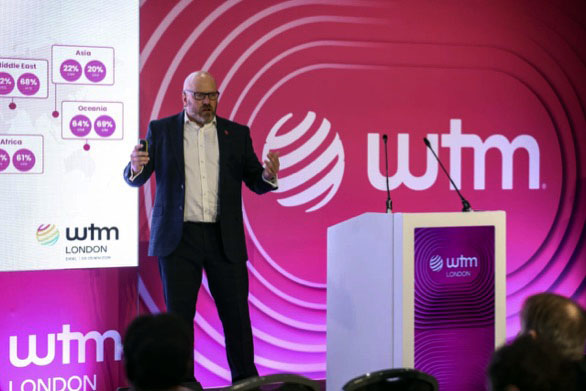
One of the major highlights of WTM London 2026 was the unveiling of the WTM Global Travel Report, produced in association with Tourism Economics. Its findings offered an insight into the changing behaviour of international travellers and the economic realities confronting the industry.
Despite mounting pressure on household finances, the report indicated that international travel remained a priority for consumers.
Dave Goodger, managing director of Tourism Economics, acknowledged that declining consumer spending power remained a challenge but argued that the broader picture was one of changing spending priorities rather than a loss of interest in travel. «Travellers are reallocating resources and looking to save where they can,» he observed.
Sean Morgan, head of travel research at Tourism Economics, provided another revealing insight, noting that 60 per cent of travellers surveyed expressed a preference for luxury holidays, with experiences playing a central role in their choices.
At a session examining the future of travel towards 2036, Chase Gray of Skift Advisory identified luxury as one of the defining values influencing tomorrow›s traveller. However, he argued that the meaning of luxury was changing, describing the emerging concept as «access not excess». He identified three broad categories of future travellers: those seeking prestige and visibility, those pursuing enrichment through personal growth and development, and those prioritising connections with family members and friendship groups.
For destinations, particularly those in Africa seeking to compete internationally, this represents an important opportunity. The continent possesses an abundance of cultural, historical, culinary and natural attractions capable of satisfying these emerging preferences.
The challenge is to package these assets into quality tourism products, supported by efficient transportation, hospitality infrastructure and effective international marketing.
Africa takes its story to the world
At the exhibition, African destinations demonstrated varying approaches to promoting their tourism potential, with an emphasis on natural attractions, cultural heritage, entertainment and investment opportunities.
Nigeria›s participation was particularly noteworthy because of the introduction of a proposed tourism passport.
Hajia Bolaji Mustapha, president of Natour, explained that the organisation›s principal objective at WTM London was to launch the Nigerian tourism passport.
«Our main objective in WTM is to launch the Nigeria tourism passport. It›s simply a booklet that shows tourism sites in Nigeria, and tour operators list,» she explained.
Ghana, another West African country with considerable tourism visibility, was also represented through the Ghana Tourism Authority. The authority plays a central role in promoting and regulating the country›s tourism industry, with the objective of positioning Ghana as an attractive and sustainable destination for international visitors.
Meanwhile, Uganda came to London with a strong wildlife and nature-based tourism proposition. Kakpoza Ivan, assistant commissioner for tourism and hospitality in Uganda, said the country›s objective was to introduce its attractions to a wider international audience.
«Our aim of coming to WTM is to let the world know what Uganda has to offer as a tourism destination,» he said. He highlighted Uganda›s 10 national parks and its wildlife attractions, including elephants, rhinoceroses, lions and buffaloes, as well as mountain gorillas and chimpanzees.
For Uganda, the challenge is to translate this natural advantage into increased international arrivals, investment and sustainable economic benefits for local communities.
Sierra Leone, on its part, is seeking to broaden its international appeal through music, fashion, food and lifestyle. Its participation at WTM London was part of a wider effort to introduce the country›s cultural identity and tourism possibilities to a global audience.
One of its major attractions is the One Nation Reggae Festival, scheduled for December 4, 2026, which is expected to showcase music, fashion, food and the broader lifestyle of Sierra Leone. The festival reflects an emerging understanding among African destinations that tourism marketing should not be restricted to traditional attractions. Music, entertainment, fashion and cultural celebrations can also become powerful instruments for attracting international visitors.
Experiences become new tourism currency
Perhaps nowhere was the changing direction of the industry more evident than in the growing prominence of experiential tourism. Recognising its expanding commercial importance, WTM London created a dedicated Experience Hub to examine how destinations and tourism businesses could transform cultural attractions, entertainment, events and personal interests into compelling travel opportunities.
Global competition for destination attention
The international exhibition also provided an opportunity to examine how destinations outside Africa were packaging their tourism assets.
Italy returned to WTM London through ENIT, the Italian National Tourist Board, with a massive exhibition space covering more than 2,000 square metres. Its presentation featured 15 regions and eight institutions, highlighting the country›s cultural, culinary, historical and lifestyle attractions. The extensive display demonstrated how a destination could use regional diversity to create a unified national tourism proposition.
Brazil also showcased its natural and cultural attractions, drawing attention to its beaches, cuisine, biodiversity and ecotourism opportunities. Its presentation highlighted iconic destinations such as the Amazon Rainforest, the Pantanal wetlands and Iguaçu Falls, alongside its commitment to sustainability.
India, meanwhile, brought its cultural heritage to the exhibition through an elaborate presentation of its traditions and tourism attractions.
The United Arab Emirates also demonstrated how community-based tourism could become an important component of national destination development through its Emirates Villages initiative.
The programme, coordinated by the Emirates Council for Balanced Development in collaboration with federal and local partners, connects tourism, culture, entrepreneurship, community participation and investment. Its objective is to enable individual villages to develop economically, culturally and socially while creating opportunities for visitors to experience local traditions, festivals, sports and community enterprises.
The initiative offers an interesting model for African countries, many of which possess rural communities with distinctive cultural identities, traditional industries, crafts, cuisine and natural attractions that remain largely outside mainstream tourism circuits. Africa›s competitiveness will increasingly depend on its ability to transform these local assets into organised tourism experiences while ensuring that host communities benefit economically.
Artificial intelligence and the future of travel
Artificial intelligence was another dominant subject at WTM London, with industry leaders examining how automation and data-driven systems could reshape customer service, marketing and business operations.
Garry Wilson, chief executive of easyJet Holidays, addressed the subject during a session on the Wanderlust Stage, where discussions also covered sustainability, profitability and the company›s development since its establishment in 2019. Wilson expressed confidence that AI could improve operational efficiency by handling routine customer enquiries, including questions about airporta transfers, thereby allowing employees to concentrate on more complicated requests requiring human intervention.
At the Future Stage, Ani Attamian reinforced the importance of reliable information infrastructure, arguing that businesses seeking to maximise AI›s potential must prioritise «correct, connected and clear data».
She cited a reported 3,500 per cent year-on-year increase in generative AI traffic to United States travel websites as of July 2025, illustrating the rapid adoption of the technology among mainstream consumers.
However, the discussion also challenged the assumption that introducing AI should automatically result in workforce reductions. Attamian referenced IKEA›s experience with its AI chatbot, Billie, explaining how the company retrained and redeployed 8,500 customer service employees into remote interior design and higher-value advisory roles.
Rather than simply eliminating jobs, the company redirected human resources towards more specialised services, creating an additional business opportunity that generated $1.37bn in revenue.
Natalia Talkowska of Natalka, speaking on the Future Stage, examined what she described as «the neuroscience of desire», arguing that businesses must understand the emotional triggers influencing consumer decisions. «The brain cares about stories that evoke emotion,» she told delegates, urging tourism operators to distinguish themselves by creating experiences that inspire genuine desire.
She also encouraged businesses to organise dinners, gatherings and other social activities where clients could interact meaningfully and temporarily disconnect from technology. «Gathering audiences is the new luxury,» she declared, arguing that the travel industry needed to build a world that connected people.
A resilient industry, an opportunity for Africa
For WTM London, the exhibition was also an opportunity to celebrate the resilience of an industry navigating economic uncertainty and changing consumer expectations.
Event Director Chris Carter-Chapman described the atmosphere as a «fantastic buzz», with business meetings and networking activities already in full swing.
Acknowledging the considerable difficulties confronting the industry, he praised travel businesses for demonstrating «strong resilience».
He also paid tribute to Egypt, a longstanding participant in WTM London and the event›s Premier Partner for 2026.
Among his personal highlights was witnessing thousands of industry professionals stream into the exhibition venue, with more than 12,000 approved buyers and over 4,000 media representatives registered for the event.
Ultimately, WTM London 2026 offered more than a showcase of destinations, travel products and business opportunities. It provided a window into an industry redefining its priorities and the competitive landscape within which destinations must now operate.
However, showcasing these attractions at international exhibitions must translate into tangible results: increased visitor arrivals, improved infrastructure, stronger private-sector investment, better connectivity, employment opportunities and sustainable economic benefits for local communities.