Follow Us on Google

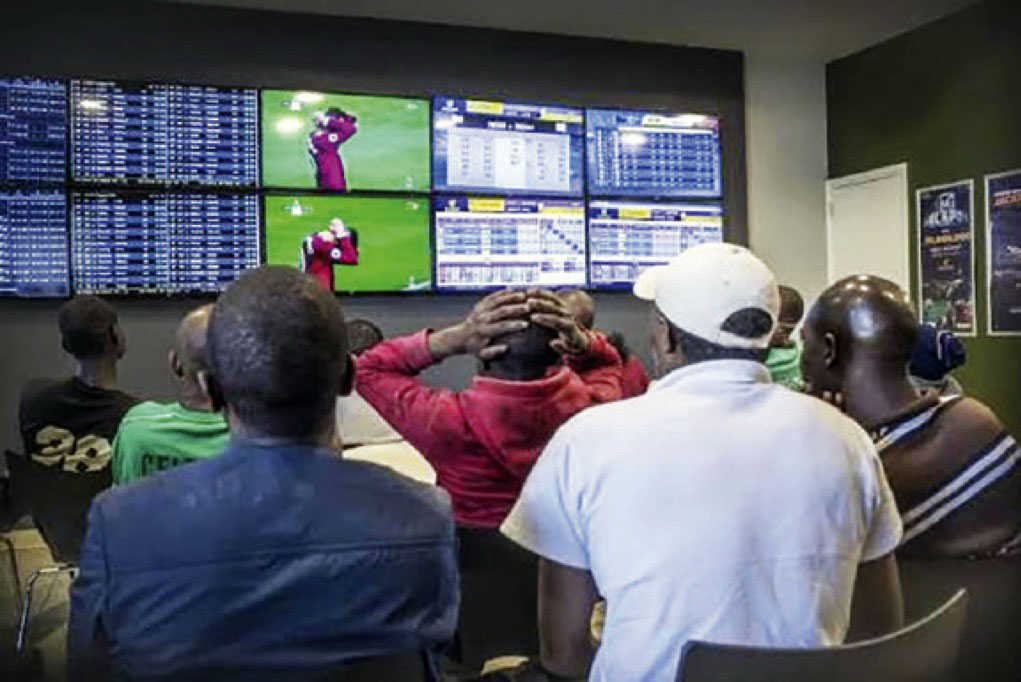
Across Lagos and other urban centres, the doors of gambling shops are open from early morning until late into the night.
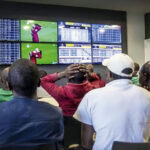
Inside the shops, plastic chairs are lined up in rows facing wall-mounted televisions that show football matches from with enthusiastic gamblers watching.
It is no longer a pastime reserved for the wealthy or for those with money to spare. Gambling in Nigeria has moved into an everyday activity. It has become as routine as buying bread in the morning.

The most common sight now is seeing both the young and elderly using their last N500 for betting slips. Perhaps the money was meant for transport home, lunch or data for an online test. But somehow it goes on a bet, because they have convinced themselves that the money will make them millionaires.
The phones buzz with notifications of free bets and welcome bonuses. The agents call out results. The screens show goals scored in places thousands of miles away, and with each goal someone cheers and someone else groans. The routine is the same everyday in all betting shops.
With the economy stretched thin and unemployment sitting heavy on graduates and school leavers, the gamble has shifted. It is no longer about entertainment. For many, it is about survival. That is how desperation is being monetised.
The betting industry did not create poverty, but it is now selling poverty to desperate gamblers. Two hundred naira is nothing, but betting two hundred naira every day becomes N6000 naira in a month. For someone earning N30,000, that is a fifth of their income gone, not on food, not on rent, but on the chance of a win that statistically will not come.
Gambling shops bearing the logos of Baba Ijebu, Bet9ja, SportyBet, BetKing, 1xBet and Betway are now a common sight across urban centres. The outlets open early and operate till late at night, with televisions showing live sports and virtual games.
The growth has been driven by mobile access, low stake amounts, and aggressive advertising by operators including NairaBet, BetWinner, 22Bet, BangBet and Surebet247. Most shops allow stakes from as little as 100 naira and offer bonuses to attract customers.
The shops are located on major streets, near motor parks, markets and around universities. Many provide power supply, free Wi-Fi and large screens to keep customers in the shop for hours. Agents earn commission on every stake placed in-store or through customer mobile accounts.
The National Lottery Regulatory Commission licenses the operators and has issued guidelines on age limits and responsible gaming. Several state governments have also introduced levies on betting companies.
With unemployment high and mobile betting accessible 24 hours, the industry continues to expand rapidly. Regulators and civil society groups say there is need for more enforcement of age restrictions and public education on the risks of gambling, as the number of shops and app users keeps rising.
Tunde Adeyemi is a bus conductor on the Oshodi to CMS route. He is 27 years old and has been doing the job since he left secondary school. Every evening after he hands over to the driver, he collects his daily commission. It is not much. Sometimes N4000, sometimes less on a slow day. A year ago a friend in the park introduced him to betting.
“I used to just watch them. They would be shouting ‘Barcelona to win’ and ‘over two and a half’. One day I had N500 left after I sent money home. I said let me try. I won N3000. That day I felt like God had answered me.”
Since then the N500 has become a habit. On good days he stakes N1000. On bad days, he still finds N200.
“Sometimes I use my savings and promise to replace it the next day when I win big. But tomorrow comes and I am back here. My wife is complaining that money for food is not complete. I know it is wrong. But when you are in that shop and everyone is winning around you, you feel like your own is next. It is like the shop is holding my future.”
He is not alone. Azeez Yusuf is a construction site supervisor. He started two years ago after most things had moved online.
“The first time I started betting, I saw the poster at the betting shop. Free N500 bonus if you register. I thought it was just free money. I used it to stake on a game and I won N8000. I was so happy. I accept that I’m addicted to gambling because now I borrow money from loan apps to bet. But I don’t use a huge amount to bet so that if I lose, I won’t feel the loss.”
To keep gambling, he started playing from his savings. When his savings was not enough, he discovered loan apps and now bets with it.
“At first it was just N5000 to stake. I told myself I would pay back when I win. Then I lost. So I took another loan to chase the first one. Now I owe three loan apps. They call me every day. They message my contacts. I know I am addicted but stopping feels like admitting that all the money I have lost is really gone. And I keep thinking, what if the next one is the big win that clears everything?”
He said it’s not easy to quit but he is trying to quit and has informed his wife. They have agreed that he will hand over his contribution directly to her as a first step to quitting the game.
Jackson Muyiwa works as a betting agent and sees the cycle every day. He said he doesn’t feel guilty when people gamble with their savings and lose because he is rendering a service, adding that they know the rule of gambling which is win or lose.
“From morning to night I see the same faces. Some of them are boys I know from the area. They will come in the morning with transport money. By evening they are asking to borrow from me so they can stake again. I have seen boys stake their last cash. I have seen a man sell his phone to stake. When they win, they shout and spray me. When they lose, they sit outside and look empty. I tell some of them to stop. But business is business. The company wants volume. The more slips, the more commission for me. I don’t feel bad for them because if I don’t do it, someone else will do it.”
Public affairs commentator, Ajayeoba Gabriel, declared that he has never participated in betting and has no intention of doing so.
He said the rise of gambling among young people is a matter of concern and stressed the need for individuals to pursue more productive means of livelihood.
He noted that while betting shops and online platforms have become common across urban centres, the practice has trapped many youths in a cycle of debt and desperation. According to him, the hope of quick money being promoted by gambling operators does not reflect reality.
Gabriel urged young Nigerians to channel their energy into education, skills acquisition and entrepreneurship rather than staking money on games of chance. He added that a sustainable future cannot be built on luck.
“We must begin to tell ourselves the truth. No nation develops on the back of gambling. Development comes from work, discipline and service. Our young people deserve better options than spending their transport and feeding money on betting,” he warned.
He called on community leaders, parents and relevant agencies to increase public awareness on the dangers of gambling addiction and to provide more opportunities that can engage youths meaningfully.
Gabriel maintained that his position is personal and informed by his values, adding that he would continue to advocate for responsible choices among young people.
Rejoice Oboh is a clinical psychologist who runs a counselling centre in Ikeja. She has seen an alarming rise in young men and women coming in for gambling-related problems in the last three years.
“The signs are very clear once you know what to look for. Preoccupation. The person is thinking about betting all the time, even when they are at work or in class. Chasing losses. They lose and immediately they want to stake again to recover it. Lying. They hide how much they are spending. Borrowing money. Selling things. Irritability when they try to stop. Neglecting responsibilities. That student who stops attending lectures. That conductor who cannot remit complete money. That is addiction.
“People think gambling addiction is about greed. It is not. It is about escape. For many of my clients, life feels hard and uncertain. Betting gives a few minutes where they feel in control. The brain releases dopamine when you place the bet, not just when you win. So even the act of staking becomes soothing. The problem is that the relief is short and the damage is long.”
On the causes of gambling addiction, Nuhu David, clinical psychologist at the Crusade for Greater Nigeria and Rehabilitation Ltd, Kugbo, Abuja, said: “First is economic pressure. When people feel they have no legitimate path to money, they turn to illegitimate hope. Second is accessibility. Your phone is a casino now. You do not need to travel. Third is social influence. If all your friends are doing it, it looks normal. Fourth is the design. These apps are built to keep you. The bonuses, the near misses, the live games. It is the same psychology used in social media to keep you scrolling.
“To overcome the addiction, you must first acknowledge it. That is the hardest step. Then cut access. Delete the apps. Self-exclude from shops. Tell someone you trust. Replace the habit. If you stake every evening at seven, fill that time with something else. Football with friends, but without money on it. Also, address the money problem. See a financial counsellor. Make a repayment plan. Addiction thrives in secrecy and in debt. Bring it into the light.”
The financial damage is quiet but cumulative. Ella Nnamani, a financial advisor in a microfinance firm in Lagos said she meets clients who come for small business loans and leave with a gambling problem.
“Small daily bets are like a leak in a bucket. Two hundred naira does not look like anything. But it is N200 that is not going into savings, not going into food, not going into transport. Over a year that is N73,000. For a low-income earner that is school fees. That is rent.
“And because it is daily, people do not feel the pain until it is too late. Then they start borrowing. They take from loan sharks. They take from family. The mental health impact is just as bad. There is shame, anxiety, depression. I have clients who cannot sleep because they are waiting for a game at two in the morning.
“The betting industry tells you it is about winning. But for most people it is about losing slowly. The house always has an edge. The more you play, the more you lose. That is mathematics, not opinion.”
Chuma Ebube, an economist, agreed.
Said he: “We are in a tough economy. Inflation is high. Jobs are scarce. People are looking for shortcuts. Betting presents itself as a shortcut. But it is a shortcut that leads back to the same place, only poorer. What we are seeing is the monetisation of desperation. The system takes the hopelessness that young people feel and turns it into revenue. And because it is digital, it is silent. No one sees you in the shop. No one knows you have an app. So the addiction spreads without anyone noticing until the debts pile up.”
He added that the solution cannot be left to individuals alone. “We need financial literacy in secondary schools and tertiary institutions. We need regulation that limits advertising betting to students. We need alternative opportunities. As long as a young man believes his only way out is a slip, he will keep staking.
“The habit of betting in Nigeria today is not about jackpots or luxury cars. It is about daily choices made under pressure. It is about a young man choosing between his savings and gambling. It is about a student choosing between a loan and quitting. It is about a conductor choosing between his family and the next game.”