Follow Us on Google
By Bianca Iboma-Emefu
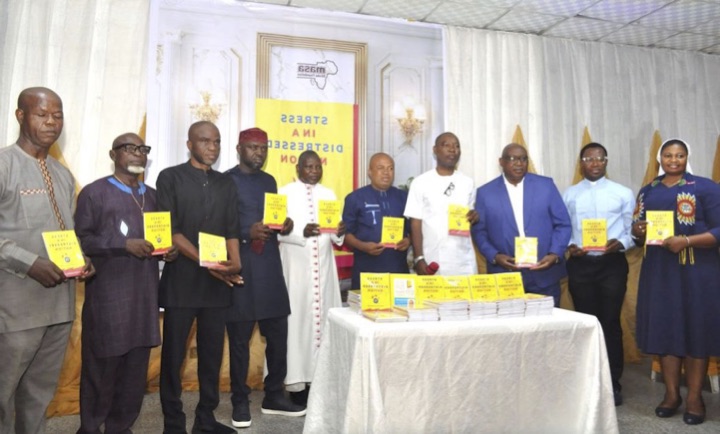
It was an unusually vibrant Saturday morning as the crème of Lagos society, friends of the author, and book lovers gathered at St. Leo Catholic Church, Ikeja, Lagos, for the public presentation of Stress in a Distressed Nation, the latest work by Ezeifedi Ugonna Julius.
The event opened with remarks from the chairman of the occasion, followed by the author, who spoke briefly about the inspiration behind the book. A select group of readers later took turns reading excerpts to the audience.
Legal practitioner Cyril Oghego, chairman of the event, described the book as timely and deeply relevant, noting that its title alone—Stress in a Distressed Nation—captures the realities many Nigerians face today.
As economic instability, political tension, and social upheaval continue to shape daily life, mental health concerns have become increasingly visible across the country. Recognising this urgent challenge, Julius’s new book delves into how national crises generate stress that affects millions.
A renowned researcher and mental health advocate, Julius blends empirical data, case studies, and personal narratives to explore how systemic issues—corruption, unemployment, insecurity, and political instability—collectively shape psychological well-being.
But beyond analysis, Stress in a Distressed Nation is also a call to action. Julius emphasizes resilience, community support, and policy reforms as essential pillars for addressing the growing mental health crisis. His accessible language and comprehensive approach make the book useful for students, scholars, policymakers, and everyday readers seeking to understand the relationship between national distress and individual stress.
Since its release, the book has received positive reviews from mental health experts, including Dr. Patrick Ijewere, who stressed that Nigerians must identify their sources of stress and develop coping mechanisms—especially those living in Lagos, where daily pressures can be overwhelming.
According to Dr. Ijewere, the author’s personal experiences and observations of what Nigerians endure help expand the book’s relevance. While stress is a global phenomenon, he noted, the book provides practical solutions, though not a perfect fix. “People need to live within their means,” he said, adding that reading and sharing experiences are crucial steps toward managing stress.
Human rights advocate Femi Falana (SAN) also spoke at the event, drawing connections between national stress and systemic injustice. He criticized what he described as the double standards of global powers, especially the United States, which he said publicly claims to defend religious freedom while ignoring its internal injustices and contributing to hardships abroad.
Falana noted that while the US grapples with its own high levels of stress—exacerbated by government violence and police brutality—it continues to project moral authority internationally. Meanwhile, Nigeria faces worsening insecurity, corruption, arbitrary arrests, and economic hardship, which collectively fuel national anxiety.
He observed that many Nigerians wrongly attribute stress to superstition—blaming witches or spiritual forces—rather than recognizing the structural failures that create widespread hardship. He argued that global powers often prioritize their strategic interests and those of wealthy elites, leaving ordinary Nigerians in deeper poverty and distress.
According to Falana, true freedom includes the right to live without fear, repression, and constant psychological burden. He emphasized that Nigeria’s struggle for justice and dignity mirrors global challenges and requires sincere international support—not political posturing.
As the nation continues to confront economic volatility, insecurity, and institutional decay, Julius’s Stress in a Distressed Nation stands out as both a mirror and a map—reflecting the complexities of life in a distressed society while offering pathways toward resilience and reform.
The book’s central message is clear: addressing mental health is not just a personal responsibility but a national imperative. And as speakers at the launch reiterated, the fight against stress, injustice, and repression requires collective effort—from individuals, policymakers, and the global community.
I