Follow Us on Google
By Vera Wisdom-Bassey
Education stakeholders have called for an increase investment in teacher training, resilient learning systems and stronger partnerships to improve access to quality education for children living in Nigeria’s informal settlements.
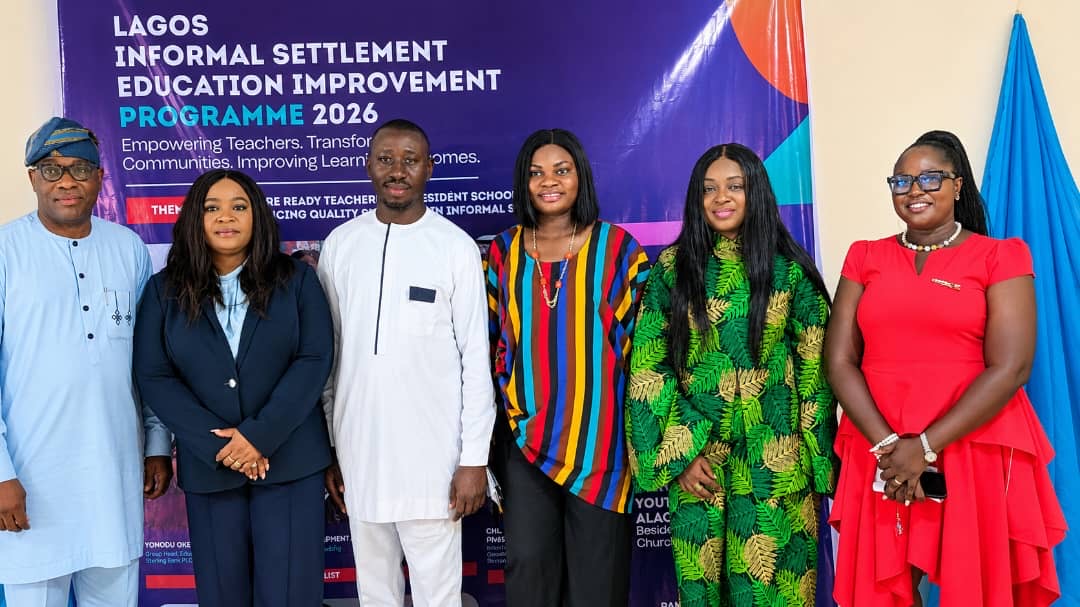
The call was made at the Lagos Informal Settlement Education Improvement Programme (LISEIP) 2026, organised by Youth Advocate for Change (YAFC) with the theme: “Future-Ready Teachers and Resilient Schools: Advancing Quality Education in Informal Settlements.”
The programme attracted teachers from public and private schools, proprietors, government officials, development partners, non-governmental organisations, financial institutions and education advocates who examined practical strategies for improving learning outcomes through presentations, panel discussions and interactive sessions.
Delivering the keynote address titled “Reimagining Education for Every Child: Building Inclusive, Resilient and Future-Ready Learning Systems in Underserved Communities,” education management consultant and Executive Director, Meadowbrook Educonsult Ltd, Dr. Stephanie Nwabuikwu, challenged governments, educators, businesses and civil society organisations to rethink education for children in disadvantaged communities.
“We gather not just to discuss education, but to reimagine it,” she said. “How do we build learning systems that are inclusive, resilient and future-ready? How do we ensure that every child, regardless of circumstance, has access to learning that unlocks their full potential?”
She identified poverty, inadequate infrastructure, shortage of qualified teachers and social exclusion as major barriers to quality education, stressing that schools have enormous potential to change children’s life trajectories through effective teaching and inclusive learning environments.
According to her, future-ready teachers must evolve beyond being transmitters of knowledge to becoming facilitators of learning, mentors and technology integrators capable of nurturing creativity, critical thinking, collaboration and resilience.
“The future-ready teacher prepares students not simply to pass examinations but to thrive in a rapidly changing world,” she said.
Nwabuikwu urged governments and development partners to invest deliberately in teacher development, educational technology, infrastructure and mentorship programmes, noting that examples such as solar-powered classrooms, mobile libraries and digital learning initiatives have demonstrated that innovation is possible even in underserved communities.
Former Director of Basic Education Services, Lagos State Ministry of Education, Dr. Adeyemi Adebayo, said teachers should be measured by their impact rather than their titles.
Other News
“A teacher is not measured by name. A teacher is measured by impact,” he said.
Adebayo urged teachers working in low-cost schools to embrace innovation, child-centred learning and instructional creativity, stressing that effective teaching depends more on sound pedagogy than expensive facilities.
He encouraged teachers to engage learners through practical activities, collaboration and locally improvised teaching materials, noting that children retain knowledge better when actively involved in the learning process.
During the plenary session, Mrs. Yonodu Okeugo, Group Head, Education Finance, Partnerships and Ecosystem Growth at Sterling Bank, emphasised the need for sustained private sector investment in education.
She said education financing should go beyond corporate social responsibility to long-term partnerships that strengthen learning systems, reward excellence and improve educational opportunities.
In his address, YAFC, Convener and Founder, Adeola Ogunlade, described the programme as a call to action rather than another education conference.
He said children in informal settlements continue to pursue their dreams despite overcrowded classrooms, inadequate infrastructure and limited teaching resources, while teachers and school owners remain committed against all odds.
“No education system can rise above the quality of its teachers,” he said.
Ogunlade called for collaboration among government, schools, development partners, civil society and the private sector, insisting that education is a shared responsibility.
“Government cannot do it alone. Private schools cannot do it alone. The private sector cannot do it alone. Civil society cannot do it alone. But together, we can create an education ecosystem where every child has access to quality learning opportunities,” he said