Follow Us on Google
From Juliana Taiwo-Obalonye, Abuja
Despite increasing climate disasters across Nigeria, persons with disabilities remain largely invisible in the country’s climate planning and emergency response — a gap advocates say is turning policy neglect into a life-or-death risk for millions.
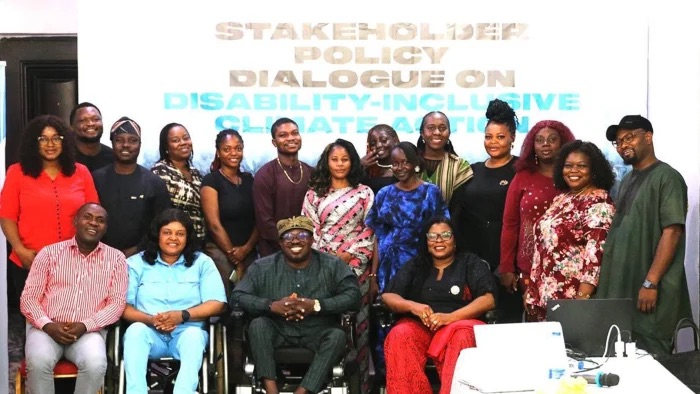
At a policy dialogue convened by the Inclusive Friends Association (IFA) with support from Rise Up Together, development experts and disability rights campaigners presented chilling examples of how exclusion compounds harm during floods, heatwaves and displacement. They warned that weak implementation, poor communication and the absence of disability-disaggregated data are turning broad policy language into practical abandonment on the ground.
“Climate change is no longer a future threat but a daily reality that is already disrupting lives and livelihoods across the country,” Executive Director of IFA, Grace Jerry said. “People with disabilities are among those bearing the heaviest burden despite receiving little attention in climate planning processes.”
Jerry recounted wheelchair users stranded by floodwaters, visually impaired people losing essential mobility aids during evacuations, and persons with albinism facing heightened exposure to deadly heat — all outcomes she links to policy and planning blind spots. She warned that lumping persons with disabilities into a generic “vulnerable” category makes specific needs invisible and relief ineffective.
To prevent further harm, Jerry urged adoption of disability-sensitive early warning systems and routine collection of disability-disaggregated data to inform responses and resource allocation.
Other News
The IFA’s Disability-Inclusive Climate Action Project, Programme Manager and Rise Up Leader, Stephen Idoko explained, is designed to turn recognition into action. “National climate policies often recognise vulnerable groups and gender concerns,” he said, “but they provide limited direction on how disability inclusion should be implemented in practice.” The initiative aims to pinpoint policy failures and help craft national guidelines that embed disability considerations into adaptation and resilience strategies.
Firsthand accounts at the forum underscored the human cost of exclusion. Kauna Gabriel of the Deaf Women Aloud Initiative described deaf residents in flood-hit Niger State who missed out on relief because official communications lacked sign language interpretation or other accessible formats. “Many deaf persons were unaware of government support programmes,” she said, noting that several people lost homes and belongings without receiving timely assistance.
Gabriel demanded that authorities deploy sign language interpreters and accessible information systems during emergencies and humanitarian interventions.
Critics also faulted implementation and financing of existing frameworks. “Nigeria possesses a number of climate-related policy frameworks, but implementation remains weak, particularly regarding inclusion and financing,” said Climate Justice Advisor at ActionAid International, Friday Ogezi. He argued that policies often recognise vulnerability in name only and fail to explain how climate hazards uniquely affect different disability groups or map clear solutions.
Speakers called for a shift from symbolic consultation to meaningful participation, insisting persons with disabilities must be involved in designing, implementing and monitoring climate policies. They urged government agencies, development partners and climate actors to enforce disability laws, expand accessible communication, invest in disability-specific data, and create formal pathways for representation in climate governance.
Participants concluded that without those changes, Nigeria’s resilience-building efforts will remain incomplete and unjust — leaving millions with disabilities excluded and exposed as climate risks intensify.