Follow Us on Google
With Okorie Uguru
The West African coastline from Nigeria down to Mauritania is fascinatingly beautiful, and steeped in the intrigue of history. Along the coastline are small, big towns and cities. Each of these has stories to tell. Stories of the past that echo betrayals, intrigues and valour. Years after those who created the towns and these stories have disappeared into the nothingness of the past, the hollows of what these towns were once upon a distant past; still remain for modernity to see. This is the common story of coastal towns and cities like Badagry, Ouidah, Cape Coast and others. It is also the story of Grand Bassam, a coastal town in Cote D’Ivoire, a UNESCO World Heritage Site.
Grand-Bassam is about 45 minutes’ drive from the Ivorian capital Abidjan. The road to Grand Bassam from the country’s capital, Abidjan, is relatively busy. It is a road that links leisure town, and also a gateway to Cote D’Ivoire-Ghana border town of Elubo which is about one and half hours’ drive away.
Grand-Bassam was the first colonial capital, and the most important port, economic centre and legal centre of Côte d’Ivoire; it bears witness to the complex social relations between Europeans and African inhabitants. It was also active during the popular movement for the independence of Cote D’Ivoire.
Grand Bassam was built at the end of the 19th century and during the early 20th century. The coastal town is unique in the sense that its planning concept was based on the specialisation of quarters for commerce, administration, housing for Europeans and Africans. It reflects colonial architecture, town planning and adaptability to climatic conditions.
The leisure town is home to the Nzima people, an Akan group native to the region They coexist with the Abouré, the original indigenous landowners of the area. The Nzima and Abouré communities form the cultural heartbeat of the historic town, notably residing in the specialised indigenous quarters that shaped the city’s rational layout.
Other News
Grand Bassam served as the first French colonial capital of Côte d’Ivoire from 1893 to 1896. Built on a narrow coastal strip between the Atlantic Ocean and the Ébrié Lagoon, it was the Cote D’Ivoire’s most important port and economic centre. The French established it as a primary settlement in the 1880s due to its strategic position as a natural harbour. With time, it became the administrative and judicial hub of the colony, featuring distinct urban planning. The town was divided functionally, with colonial administrative and European quarters separated from African and commercial zones.
However, due to an outbreak of yellow fever, the French relocated the capital to Bingerville in 1896. Grand-Bassam’s port subsequently suffered due to changing maritime access, and commercial shipping practically ceased by the 1930s.
After Côte d’Ivoire gained independence in 1960, all remaining administrative functions were transferred to Abidjan. However, the town still maintains its position as a hub for relaxation and tourism.
In every part of this old town that one visits, there is the imprimatur of both the local culture and history of the aborigines, and the deep influence of French culture. The town bears witness, through its well preserved urban organisation, to an important cultural tradition linked to its role as a colonial capital, an administrative centre for the former AOF (Afrique Occidentale Française) and a regional commercial hub. From the 1880s to the 1950s, the town brought together various African, European and Middle Eastern populations. They lived harmoniously but with occasional disagreements.
As holiday cum leisure town, what stands Grand Bassam out is the French colonial hue of the town’s architecture and the leisure ambience that is always common in the ocean front in West Africa. The long sandy ocean beachfront is an added attraction.
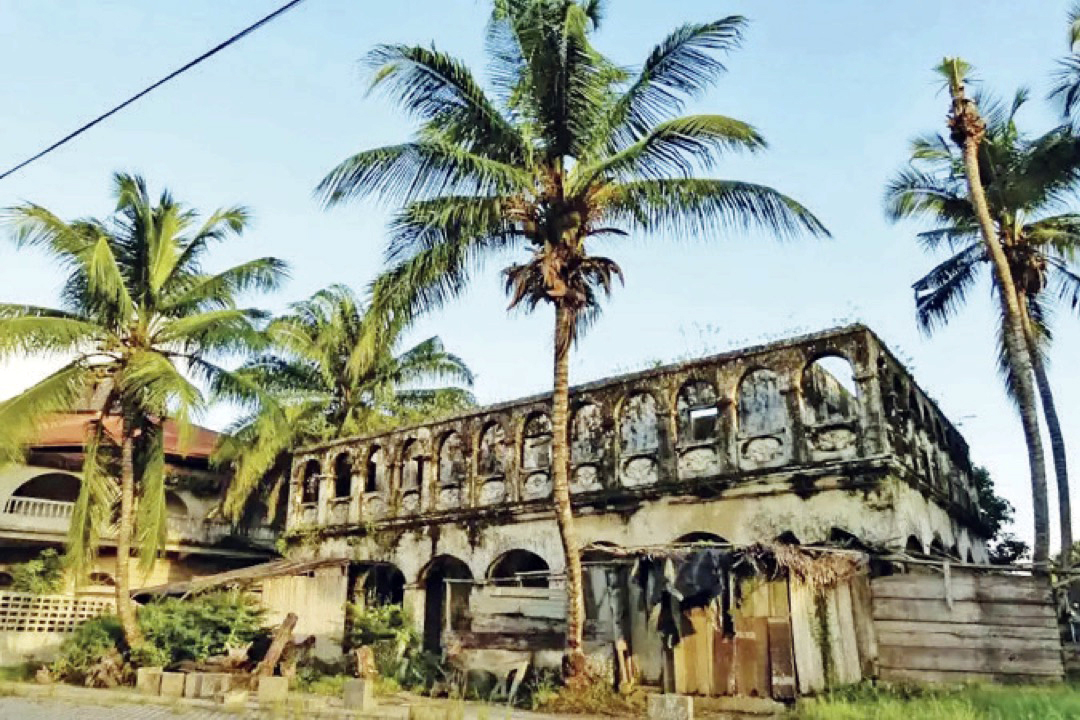
The town is littered with old grand buildings that speak of an affluent distant past. These are part of the history of the town.
The town’s authority has put in place structure a protection and management system to conserve these historical properties.
The city remains divided into two distinct halves by the Ébrié Lagoon known as the Ancient Bassam, a former French colonial settlement with impressive colonial-era architecture and remnants of the old port infrastructure, including its lighthouse and Nouveau Bassam (New Bassam) situated on the northern side of the lagoon and linked to the old town via the Pont de la Victoire bridge. It used to be the African quarters and serves as the city’s main commercial hub.
Culturally, the city remains tied to the local N’zima people. The King of Grand-Bassam is His Majesty Awoulae Désiré Amon Tanoé, the supreme ruler of the N’Zima Kotoko people in Côte d’Ivoire and Ghana. Crowned in December 2003, he also serves as the President of the National Chamber of Kings and Traditional Chiefs of Côte d’Ivoire.
There are lots of leisure activities to engage in at Grand Bassam. One could tour to see remnants of the old building that speak of past affluence. Some have been converted to art houses.
The former post office and customs building has been overhauled, respecting its colonial-era architecture of red earth bricks, large wooden windows and high ceilings. It has two permanent exhibition spaces as well as a temporary one and offers a residency for artists with a workshop and meeting rooms.
With its tropical climes, sea air and history, Grand Bassam is a magnet for artists and they depend a lot on the tourists and visitors for patronage, buying sculpted works and other souvenirs. The artists from the town are renowned for their craftsmanship in the art of woodcarving and pottery.
Beyond its allure, Grand Bassam is a serene beautiful place with life moving at a slow leisurely pace. Music and dance are integral to the people’s culture. The town hosts traditional performances unique in its rhythmic beats and beautiful costumes.
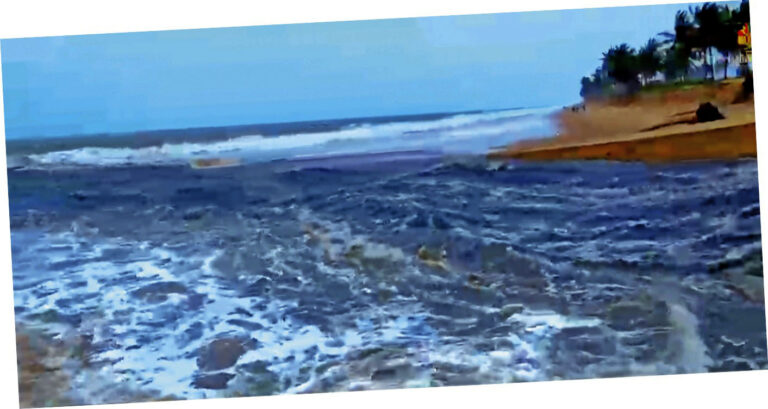
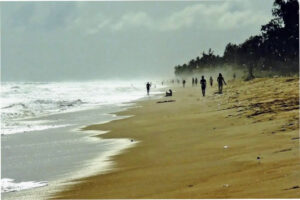
Grand Bassam’s coastline stretches along the Atlantic Ocean. The serene beaches offer a tranquil escape, perfect for relaxing walks and sunbathing. Tourists can also engage in watersports such as swimming, surfing, and jet-skiing, and many more.