Follow Us on Google

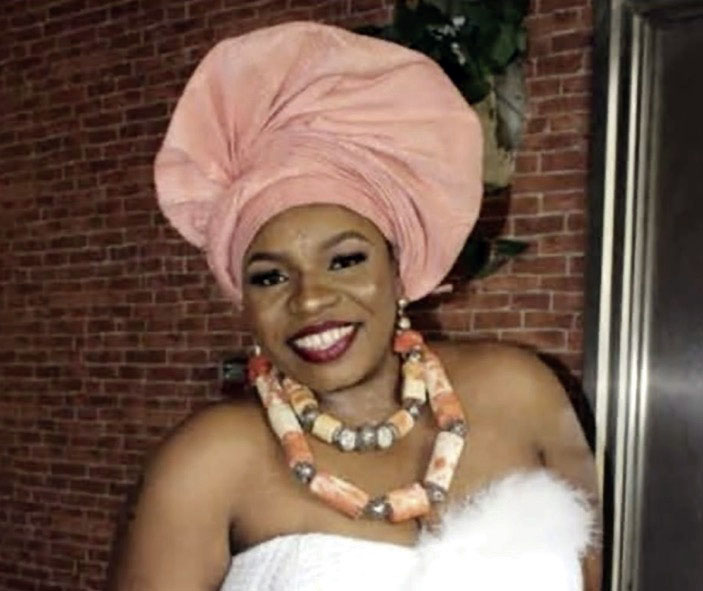
“Writing comes naturally from your quest as a person,” Ernest Onuoha begins, sipping from a glass of red wine. A novelist, poet and nonfiction writer, he is a manager with Dana, Aba, and has held the chair of the Abia State chapter of the Association of Nigerian Authors. We are chatting at the World Class Hotel, Mpape, Abuja, close to Mamman Vatsa Writers’ Village. “Two people might be working on the road: a businessman will see a store; a painter might see beautiful trees; a writer might see the deficiency between the tree and the store. So it will arouse the interest of the writer to begin to question why the tree is not properly planted and why the store should be where it is.”
Onuoha says, with that curiosity, the next thing for a writer is to bring it into openness for people to know that this is what you think and also realise that things can be done differently. “So writers are like chief priests of old. They want orderliness in the society,” he echoes. “While they want to entertain the society, their mind is not at rest when society is going wrong.”
Many years ago, a wealthy man invited Onuoha to his beautiful home, but he wasn’t impressed. “I asked him, ‘Where do you have your library?’ Unfortunately, there was none. So that beautiful edifice couldn’t sustain my mind.” Onuoha began to question why that should be the case.
Meanwhile, Onuoha started writing when he was in secondary school. His inquisitive mind led him to be writing letters to editors, which earned him some publicity and respect. Even when he was trying to write his first book, it was curiosity that triggered it, though he wasn’t sure of its end product. “And since that time, 1988, when I started, I haven’t stopped writing.”
What’s his writing process like? Onuoha tells The Sun Literary Review that “it’s more like an art of history” and “we have some ideas that will come to mind. So you quickly go and put it on paper so you don’t forget them.” He can also have an idea of how the major characters and settings would look like, as well as the themes and the title of the book. “But I bet you, sometimes, you might change the title more than five times. Some-times, too, you might rewrite the beginning chapters up to ten times.”
Onuoha admits he has been toying with the idea of writing a particular book for over ten years now, but he hasn’t succeeded in doing that. “I have been trying to do something like The Merchant of Venice. I like transferring dramatic scenes into prose, which is where I am very good at.” His interest in this Shakespearean classic has to do with the nature of greed in the pound-of-flesh saga. Though Onuoha has done the characterisation over and over again, he hasn’t hit the nail on the head yet. “So a writer will have many ideas about so many works and, one day, gradually, it matures,” he adds.
Asked if he can recall the first book that made him cry, Onuoha looks into the air. His answer will surprise you, “It’s actually my own work, Challenges of Existence, because the characterisation is of a young man that lost his mother very early in life due to a wrong medication. So I had depicted a situation where the woman was keeping expired drugs, and she died as a result. The son was still a young boy in primary school. When I was depicting that and the hardship his stepfather had to make him undergo, it became like a real life story, and I saw my- self shedding tears.” At a point, Onuoha began to interrogate himself: was he not the writer creating the work? Why should he be affected? Momentarily, he dropped the work and walked away.
During his youth, Onuoha enjoyed reading and buying cheap books, mostly from bookstores that sold new and old books. Some of the books were as cheap as 2 kobo or 3 kobo. That was in the 1980s. So he was influenced by the works of Charles Dickens. One of them was David Copperfield where the major character suffered many privations and worked as a minor.
He was also influenced by Ernest Hemmingway’s The Old Man and the Sea, Chinua Achebe’s Things Fall Apart, Barbara Taylor’s A Woman of Substance, among other historical novels from England and Europe, which made him realise that “English people were not always enlightened as they are now.
There was a time they were barbaric,” he laughs. “There was a time they were practising witchcraft, but they have transited. I believe that, if we keep working hard, we can transit from this superstitious level we are to a modern era where education, science and will power will prevail.”
Writing about opposite sex
Other News
“Actually, I don’t have any difficulty writing about the opposite sex. There are weak female characters, as well as strong male characters in works by Nigerian authors. Sometimes women create that avenue for weak female characters. If you watch Nigerian movies, you will see how scriptwriters cheapen female characters, and women accept it by playing such demeaning roles. They seem to enjoy it.”
Selecting names of the characters
“I remember when I was writing Challenges of Existence, I sent the first two chapters to one of my would-be publishers, Spectrum, Ibadan. After going through the first two chapters, they said I needed to create strong characters and barriers they should overcome. Depending on the type of book you are writing, you have to look at the character you are trying to create and the roles they will be playing.
For example, if you look at Chinua Achebe’s Things Fall Apart, Obi Okonkwo has what it takes to be a protagonist in the novel. When it was adapted to a film, you could see the vibrancy of his personality. A character like Onuka that he created as a chronic debtor, you can see how feeble he is. So it depends on what scene you are creating. It’s always good to have strong characters as protagonists. If your protagonist is flat, readers might drop it after just one page.”
Hardest scene ever written
“It has to do with Biafra: The Victims. I was about 7-8 years old when the Civil War started. From Agborike Nsulu, Isiala Ngwa North, you had to trek to Umuahia for 30 kilometers, then to Owerri and to Ikeduru in Imo State. When the war ended, we were seeing bodies of dead people. We ate all kinds of things, including lizards and rats.
“So when I wanted to do a factional work on the experience, it was quite difficult, because I was involved. In those days, you would see Okada riders reading some cheap blue newspapers and they would be discussing propagandas being dished about in them, and they believed everything. In forming my characters for this book, I be- gan with those Okada riders, what they used to do and react to what they read. It was tough for me writing Biafra: The Victims, though it was a small book.
How far his books have travelled
“For my first work, Challenges of Existence, I never knew it had been digitised by Google until my colleague in the office, an Indian, who was researching about me, told me he saw my digitised book on Google, which they picked from Indiana University. My second work, Biafra: The Victims, can be found at Stanford University in the USA. The same goes for Tomorrow in My Hands. My latest work, Beauty in the Rubble (poetry) has also been digitised by Google.
So it gives me joy that my works, apart from good reviews I got from media houses, have made their way abroad and have become among the 360 must-read books in Nigeria. I am impressed, because I want my stories to go far.”