Follow Us on Google
From Romanus Ugwu, Abuja
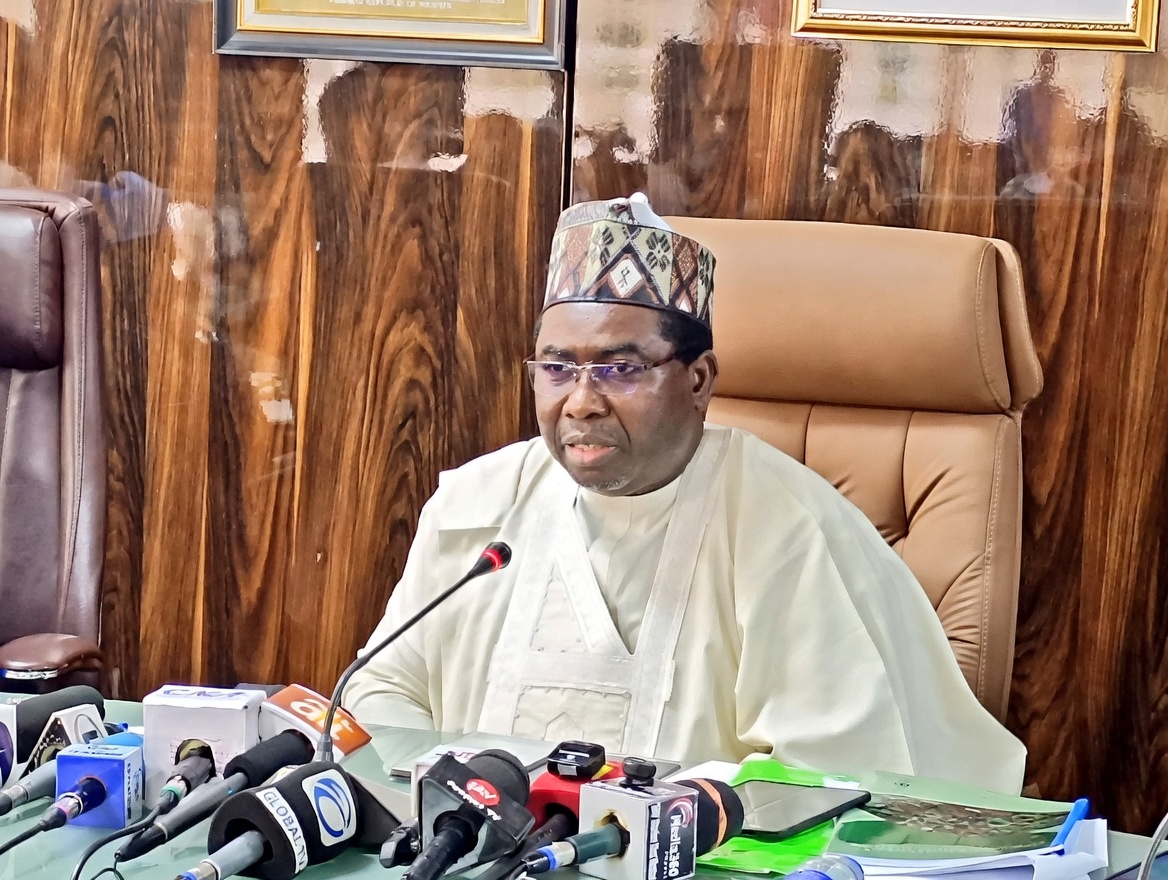
Chairman of the Independent National Electoral Commission (INEC), Joash Ojo Amupitan, has said challenges of electoral system like malpractices, threats of violence and vote trading pose significant risks to national security.
Amupitan also emphasised that the challenges equally undermine the confidence of the electorate and affect the outcome of elections.
The electoral umpire boss made the claim in his remarks at the second annual lecture of the Alumni Association of the National Institute for Security Studies (AANISS).
“In Nigeria, our electoral system has faced numerous challenges over the years, ranging from malpractices to threats of violence, vote trading that undermine the confidence of the electorate.
“These challenges not only affect the outcome of elections but also pose significant risks to our national security. Thus, it is imperative that we address these concerns with utmost seriousness and resolve.
“We meet at a critical juncture following the commission’s recent release of the Notice of Election for the 2027 general election. With the presidential and National Assembly elections set for January 16, 2027, and the governorship and State Houses of Assembly elections for February 6, 2027, this roadmap is no longer just an administrative timeline; it is a security trigger.
“Today, Nigeria faces a sophisticated triad of electoral challenges: the convergence of social media volatility, the weaponisation of AI-driven disinformation, Foreign Information Manipulation (FIMI) and logistic deficit.
“When these digital threats intersect with physical challenges like insurgency and communal strife, the trust deficit widens. It is our collective responsibility to close this gap with surgical precision- hence the importance of this lecture,” he said.
While enumerating the importance of security agencies to electoral success, he said: “We must recognise that credible elections foster public trust in governance, and this trust is crucial for national security. When citizens believe in the electoral process, they are more likely to accept the outcomes, reducing the tensions that can lead to unrest.
“Therefore, it is incumbent upon us as stakeholders – INEC, security agencies, civil society and the electorate – to collaborate in fortifying the systems that underpin our elections. Under my leadership, the commission’s approach is anchored on the Supremacy of the Constitution and the Electoral Act.
“We are currently navigating a new statutory frontier where adjustments to timelines demand earlier and more rigorous security deployments. We are not merely watching the law; we are enforcing its technical safeguards – specifically the Bimodal Voter Accreditation System (BVAS) and the INEC Result Viewing Portal (IReV) – as the ultimate defense against electoral fraud.”
He also called on security agencies, civil society and all stakeholders to work collaboratively to ensure the success of Nigeria’s forthcoming elections.
He noted that credible polls were indispensable for national security, saying credible elections foster public trust in governance that is crucial for national security.
According to him, when citizens believe in a transparent and reliable electoral system, they are more likely to accept outcomes, reducing tensions that could otherwise lead to unrest.
The INEC boss stressed that the upcoming Ekiti governorship election on June 6 and the Osun election on August 18 would be a test of Nigeria’s electoral and security preparedness.
“Success depends on total synergy among the Nigerian Police, civil defence and all other security agencies.
“Security is both the first mile and the last mile of election logistics. Without proactive intelligence coordination and rigorous deployment, credible elections remain a distant goal,” he said.
On voter participation, Amupitan noted the dangers of low turnout, citing recent trends in the Federal Capital Territory (FCT).
Other News
According to him, voter apathy is not just a civic concern, it is a security risk. Non-participation creates a vacuum that non-state actors can exploit to delegitimise governance.
“Every vote cast is a bricklayer in the world of national security,” he said.
The INEC chairman urged alumni and experts present to act as “strategic movers of democracy” by helping to refine threat assessments and security deployment models.
According to him, strict adherence to the Electoral Act is our strongest shield against post-election unrest and we must ensure that security operations are precise, preventive, and effective.
Delivering the lecture titled, “Credible elections and national security in Nigeria,” former INEC Resident Electoral Commissioner (REC), Mike Igini, offered a complementary perspective, highlighting the constitutional and legal framework that underpins credible elections.
According to Igini, INEC operates as an independent body, saying the procedures governing elections are not subject to arbitrary control, and political parties are the essential organs of democracy.
He emphasised the role of law enforcement agencies in enabling a peaceful electoral environment, adding that security, judicial, and administrative bodies must facilitate elections, ensuring that public institutions, from stadium to civic centres and media facilities, remain accessible to all stakeholders.
“Their responsibility is to allow Nigerians to exercise their franchise freely and safely,” he said.
Describing democracy as an orchestra, Igini said that its harmony depended on the unique contributions of every participant.
According to him, laws, processes, and integrity must work together to ensure the will of the people is respected.
He said that elections must be conclusive, final, and leave a lasting democratic legacy for future generations.
In his welcome address, President of AANISS, Mike Ejiofor, emphasised the critical nexus between credible elections and national security.
Ejiofor said the integrity of the nation’s electoral process was not just a political issue but a fundamental security imperative.
According to him, credible elections confer legitimacy, while flawed elections breed discontent, instability, and, in some cases, violence.
Ejiofor lauded the presence of lawmakers, security officials, politicians, and electoral management figures at the lecture, noting that their participation demonstrates a shared commitment to Nigeria’s peace and progress.
“We are here today not merely as spectators, but as concerned stakeholders in the future of our great nation.
“Let us listen attentively, engage actively, and leave here inspired to take action in our spheres of influence,” he said.
The Second Annual Lecture brought together experts from law, academia, and security to deliberate on how credible elections, active civic engagement, and robust security measures can strengthen democracy and national stability.
Speakers emphasised that free, fair, and transparent elections are critical not only for governance but also for public trust, economic development, and Nigeria’s international reputation.