Follow Us on Google
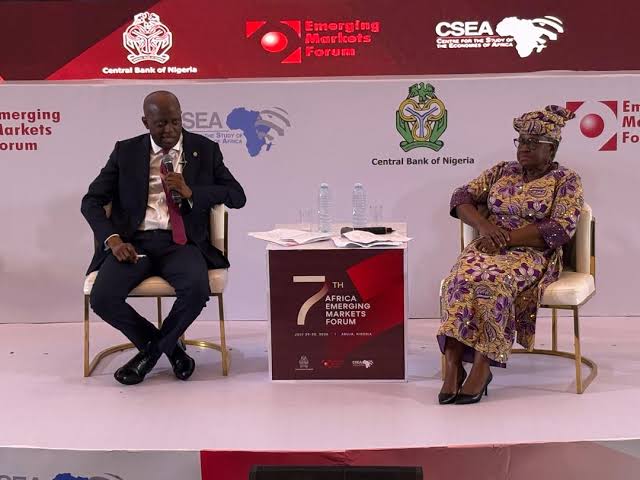
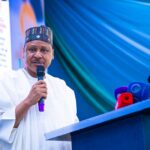
Director-General of the World Trade Organisation (WTO), Ngozi Okonjo-Iweala, has urged African governments to make bold investments in artificial intelligence (AI), renewable energy, and critical mineral value chains, warning that the continent risks falling behind in an increasingly technology-driven global economy.
Speaking at the 7th Africa Emerging Markets Forum in Abuja on Wednesday, Okonjo-Iweala said Africa could no longer depend on exporting raw commodities while other regions reap the benefits of value addition through technology, manufacturing and innovation.
She noted that although African economies were gradually recovering from the disruptions caused by the COVID-19 pandemic, inflation, supply chain bottlenecks and geopolitical tensions, current growth levels remained insufficient to generate the jobs, industries and prosperity required by the continent’s rapidly growing population.
“The future belongs to economies that innovate, create value and invest in people,” she said, calling on governments to prioritise investments in digital infrastructure, education, research, artificial intelligence and renewable energy to improve long-term competitiveness.
Okonjo-Iweala also urged African countries to strengthen their position in global critical mineral supply chains by processing and adding value to the continent’s vast deposits of lithium, cobalt, manganese, graphite and rare earth minerals rather than exporting them in raw form.
According to her, Africa’s abundant reserves of strategic minerals present a rare opportunity to become a key player in the global green and digital economy, provided governments establish policies that attract investment, promote industrialisation and encourage local value addition.
Other News
She further cautioned that rising public debt continues to constrain economic transformation across the continent, urging governments to maintain fiscal discipline while directing limited public resources towards productive investments capable of supporting sustainable economic growth.
Her remarks come as countries worldwide intensify efforts to dominate artificial intelligence and secure supplies of the critical minerals needed for electric vehicles, batteries, semiconductors and other advanced technologies expected to drive global economic competitiveness in the coming decades.
Analysts note that despite possessing some of the world’s largest reserves of critical minerals, Africa captures only a small share of their economic value because most of the resources are exported with little or no local processing.
Also speaking at the forum, Governor of the Central Bank of Nigeria (CBN), Olayemi Cardoso, said macroeconomic stability remains essential to attracting investment and sustaining economic growth.
Cardoso said the apex bank would continue implementing policies aimed at maintaining price stability, strengthening investor confidence and safeguarding Nigeria’s financial system despite heightened global economic uncertainty.
The 7th Africa Emerging Markets Forum, themed “Building Resilience Amidst Geoeconomic Uncertainties”, brought together government officials, central bankers, economists, investors and development partners to examine strategies for helping African economies navigate rising geopolitical tensions, trade fragmentation and financial volatility while accelerating sustainable development.