Follow Us on Google

From Ndubuisi Orji, Abuja
The chairman of the Economic and Financial Crimes Commission ( EFCC), Ola Olukoyede, has said lawmakers, in the country, must ensure that embrace the appropriation processes are transparent.
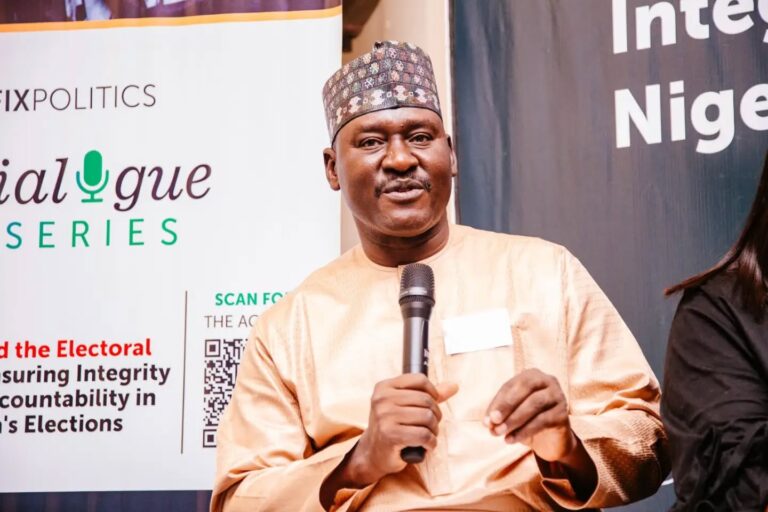
Olukoyede stated this, while speaking at the ongoing National Conference on Public Accounts and Fiscal Governance organized by the Senate and House of Representatives Public Accounts Committees (PACs), yesterday in Abuja.
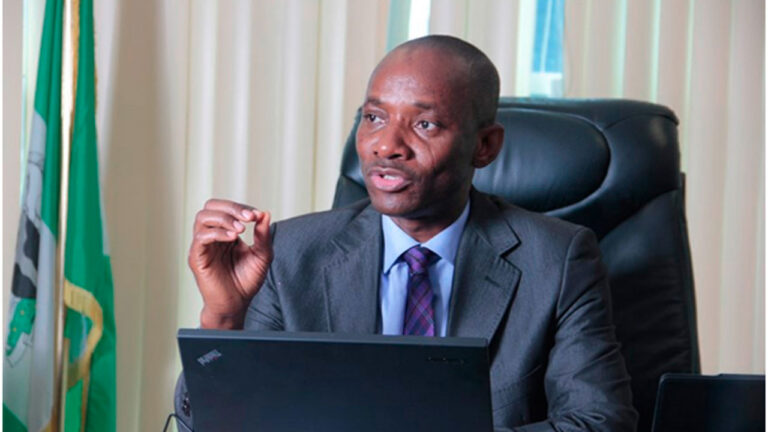
The EFCC chairman, who was represented by the Agency’s Director of Public Affairs, Wilson Uwujaren, said the parliament cannot demand accountability in the management of public finance, if it does not practice it.
Olukoyede, who also raised concern over alleged opacity in the financial reporting system in the country, especially within the oil and gas sector,called for a collaboration between the Commission and the National Assembly Public Accounts Committees in the fight against mismanagement of government resources.
According to him,”opaque financial reporting, especially in the oil and gas sector, where earnings remain speculative rather than factual, is one of the most disturbing vulnerabilities in our system. These weaknesses feed corruption and erode public trust.”
Nonetheless the EFCC chairman noted that, “parliament cannot demand accountability if it doesn’t practice it. Fiscal integrity must be the norm in all organs of government. Legislators must embrace transparent appropriation and resist any actions that erode public trust.
“There is also a need for greater synergy and collaboration between the Public Accounts Committee of the National Assembly and the EFCC. To the best of my knowledge, no report of the Committee’s oversight of MDAs has been forwarded to the EFCC for investigation. Leveraging the enforcement powers of the Commission will send a powerful message that the Public Accounts Committee’s work is not routine or toothless.”
Olukoyede, who explained that in the last 18 months, the Commission has taken strategic steps to strengthen internal controls across the public sector, stated that funds recovered from various corruption cases, have been re-channelled into key national initiatives such as the Nigerian Education Loan Fund (NELFund) and the Consumer Credit Scheme (CREDICORP).
Furthermore, he called for institutionalization of real-time digital budget and project tracking, public access to expenditure data, and a strengthened whistleblowing system.
“We must close procurement and payroll loopholes through robust automation and active citizen participation. No system will work without the right people. That’s why we’re pushing for integrity testing for all public officers across MDAs,” the EFCC chairman stated.
Similarly, the Accountant-General of the Federation, Shamsudeen Ogunjimi, while speaking at the conference, called for a paradigm shift in Nigeria’s public financial management system.
Ogunjimi explained that in an era high debt obligations, dwindling revenue streams and rising economic volatility across the globe, Nigeria can no longer afford fiscal inefficiencies.
According to him, “every naira that is mismanaged or wasted is a naira that could have gone into schools, hospitals, infrastructure or security.”